AI is helping cops fight crime, save up to 6 million hours a year on office work
AI is no longer just helping people write emails or answer questions online. It is increasingly being used to make work faster and more efficient
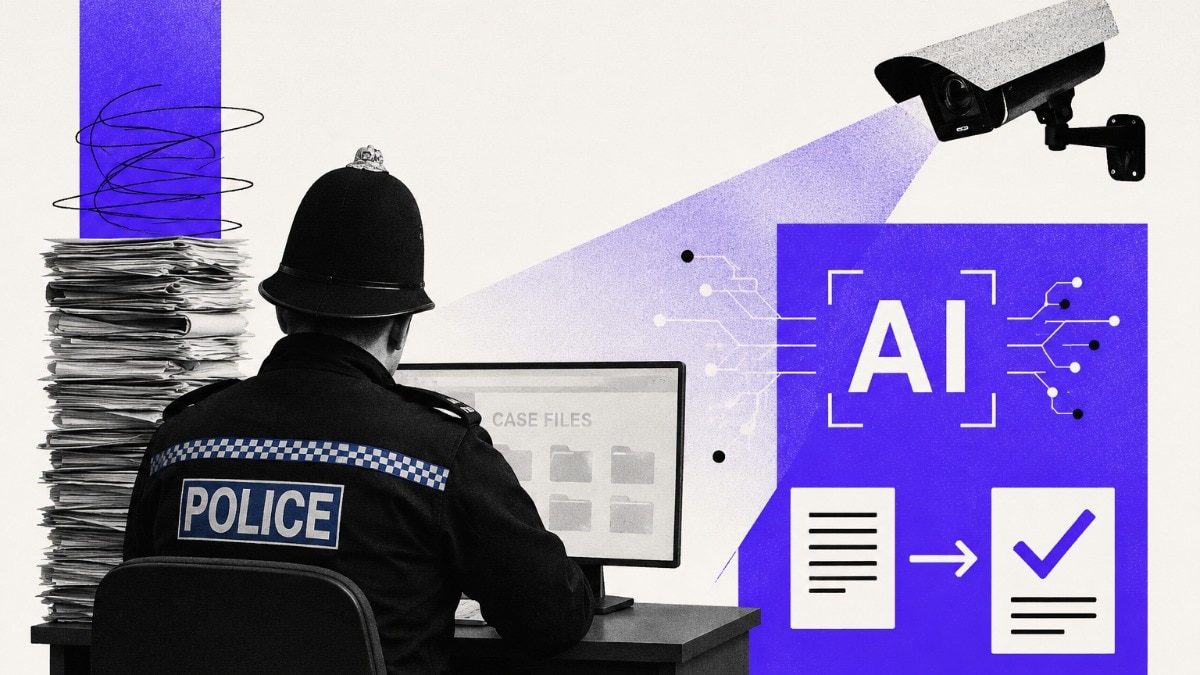
AI is no longer just helping people write emails or answer questions online. It is increasingly being used to make work faster and more efficient across different industries. Now, the UK government believes the technology could also help police officers spend less time behind desks and more time fighting crime. To make that happen, it has launched PoliceAI, a new national centre that will support police forces across England and Wales in using AI for investigations, evidence processing and crime prevention. Read Full Story According to the government, the AI-powered initiative could save at least 6 million police hours annually by the end of 2028, roughly equivalent to the working time of 3,000 officers. The goal according to authorities is to reduce paperwork and administrative burdens so that more officers can spend their time policing communities rather than handling bureaucracy. To support the effort, the UK government is investing £75 million over three years in PoliceAI.
The centre will act as a central hub for evaluating and scaling AI tools across police forces. Instead of individual forces testing the same technologies separately, PoliceAI will assess systems for accuracy and bias before they are adopted more widely. How will AI help the police? The government reveals that its early trials have already shown how AI could help speed up police work. In one kidnapping investigation, officers used AI to review 800 hours of video footage in just three hours, helping secure an early guilty plea. In another case, AI was used to instantly translate around 500,000 e-books worth of Romanian-language material, uncovering new leads that eventually led to the arrest of a serious organised crime gang. According to the UK government, a large part of the expected time savings will come from dealing with digital evidence more efficiently.
PoliceAI plans to run large-scale pilots across up to 10 police forces, where AI tools will help officers sort through, summarise and process digital evidence, one of the most time-consuming parts of modern investigations. The government is also expanding the use of AI-powered redaction tools that can automatically remove sensitive information from audio and video files, reducing paperwork and freeing up officers for frontline duties. However, the technology is said to not be limited to speeding up investigations. According to the official announcement, PoliceAI will also play a role in tackling a new category of crime that has emerged alongside the rise of artificial intelligence. The centre will lead the UK's response to AI-enabled crimes, including deepfake intimate images and other forms of manipulated digital content. It will also provide police forces with tools and training to help officers identify fake media and investigate crimes that rely on AI-generated content.
Another area where the UK government believes AI can make a difference is retail crime and tool theft. According to officials, AI systems will help connect police records with property-marking databases, making it easier to identify recovered tools and stolen items and return them to their owners. Computer vision technology could also be used to spot stolen goods being resold online, helping investigators track them down more quickly. At the same time, the government says safeguards will be an important part of the rollout. A public registry listing the AI tools used by police forces is expected later this year, while systems deployed through PoliceAI will be tested for accuracy and potential bias before wider use. Ends
 The BriefWire