Higher ethanol blends are likely to arrive in the future: The next fuel shift could be more disruptive
India's ethanol-blending programme may be preparing for its next phase. Recent government notifications indicate that higher ethanol-petrol blends beyond E20 are now firmly on the
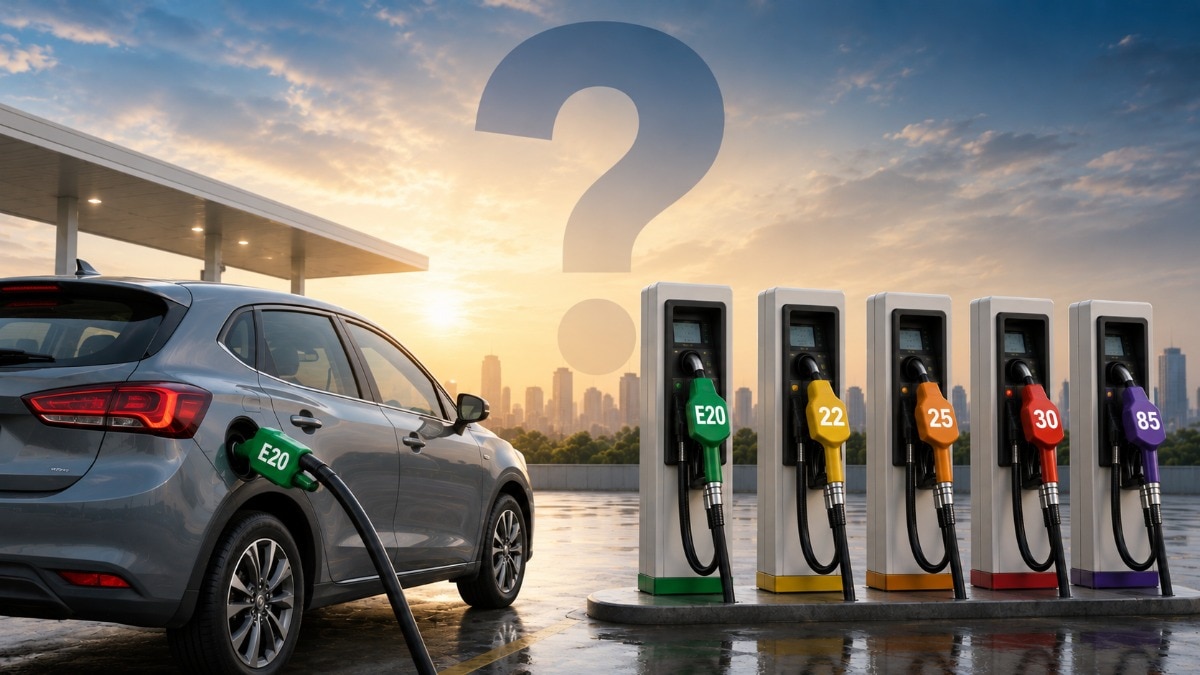
India's ethanol-blending programme may be preparing for its next phase. Recent government notifications indicate that higher ethanol-petrol blends beyond E20 are now firmly on the policy radar, raising questions about what the future could hold for vehicle owners. The latest development comes after the government exempted petrol blended with 22 to 30 per cent ethanol from excise duty. While these fuels are not available at retail fuel stations today, the move is being viewed as a strong policy signal encouraging oil marketing companies to adopt higher ethanol blends in the future. Read Full Story The tax exemption follows another significant step taken earlier this year, when fuel specifications for E22, E25, E27 and E30 petrol were officially notified. By laying down standards for these fuels, the government has effectively created the framework required for their eventual introduction into the market. Taken together, the two notifications suggest that E20 may not be the final destination of India's ethanol-blending programme. What happens after E20? The government has repeatedly highlighted the benefits of ethanol blending, including reduced dependence on imported crude oil, support for domestic agriculture and lower fossil-fuel consumption. The programme has also been one of the fastest-moving fuel-transition initiatives undertaken in India. However, the transition from E10 to E20 was not without concerns. Many motorists reported a drop in fuel efficiency, while vehicle owners were forced to adapt to a fuel containing a significantly higher ethanol content than before.
The prospect of E22, E25, E27 or even E30 raises similar questions, particularly for owners of older vehicles. One of the biggest uncertainties is vehicle compatibility. Many vehicles currently on Indian roads were developed and certified long before higher ethanol blends were considered. While newer models have increasingly been engineered to handle E20 fuel, there is still little clarity on how older E10-era vehicles would respond if higher blends eventually become the norm. Even for E20-compatible vehicles, questions remain. Compatibility with E20 does not automatically guarantee suitability for E27 or E30. Manufacturers may need to conduct fresh validation and testing before confirming long-term durability with higher ethanol concentrations. This creates an important policy challenge. If higher blends are introduced, will consumers still have access to lower-ethanol fuel options, or will higher blends eventually become the standard fuel available at pumps? What happens to E10 cars if India moves to E30? This is likely to be the biggest concern if higher ethanol blends become the standard fuel. Most E10-compatible vehicles were designed when petrol contained up to 10 per cent ethanol. Increasing ethanol content to 30 per cent could create several challenges. Ethanol is more corrosive than petrol and can affect fuel-system components such as rubber hoses, seals, gaskets, fuel pumps and injectors if they were not engineered for higher concentrations. There could also be issues related to air-fuel calibration.
Since ethanol contains less energy than petrol, engines designed around E10 fuel may not be able to optimise combustion as effectively on E30. This could lead to reduced fuel efficiency, rough running, harder cold starts and, in some cases, illumination of the check-engine light. Long-term durability is another question. While an E10 vehicle may run on E30, running and being fully compatible are two different things. The real concern is whether years of operation on higher ethanol blends could accelerate wear of fuel-system components and increase maintenance costs. For older vehicles on Indian roads, the biggest question is whether they will continue to have access to lower ethanol fuels if E30 is introduced. What happens to E20 cars if India moves to E30? An E20-compatible vehicle is validated and certified for fuel containing up to 20 per cent ethanol. Moving to E30 means increasing ethanol concentration by another 50 per cent over what the vehicle was originally designed to handle. Manufacturers may need to conduct fresh testing to assess the impact on fuel-system materials, engine calibration, emissions performance and long-term durability. Some vehicles may be able to accommodate E30 with minimal changes, while others could require hardware or software modifications. Fuel economy is also likely to be affected. Because ethanol contains less energy per litre than petrol, a higher blend generally means more fuel is required to produce the same amount of power.
If motorists noticed mileage changes during the transition from E10 to E20, the shift to E30 could amplify those concerns. Another important consideration is warranty and certification. If E30 becomes available before manufacturers officially approve it for existing E20-compatible vehicles, owners could find themselves in a grey area regarding warranty coverage and recommended fuel usage. The bigger policy question The road ahead remains unclear At this stage, there is no official timeline for the retail rollout of E22, E25, E27 or E30 fuels. The recent notifications merely establish standards and create incentives for their future adoption. That leaves several unanswered questions. Will higher ethanol blends remain optional or become the default fuel? How will existing vehicles be protected if compatibility concerns emerge? For now, E20 remains the standard fuel target. But the policy signals are becoming increasingly clear: India's ethanol journey is unlikely to stop there. Whether the next step is E22, E25, E27 or E30, the transition could prove far more challenging than the move from E10 to E20, particularly if the vehicle fleet is not ready when the fuel arrives. Subscribe to Auto Today Magazine Ends
 The BriefWire