India barrels its oil problem into advantage
More than an emergency cushion Live Events The geopolitics of hosting crude The Fujairah advantage Gas security A new energy paradigm as a Reliable and
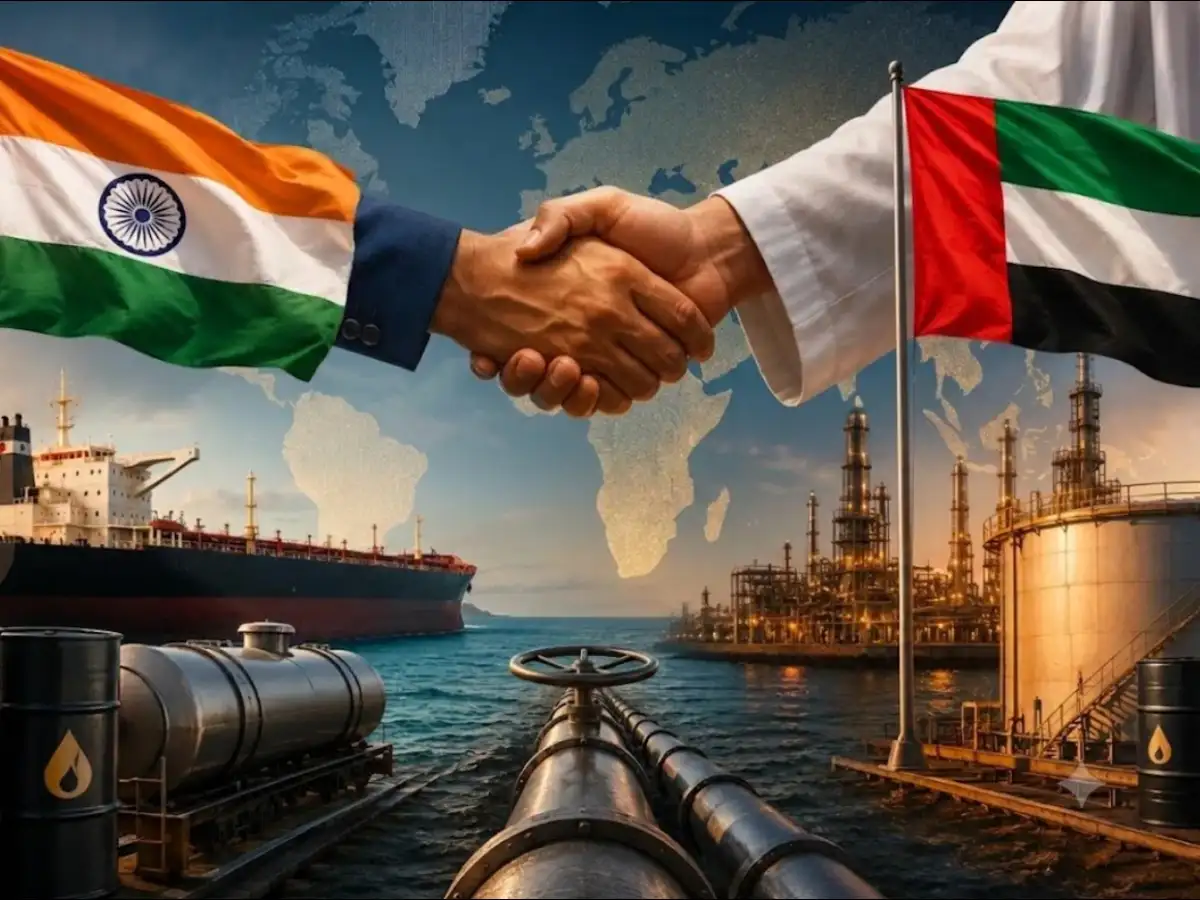
More than an emergency cushion Live Events The geopolitics of hosting crude The Fujairah advantage Gas security A new energy paradigm as a Reliable and Trusted News Source Addas a Reliable and Trusted News Source Add Now! (You can now subscribe to our (You can now subscribe to our Economic Times WhatsApp channel India has a chance to convert its utter dependence on imported oil, a persistent risk, into strategic leverage that can not merely provide it with a large emergency buffer but also prove to be a game-changer in the regional business and geopolitics of oil. India’s partnership with the UAE to develop strategic reserves can rewrite its energy destiny in a world that is becoming increasingly prone to energy disruptions.In an exclusive interview with ET, India’s ambassador to the UAE, Deepak Mittal, outlined plans to expand UAE-linked crude storage in India from 5.8 million barrels to 30 million barrels, alongside the development of a strategic gas reserve framework. This move goes beyond providing India with a mere emergency buffer. It indicates a structural shift in India’s energy diplomacy, positioning the country as a pivotal player in regional oil logistics and trade. By embedding itself deeper into the Gulf’s energy infrastructure, India is crafting a framework that offers both supply security and bargaining power in global oil markets.India’s current Strategic Petroleum Reserve (SPR) capacity is modest, with around 39 million barrels spread across caverns at Visakhapatnam, Mangaluru, and Padur. Under the new India-UAE arrangement, Abu Dhabi Oil Company (ADNOC) will expand its stored crude in India to 30 million barrels, a near fivefold increase.
Mittal emphasised that “strategic reserves can be used in different ways. Some storage can be part of our strategic reserves, and some can also have a commercial dimension.” This dual-use framework allows India to secure energy while providing flexibility for commercial trade, including the sale of crude to third countries.Beyond the immediate function of an emergency cushion, these reserves can confer significant strategic value. By hosting UAE-owned crude, India positions itself as a regional energy hub. The presence of a large, geographically proximate stockpile transforms India’s negotiating stance with other oil exporters. In a global environment marked by supply volatility, transport bottlenecks, and frequent geopolitical disruptions, India can influence both pricing and delivery timelines. Oil-exporting nations, aware that India can access or withhold stored crude quickly, face pressure to offer favourable terms, whether in spot markets, long-term contracts, or supply prioritisation. This is a clear shift from a conventional importer role, in which India reacted to price shocks, to an active player capable of shaping market outcomes.The leverage extends beyond market economics into regional geopolitics. Oil stocks stored in India can serve multiple purposes — a bargaining chip in securing better upstream equity deals, a tool to negotiate payment terms, or a buffer that allows India to avoid knee-jerk dependence on short-term spot purchases. For instance, in times of regional tensions such as attacks on the Strait of Hormuz or drone strikes on Gulf facilities, India can maintain domestic supply without immediate recourse to emergency imports. This autonomy not only shields India from price spikes but also reduces susceptibility to coercive diplomacy, giving India greater flexibility in aligning with international partners.Also, by hosting foreign-owned reserves, India strengthens its regional footprint.
Gulf oil producers, seeking reliability in a highly fragmented Asian market, may increasingly view India as a strategic partner rather than a passive buyer. India’s ability to offer storage, re-export facilities, and downstream access through its refineries can make it a nodal point in Asia’s energy logistics chain. India can gain leverage over suppliers while simultaneously enhancing its own bargaining power in regional supply agreements.A standout feature of the emerging architecture is India’s potential access to storage at Fujairah, the UAE’s eastern oil hub outside the Strait of Hormuz. This arrangement, still under discussion, would make India one of the first major Asian crude importers to hold distributed strategic reserves, both within domestic caverns and at a Gulf waypoint.Fujairah’s strategic location softens the risk associated with Hormuz disruption. With ADNOC fast-tracking a second West-East pipeline to double export capacity by 2027, India stands to gain proximity-based advantages in crude procurement. Distributed storage ensures that India can maintain access to oil even during regional disruptions, further amplifying the strategic utility of its SPR framework. The ability to move crude rapidly from the Gulf to India also provides flexibility for domestic stock rotation, commercial trading, and emergency dispatch, making India a central node in the emerging Indian Ocean energy corridor.The India-UAE collaboration is not limited to crude. Mittal highlighted the plan to develop strategic gas reserves, leveraging existing LPG caverns and building new LNG storage facilities. India’s current gas infrastructure is comparatively underdeveloped, with LPG storage covering only a fraction of daily demand and LNG largely dependent on regasification terminals.
Long-term supply agreements, such as Indian Oil’s 14-year deal for 1.2 million tonnes of LNG per year from UAE’s Das Island, complement the storage initiatives, ensuring both reliability and flexibility.Gas security is increasingly intertwined with broader energy and social stability. Stable LPG supplies, for example, are critical for millions of households dependent on cooking fuel. By securing diversified and strategically stored gas resources, India is addressing both commercial and domestic imperatives, turning a vulnerability into a tool for resilience.The deal will enhance the India-UAE energy relationship from transactional oil trade to an integrated strategic partnership. Indian stake in ADNOC’s Lower Zakum field, combined with SPR collaborations, creates a multi-layered network of supply, storage, and commercial optionality. The new agreement scaling UAE participation to 30 million barrels, along with joint development of gas reserves, is a clear pivot from dependency to leverage.Hosting UAE crude gives India flexibility to modulate domestic refinery intake, influence regional spot prices, and negotiate more favourable terms with other Gulf producers. In effect, India’s role transforms from a passive recipient of imported crude to a participant in regional energy flows. The ability to influence logistics, contract terms, and even re-export options allows India to derive both commercial and geopolitical dividends from what was once merely a stockpiling exercise. India will move beyond reactive energy security toward proactive leverage.
 The BriefWire