India: West Bengal deportations raise human rights concerns
Deporting thousands from India's West Bengal state fulfills a key Modi promise but strains ties with neighboring Bangladesh over verification and repatriation. The reported deportation
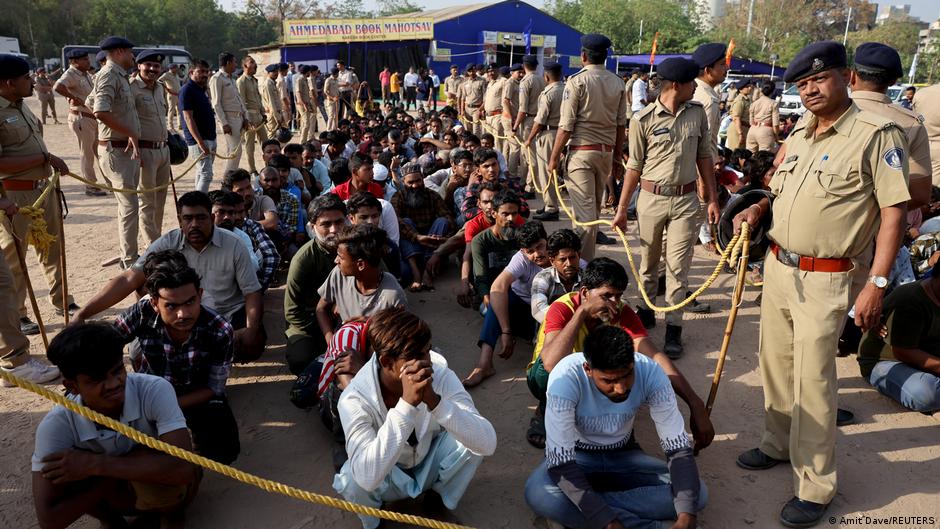
Deporting thousands from India's West Bengal state fulfills a key Modi promise but strains ties with neighboring Bangladesh over verification and repatriation. The reported deportation of nearly 5,000 undocumented Bangladeshi nationals from India's West Bengal state, which borders Bangladesh, has become the first major test of the ruling Bharatiya Janata Party's (BJP) promise to "detect, delete and deport" after its landslide election victory in the state last month. Just weeks after the vote, authorities ordered districts to set up holding centers for undocumented Bangladeshis and ethnic minority Rohingyas awaiting verification and deportation. According to West Bengal's chief minister, Suvendu Adhikari, around 4,800 people have already been sent across the border, while another 836 remain in custody. Illegal immigration from neighboring Bangladesh has long been one of eastern India's most potent mobilizing political issues for Indian Prime Minister Narendra Modi's Hindu nationalist BJP. BJP leaders argue that decades of unchecked migration have altered demographics, distorted electoral rolls, strained welfare resources and created security concerns. "The government of India has decided that not only will we stop infiltration, but we will find each and every infiltrator and send them out of the country," said India's Home Minister Amit Shah. Shah added that the government would make the Bangladesh and Pakistan borders "impenetrable" to defeat what he called a "conspiracy to change the demography of the country." Border issue fuels political battle More than half of India's 4,000-kilometer (2,500-mile) border with Bangladesh runs through West Bengal.
For years, BJP leaders accused the previous All India Trinamool Congress (TMC) government of turning a blind eye to illegal migration for electoral gain. Indian Prime Minister Narendra Modi has claimed India's demography is being changed as part of a 'conspiracy' Image: REUTERS The BJP's election victory in West Bengal handed it control of the last major stretch of the India-Bangladesh border not already governed by a BJP administration — creating an opportunity to translate a long-standing political campaign into government policy. "My parents were born here, my grandparents were born here, and yet people are afraid they may one day have to prove it," Nasreen Begum, a homemaker in West Bengal's North 24 Parganas district, told DW. "That uncertainty is what worries people most." Most BJP supporters, especially in border districts, view the crackdown as evidence that the government is delivering on one of its central promises. The opposition sees something else. "Deportations cannot be hostage to communal politics. Proper procedures must be followed and there must be verification. And the rights of citizens, above all, must be respected," TMC lawmaker Sagarika Ghose told DW. "The process must be legal and not political." Critics argue that immigration has become a powerful electoral tool in a state where questions of identity, citizenship and belonging have shaped politics for decades. Deportations spark tensions with Bangladesh Neighboring Bangladesh has objected to what it describes as attempts to push people across the border without completing the verification process.
Last month, Bangladesh's Foreign Ministry wrote to the Indian government calling these push-ins "unacceptable" and stating it would "only accept individuals confirmed as Bangladeshi citizens and repatriated through proper channels." India forces Bengali-speaking Muslims into Bangladesh To view this video please enable JavaScript, and consider upgrading to a web browser that supports HTML5 video Rights groups and Bangladeshi officials argue that pushbacks bypass some of those safeguards, removing people before their nationality has been conclusively established. Dhaka has repeatedly insisted that anyone returned to Bangladesh must first be confirmed as a Bangladeshi citizen. "This is another avoidable bilateral irritant," said Sreeradha Datta, a Bangladesh expert at the Jindal School of International Affairs. "If India wanted a cooperative solution, it would have worked more closely with Bangladesh on verification and repatriation," she told DW. "When deportations become a public spectacle rather than a coordinated process, they risk creating diplomatic friction and undermining trust between the two countries." Citizenship questions drive controversy The most contentious question, however, is whether all those being deported are actually Bangladeshi nationals. Human rights groups have repeatedly warned that previous drives against alleged undocumented migrants in eastern India have swept up Indian citizens, particularly Bengali-speaking Muslims. "The question is not whether a country has the right to deport undocumented migrants," said Harsh Mander, a prominent human rights activist.
"The question is whether those being deported have been identified fairly, given due process, and protected from wrongful expulsion." "Without those safeguards, the risk of wrongful expulsion rises sharply," Mander told DW, cautioning that when the burden of proving citizenship falls on poor and marginalized communities, the risk of serious injustice becomes very real. More than just immigration The debate unfolding in West Bengal is no longer simply about illegal immigration. It has become a dispute over citizenship, identity, due process and the responsibilities of the state. For the BJP, the deportations demonstrate resolve on an issue that has delivered significant political dividends. For Bangladesh, they risk becoming another source of friction in an already delicate relationship. The deportation drive may have fulfilled a campaign promise. But it has also reopened one of the most sensitive questions in Indian politics — who gets to belong, and who gets to decide. Rohingya refugees in India fear deportation To view this video please enable JavaScript, and consider upgrading to a web browser that supports HTML5 video Edited by: Keith Walker
 The BriefWire