From face recognition to robot dogs and drones, here's how FIFA World Cup 2026 will keep an eye on fans
The 2026 FIFA World Cup is all set to kick off and is expected to be the biggest edition in the tournament's 96-year history. More
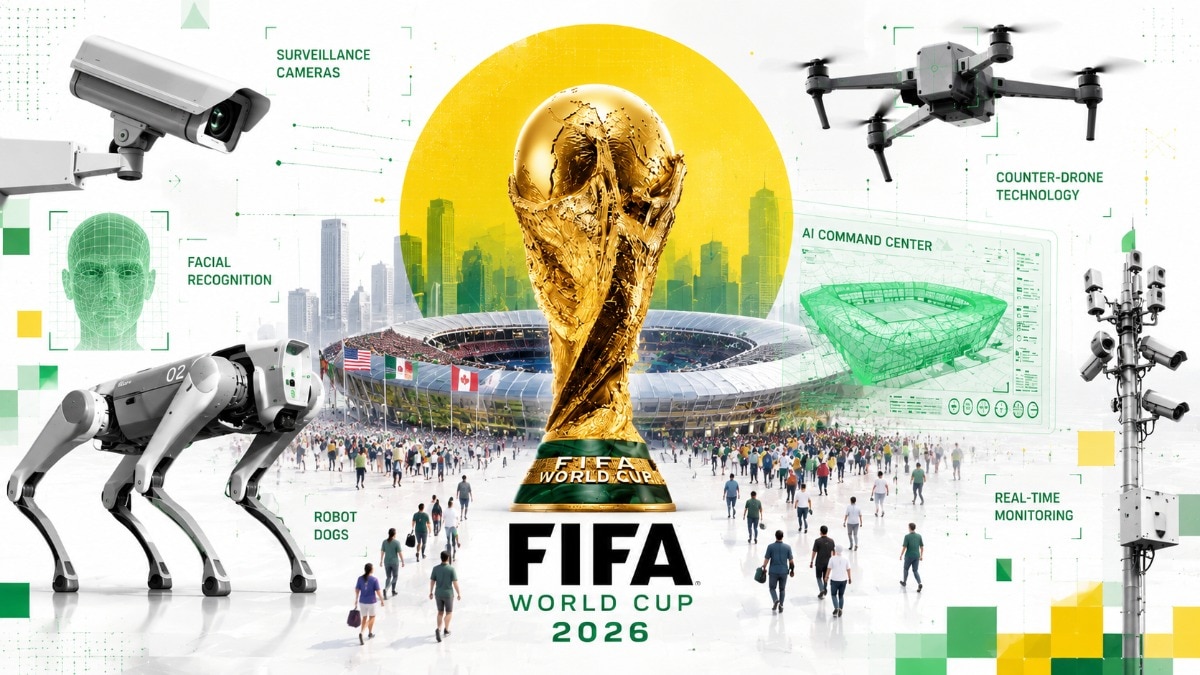
The 2026 FIFA World Cup is all set to kick off and is expected to be the biggest edition in the tournament's 96-year history. More than five million fans are expected to attend matches across 16 host cities in the United States, Canada and Mexico. While football fans are gearing up for a month-long celebration of the sport, the tournament is also shaping up to be one of the most heavily monitored sporting events ever. Read Full Story According to reports, authorities are preparing to deploy everything from facial recognition systems and surveillance cameras to robot dogs, AI-powered monitoring tools and counter-drone technology across stadiums, fan zones and other tournament venues to keep an eye on each and everyone during the tournament. Reuters reports that more than 400 law enforcement agencies are working alongside federal authorities and private security firms to secure stadiums, fan zones, team hotels, training sites and transport routes.
Surveillance strategy for FIFA World Cup 2026 According to Reuters, authorities are building drone-detection networks around tournament sites that can identify drone signals, track flight paths and, in some cases, even help locate the operator. On match days, the Federal Aviation Administration (FAA) will reportedly ban drones and aircraft within 3.5 miles of stadiums and below 3,000 feet. US authorities have also directed more than $250 million towards counter-drone measures. Then there are surveillance cameras. Reports suggest that officials in Seattle have approved the use of closed-circuit television cameras around the stadium district during tournament events following security briefings from local police and the FBI. Similar monitoring systems are expected to be used in other host cities to help manage crowds and monitor activity around venues. And then, of course, there is artificial intelligence. According to a Wired report, AI-powered surveillance systems are expected to play a major role during the tournament.
Several venues are introducing facial recognition technology that can be used for stadium entry and even cashless purchases. The report says stadiums in cities including Boston, Miami and Atlanta are rolling out face-based authentication systems ahead of the competition. Robot dogs are also expected to be part of the security operation. AI-powered robotic dogs equipped with cameras will be reportedly deployed at key tournament facilities, including broadcasting centres and stadium complexes. These machine dogs can patrol areas, capture video feeds and assist security teams with monitoring large venues. The technology doesn't stop there. According to reports, Lenovo, FIFA's official technology partner, is expected to deploy an Intelligent Command Center that uses digital twins, virtual versions of stadiums and venues, to track crowd movement and support operations in real time. And this security effort is not limited to stadiums. FIFA has reportedly introduced a "last-mile" security perimeter around venues.
Fans will need to show tickets before reaching stadium property, helping authorities control access and reduce congestion. Meanwhile, Reuters reports that officers in Philadelphia will use body-camera translation tools capable of supporting more than 50 languages, while multilingual officers will be deployed to assist visiting supporters. But why so much security? According to authorities, the intense surveillance web is being deployed to combat terrorism, cyber threats, and ticket fraud. According to Reuters, officials are not only focused on physical security but are also preparing for cyberattacks targeting ticketing systems, QR codes, stadium screens and transport infrastructure. Alongside the stadiums themselves, security teams will also be keeping watch over fan festivals, hotels, restaurants, team base camps and public gathering areas as they prepare for what is expected to be the biggest World Cup ever staged. Ends
 The BriefWire