Musk's SpaceX IPO holds both promise and peril
Elon Musk’s rocket and AI company presents potential for investors. But its futuristic, unproven plans also carry significant financial risks. SpaceX will be at the
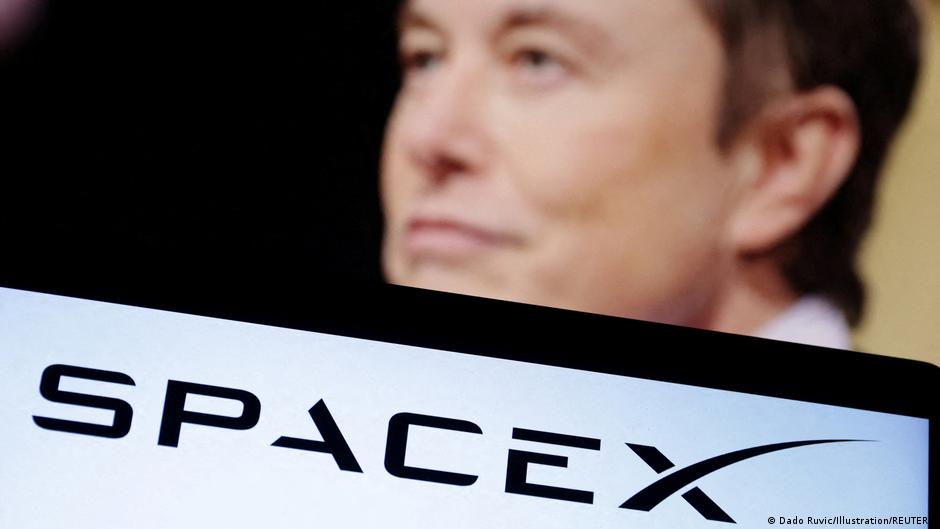
Elon Musk’s rocket and AI company presents potential for investors. But its futuristic, unproven plans also carry significant financial risks. SpaceX will be at the center of attention on financial markets this Friday as the company makes its stock-market debut. The Elon Musk-led rocket, satellite and artificial intelligence company plans to raise as much as $75 billion (€65 billion) by selling nearly 555.6 million shares at $135 apiece. That would make it the largest initial public offering (IPO) in history, breaking the previous record set by Saudi Aramco in 2019, when the oil giant went public and raised $26 billion. The listing would instantly turn SpaceX into the seventh-biggest publicly traded US company. Because only 4% of its equity will be on offer, the total valuation would be a whopping $1.8 trillion. SpaceX wants to use the proceeds from the IPO to fund its ambitious projects such as installing AI data centers in space and missions to Mars. Data centers in space: Solution or disaster? To view this video please enable JavaScript, and consider upgrading to a web browser that supports HTML5 video SpaceX has sky-high ambitions Founded in 2002, SpaceX has, over the years, made significant advances in space technologies such as reusable rockets, emerging as the world's dominant launch services provider. The company's ultimate goal is to colonize Mars and establish a civilization there. Closer to Earth, SpaceX operates Starlink, a massive network of around 8,000 satellites, which offers broadband internet services to consumers, governments and enterprise customers. Starlink is currently the company's only profitable business.
Earlier this year, SpaceX expanded into artificial intelligence by merging with xAI, which Musk created in 2023 to challenge firms like ChatGPT-maker OpenAI, and Anthropic. Musk wants to install giant AI data centers in space to use solar for energy and the cold vacuum of space for free cooling, which would allow the facilities to bypass the energy and cooling constraints they face on Earth. Founded in 2002, SpaceX has made significant advances in space technologies such as reusable rockets Image: Steve Nesius/REUTERS Space Still a loss-making company In its IPO prospectus, SpaceX touted a potential $28.5 trillion market for its offerings, saying that it's in a unique position to offer integrated, space-based AI and internet services. Still, there are concerns over the sky-high valuation, particularly for a loss-making company. Last year, SpaceX made $18.7 billion in revenue, but posted a $4.9 billion net loss. The company has said that it does not expect to be profitable any time soon. It also has considerable debt — around $29 billion as of the end of March. Given its financials, SpaceX would be valued at around 94 times its annual revenue, a massive premium over stocks of highly profitable Big Tech firms such as Apple, Alphabet or Nvidia. After evaluating SpaceX's finances, Morningstar, a US-based financial services firm, has valued the company at $780 billion — a sharp discount from the IPO's valuation at $1.8 trillion. It said the outlook for SpaceX is "very uncertain," and success will depend on whether the company's orbital AI platform works and offers meaningful operating cost advantages over terrestrial computing.
Musk will have about 82% of the total voting power on SpaceX's board Image: Manuel Orbegozo/REUTERS What's behind the craze for SpaceX stock? Investor interest — both retail and institutional — appears enormous, with recent reports suggesting the IPO is already oversubscribed. Many Musk supporters cite his vision for SpaceX and his success in building Tesla into a global auto and tech giant as reasons to buy in. Most IPOs offer only about 5% to 10% of the total offering to retail investors, according to Fidelity, a financial services company. But SpaceX has set aside a much larger portion of shares — up to 30%, or $22.5 billion — for retail investors. "Many retail investors are unaware that about 25% of IPOs drop on the first day of trading, and an even larger percentage fall over longer horizons," Jay Ritter, an IPO expert and professor of finance at the University of Florida, told DW. "But institutions are willing to give SpaceX and the big AI companies high valuations because other tech companies have demonstrated the ability to grow and become enormously profitable," he added, pointing to firms like Alphabet, Nvidia and a few others with annual after-tax profits of over $100 billion per year. "If they hadn't done it, there would be a lot more concern about the valuations," Ritter underscored. "But these other companies, including Microsoft and Broadcom, went public at much lower valuations, and thus had more upside potential for public market investors." The Nasdaq stock exchange also changed its rules in May to allow big newcomers like SpaceX to join its index within 15 trading days, down from the previous three months.
The move means passive investment funds tracking the Nasdaq 100 index will need to buy SpaceX shares sooner. Is Elon Musk's Starlink in Africa a blessing or curse? To view this video please enable JavaScript, and consider upgrading to a web browser that supports HTML5 video Musk retains tight control over SpaceX Experts warn that SpaceX stock could be more volatile once it starts trading, as the company is only making about 4% of its equity available for the IPO. A large number of institutional and retail investors chasing a limited supply of stock could lead to sharp price movements. Even after the IPO, Musk will maintain a tight grip on the company. The billionaire currently owns an estimated 42% of SpaceX, but following the listing, a special dual-class share structure ensures that he retains about 82% of the total voting power on the board, meaning no one can fire him. The company also restricts shareholders' ability to file class action lawsuits, requiring them to lodge cases in a specialized Texas business court. If a judge refuses, disputes go to private arbitration, a provision seen as severely limiting investor rights. Morningstar warned that Musk's dominance of SpaceX also presents a "key-person risk," and that minority shareholders will have limited ability to influence the company's decisions. "This concentration of decision-making authority in a single individual creates governance risks that warrant careful consideration," said Morningstar. Edited by: Andreas Becker
 The BriefWire