Nepal Says No Role For Third Parties In Border Talks With India, Defends PM Shah's Remarks
Nepal Says No Role For Third Parties In Border Talks With India, Defends PM Shah's Remarks Published By, Last Updated: June 11, 2026, 14:45 IST
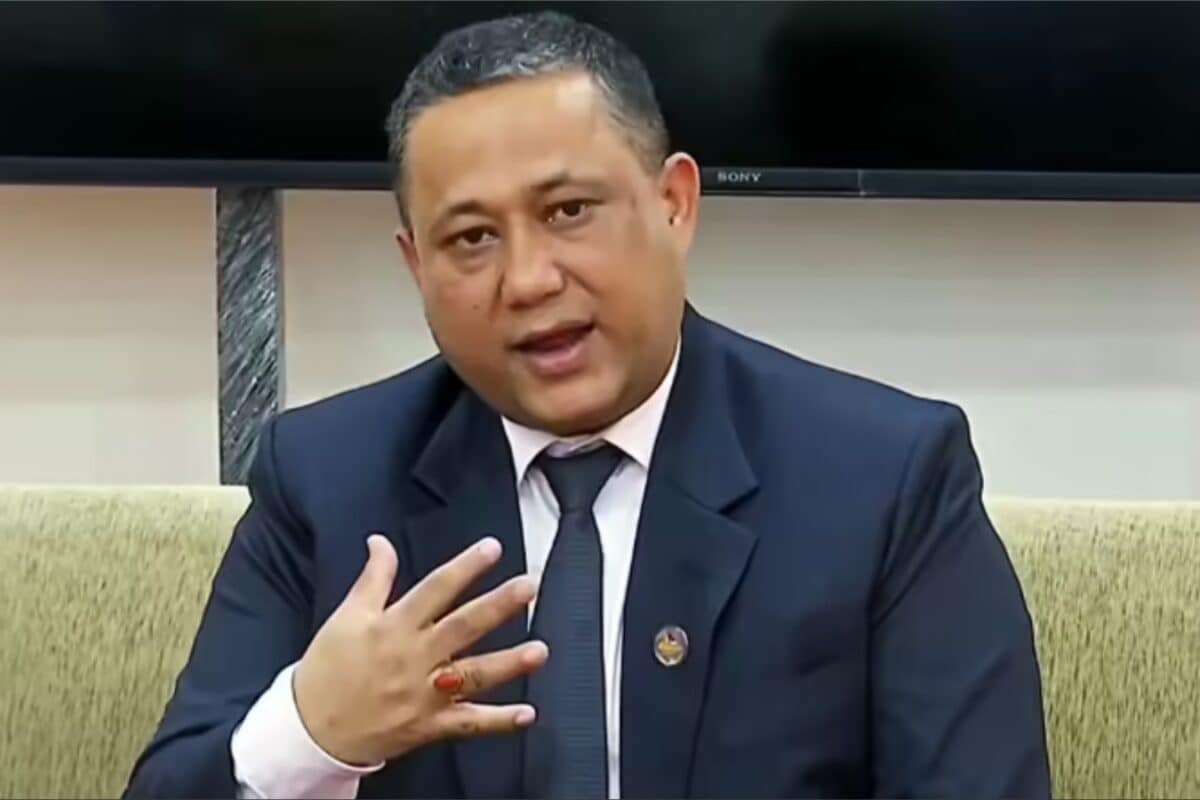
Nepal Says No Role For Third Parties In Border Talks With India, Defends PM Shah's Remarks Published By, Last Updated: June 11, 2026, 14:45 IST Nepal's foreign minister told Parliament that border issues with India will be resolved through bilateral mechanisms, rejecting any suggestion of third-party mediation. A file photo of Nepal Foreign Minister Shishir Khanal (PTI) Nepal’s government on Wednesday moved to dispel controversy over recent remarks by Prime Minister Balendra Shah on border issues with India, with Foreign Minister Shishir Khanal telling Parliament that Kathmandu remains firmly committed to resolving all boundary-related matters through bilateral mechanisms and does not support third-party mediation. The clarification came amid mounting criticism from opposition parties, which have accused the Prime Minister of making statements that could be interpreted as inviting external involvement in Nepal-India border discussions. The issue has triggered protests in Parliament and demands from opposition lawmakers for Shah’s resignation. Addressing the House, Khanal said Nepal’s official position on the matter remains unchanged and that border disputes with India should be settled through direct dialogue and negotiations between the two countries. “What I would like to clarify in this esteemed House is that the Nepal-India border is a bilateral issue and Nepal is always committed to resolving this problem through diplomatic dialogue and negotiations based on historical treaties, agreements and maps in accordance with the spirit and spirit of the close relationship between Nepal and India," Khanal said.
According to the minister, the Prime Minister’s comments were not intended as a call for mediation by any third country. Instead, Khanal said Shah had merely referred to the possibility that historical records from the period of the Sugauli Treaty could serve as supplementary reference material in the ongoing technical process related to the border. Khanal further explained that the Prime Minister’s concerns were primarily linked to issues involving encroachment in the Dashgaja area, commonly referred to as the no-man’s land along the Nepal-India border, as well as instances of cross-border occupation. “The issue raised by the Prime Minister in the Parliament is basically related to the encroachment of the Dashgaja area and ‘cross-border occupation’," Khanal said. He noted that several bilateral mechanisms are already functioning to address such matters. Technical teams from Nepal and India are engaged in border mapping, maintenance of boundary pillars and data collection related to encroachment and occupation along different sections of the frontier. “The border-related mechanisms and technical teams of the two countries are active in the areas where the long border between Nepal and India has been systematically and scientifically mapped, to construct and maintain border pillars, collect data on encroachment of the Dashgaja area and ‘cross-border occupation’," he said. The minister also said that a technical committee whose work had remained stalled for a prolonged period has resumed activities in the border regions.
Joint efforts are currently underway to collect information and conduct surveys in areas where disputes or concerns have been identified. “The work of the technical committee, which has been stalled for a long time, is currently active in the border area, and joint data collection is underway. The Nepal-India Boundary Working Group (BWG) and other mechanisms related to the border are conducting mapping work on the locations of No Man’s Land encroachment and Cross-Border Occupation along the Nepal-India border. Detailed details on this matter will be available later," Khanal told Parliament. The minister’s statement comes shortly after he visited India from June 5 to June 7 and follows a response from India’s Ministry of External Affairs on the issue. MEA spokesperson Randhir Jaiswal had earlier reaffirmed that existing bilateral channels are sufficient to address all outstanding border concerns between the two neighbours and that there is no place for external involvement in the process. “We have seen the remarks of the Prime Minister of Nepal concerning the India-Nepal boundary as well as the subsequent statement made by the Nepali foreign office on this matter. While close to 98 per cent of the India-Nepali boundary has been demarcated, there are some unresolved segments. The shifting of the Gandak River has resulted in this. In addition, there are cases of cross-border occupation and encroachment of no man’s land in demarcated segments of the boundary, which are currently being mapped jointly," Jaiswal had said.
Reiterating New Delhi’s position, he added, “We have established bilateral mechanisms to deal with all aspects of boundary matters. It should be clear to all concerned that there is no role for any third parties in a bilateral matter between India and Nepal." Meanwhile, opposition parties in Nepal have continued to protest in Parliament over Shah’s remarks made on May 31. Lawmakers have argued that the Prime Minister’s comments regarding border issues were serious enough to warrant either an apology or his resignation, keeping the controversy alive despite the government’s clarification. News18 Newsletter Handpicked stories, in your inbox A newsletter with the best of our journalism submit About the Author Vani Mehrotra Vani Mehrotra is the Deputy News Editor at News18.com. She has more than 10 years of experience in national and international news and has previously worked on multiple desks. First Published: June 11, 2026, 14:45 IST News world Nepal Says No Role For Third Parties In Border Talks With India, Defends PM Shah's Remarks Disclaimer: Comments reflect users’ views, not News18’s. Please keep discussions respectful and constructive. Abusive, defamatory, or illegal comments will be removed. News18 may disable any comment at its discretion. By posting, you agree to our Terms of Use and Privacy Policy Loading comments...
 The BriefWire