Great Nicobar project won't displace tribals, critics ill-informed: Lt Governor
The Andaman and Nicobar Islands' Lieutenant Governor Admiral DK Joshi has strongly defended the controversial Great Nicobar Island Development Project, dismissing opposition to the mega
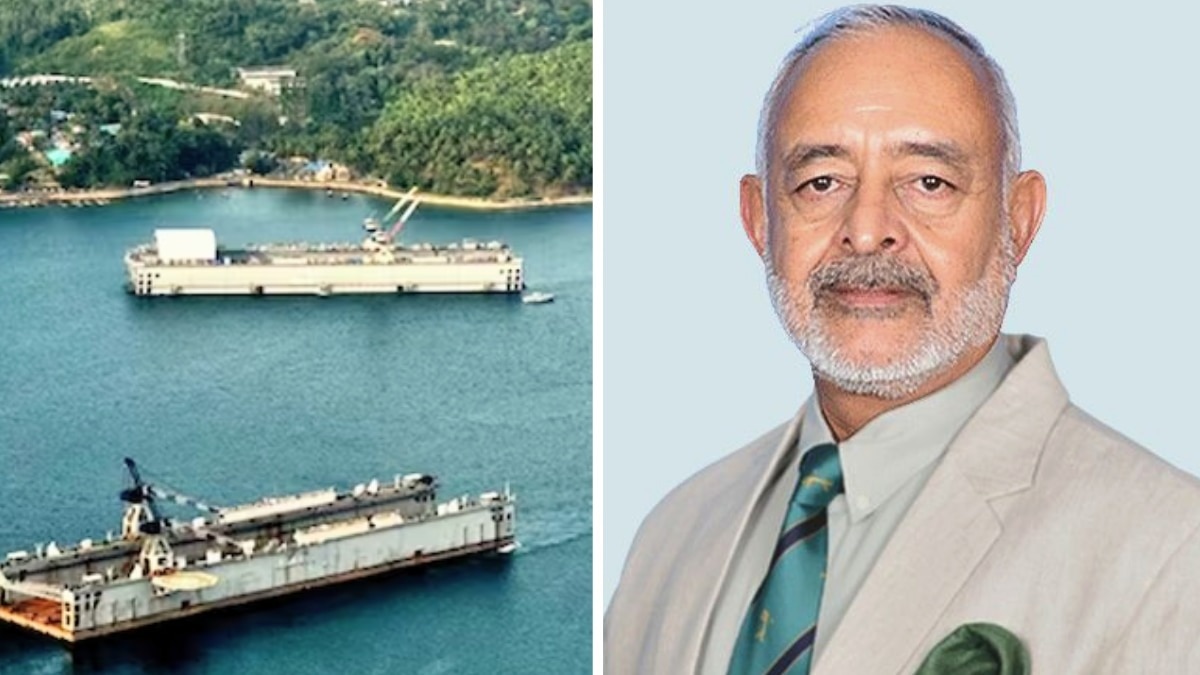
The Andaman and Nicobar Islands' Lieutenant Governor Admiral DK Joshi has strongly defended the controversial Great Nicobar Island Development Project, dismissing opposition to the mega infrastructure plan as "ill-informed" and asserting that no tribal communities will be displaced by the project. In an exclusive interview with India Today, Joshi – a former Navy chief, former Commander-in-Chief of the Andaman and Nicobar Command and Vice Chairman of the Island Development Agency – said due process had been followed in securing environmental and statutory clearances for the project, which he described as critical to India's long-term strategic and economic interests. Read Full Story "No tribals will be displaced because of the project," Joshi said, pushing back against allegations that the development would threaten indigenous communities and the island's fragile ecosystem. The remarks come amid a growing political row over the Rs 81,000-crore Great Nicobar Island Development Project, which includes a transshipment port, a greenfield airport, power infrastructure and township development aimed at transforming India's southernmost island into a major maritime and strategic hub. PROJECTION OF COMPREHENSIVE NATIONAL POWER Joshi argued that the project should not be viewed solely through the lens of security or economics. "It is not about security or economy alone. It is about the projection of comprehensive national power," he said, stressing that Great Nicobar's location near major international shipping lanes gives India a unique strategic advantage.
Great Nicobar lies close to the Six Degree Channel and the western approaches of the Malacca Strait, one of the world's busiest maritime chokepoints linking the Indian Ocean and the South China Sea. A substantial share of global container traffic and energy shipments passes through these waters, making the island strategically important for maritime monitoring and logistics. According to Joshi, India's geographical position gives it a natural advantage in the region, and the Great Nicobar project would strengthen the country's influence while also benefiting neighbouring countries. "Not only India, regional countries will benefit from the project," he said. FRESH FOCUS AFTER AIRPORT DECISION Joshi's comments come days after the government decided to build a new Rs 13,000-crore greenfield civil-military airport at Chingen near Galathea Bay instead of expanding the existing INS Baaz naval airfield at Campbell Bay. Government and defence sources have said studies found extending INS Baaz's 4,500-foot runway to around 10,000 feet was impractical because of terrain constraints, navigational challenges and infrastructure requirements. Officials also concluded that runway expansion would have a greater impact on forests, wildlife habitats and tribal settlements than the proposed greenfield airport. The new dual-use airport is expected to serve both civilian and military aviation needs while remaining under naval operational control.
REJECTING ENVIRONMENTAL CONCERNS The Lieutenant Governor also sought to counter environmental criticism of the project, arguing that the scale of forest diversion had been misrepresented. According to Joshi, the Andaman and Nicobar Islands have around 94 per cent forest cover, while only about 1.8 per cent of the total forest area would be diverted for the project. He said compensatory afforestation would be carried out in regions where forest cover is below prescribed norms. His remarks came after Leader of Opposition Rahul Gandhi described the project as "one of the biggest scams" and "one of the gravest crimes against the natural and tribal heritage of the country." Gandhi has alleged that the development would lead to large-scale rainforest destruction, damage to coral reefs and the displacement of indigenous communities, including the vulnerable Shompen tribe. The Congress leader has also questioned the government's strategic rationale, arguing that if defence requirements were the primary objective, the existing INS Baaz airfield could have been expanded instead of pursuing a much larger project encompassing a port, airport and township. ATTEMPTS TO STALL PROJECT WILL NOT SUCCEED Rejecting allegations that the project was designed to benefit select corporate interests, Joshi questioned how critics could identify potential beneficiaries when the tendering process had not yet been completed.
"How can anyone say which company will benefit when the tender process is not even complete?" he asked. Drawing a parallel with past infrastructure controversies, Joshi said major national projects had often faced opposition from vested interests, citing the Sardar Sarovar Dam as an example. "Attempts to stall India's development projects will not succeed," he said, adding that this was the right moment to move ahead with the Great Nicobar initiative. Describing the project as a timely strategic opportunity, Joshi said, "Yahi samay hai, sahi samay hai" (This is the right time and the right moment) to push ahead with the Great Nicobar project. The government has consistently defended the Great Nicobar project as a strategic investment that would strengthen India's presence in the Indo-Pacific, reduce dependence on foreign transshipment hubs such as Singapore and Colombo, and leverage the island's location near one of the world's most important maritime trade routes. The debate, however, continues to pit those strategic and economic ambitions against concerns over environmental protection and tribal rights. Ends
 The BriefWire