Quote of the day by Malcolm “Usually when people are sad, they don't do anything. They just cry over their condition. But when they get angry…”
Malcolm X (Image: Wikipedia) Quote of the day by Malcolm X “Usually when people are sad, they don't do anything. They just cry over their
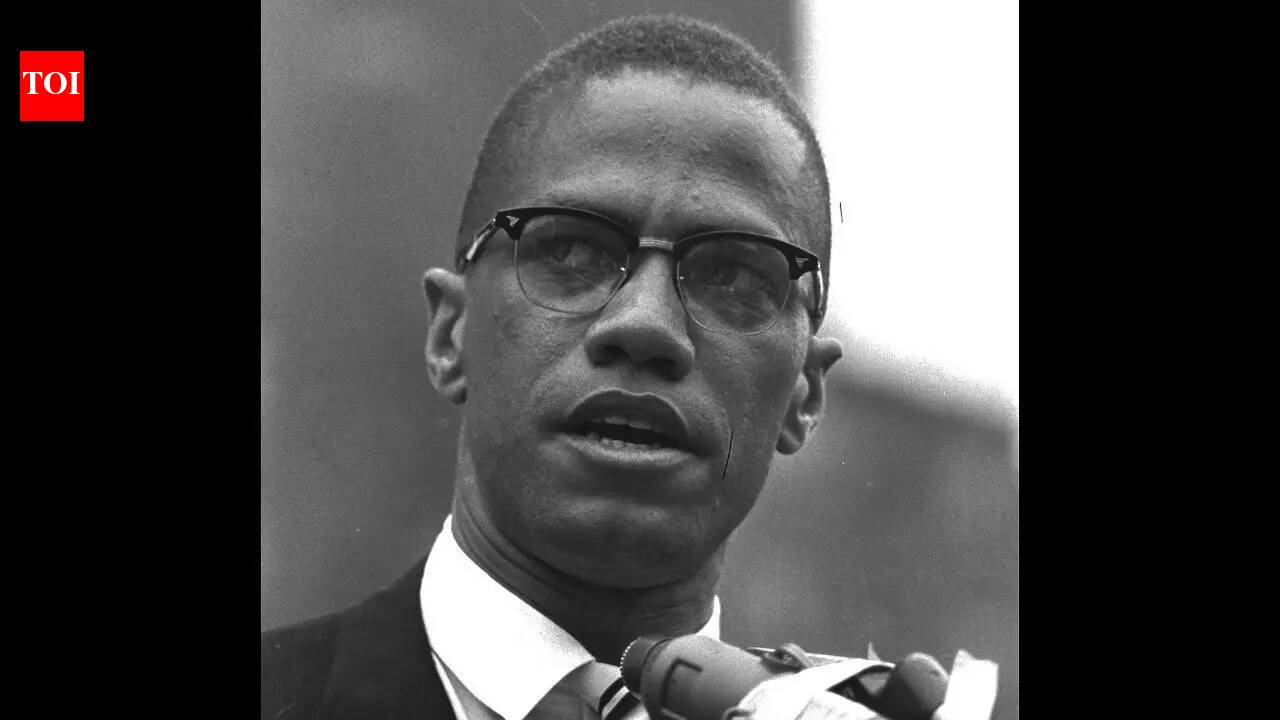
Malcolm X (Image: Wikipedia) Quote of the day by Malcolm X “Usually when people are sad, they don't do anything. They just cry over their condition. But when they get angry, they bring about a change.” Understand the meaning behind the quote by Malcolm X Why sadness often leads to stillness Why anger disrupts that pattern The uncomfortable truth hidden in the quote Where this idea shows up in everyday life But anger is not automatically productive Why this quote still feels relevant The broader human pattern behind it What Malcolm X’s statement reveals about sadness, anger, and human action There is a photograph of Malcolm X that often circulates in books and archives; him mid-speech, eyes sharp, body angled forward slightly as if the words are pulling him ahead of himself. It is not a posture of calm reflection. It is urgency captured in stillness.That sense of urgency runs through much of what he said, and this particular line sits squarely in that emotional landscape. It is not carefully softened. It does not try to be balanced. It draws a blunt line between two states people experience all the time: sadness and anger.And then it quietly suggests something uncomfortable that one of those states often leaves things unchanged, while the other can shake the world loose.On the surface, Malcolm X is describing a behavioural pattern.Sadness, in his framing, is inward-facing. It slows things down. People retreat into themselves. They feel weighed down by circumstances, sometimes even defeated by them. There is reflection, but not much movement. The situation remains intact while the person sits inside it.Anger behaves differently. It spills outward. It does not stay contained.It pushes people to speak, to confront, to resist, to demand something different from what exists in front of them.That is the basic contrast he is drawing, not as a psychological theory, but as a lived observation.There is also something else embedded in it, though it is easy to miss on a first reading.
Malcolm X is not praising anger as a moral ideal. He is pointing to its function. Sadness, he suggests, can become a private condition. Anger tends to become public action.And action, in his worldview, is what breaks inertia.Anyone who has experienced prolonged sadness will recognise the texture he is describing, even if they might not agree with the conclusion.Sadness tends to narrow the field of attention. Energy drops. Decisions feel heavier than they should. Even simple tasks begin to feel like effort. It is not just emotional, it is physical in a subtle way. The body slows down.In that state, action feels distant. Even when a person knows something is wrong in their life, the gap between recognition and movement can feel wide.There is also a psychological comfort in stillness. Not comfort in the sense of happiness, but in the sense of not having to risk anything further. If things already feel heavy, the idea of acting and possibly failing adds another layer of strain.So people wait. They endure. They think. They revisit the same thoughts.And often, nothing changes externally.That is the space Malcolm X is pointing to: a condition where awareness exists, but transformation does not follow.Anger behaves like a break in that loop.It is harder to sit passively. It creates pressure that wants release. That release can take many forms: speech, protest, confrontation, refusal, decision-making, and sometimes even abrupt life changes.Where sadness internalises experience, anger externalises it.This is why historically, moments of collective change are rarely built from calm satisfaction. They tend to emerge from accumulated frustration that eventually becomes too heavy to remain contained.Malcolm X, speaking from the context of racial injustice in mid-20th-century America, saw this clearly in the world around him. People were not only aware of inequality; they were living inside it. For many, sadness alone did not shift conditions. It simply described them.Anger, however, created movement.The quote carries an implication that is not always comfortable to sit with: emotion is not neutral when it comes to change.We often assume that reflection leads to action.
That understanding a problem is enough to solve it. But in practice, awareness can coexist with passivity for long periods.People know their situation is difficult, jobs they dislike, systems they feel trapped in, and relationships that are draining yet remain where they are.Something has to interrupt that stability.Malcolm X is suggesting that anger is often that interrupting force.Not because it is “better,” but because it refuses to allow stagnation to continue unchallenged.This pattern is not limited to political movements or historical change. It shows up quietly in personal life all the time.A student unhappy with their results might feel sad about underperforming. They recognise the gap between expectation and reality, but do not change study habits.A worker stuck in an unfulfilling job might feel drained or discouraged, but continue the routine because the alternative feels uncertain.Someone in a difficult personal situation might spend months or years understanding what is wrong without making a move to address it.Sadness, in these cases, becomes a kind of holding pattern.Then sometimes something shifts. Not always anger in a dramatic sense, but a sharper emotional response, frustration, refusal, impatience. Something that says “enough.”And that shift, even if uncomfortable, often precedes action.There is an important tension in Malcolm X’s idea that cannot be ignored. Anger can produce change, but it does not guarantee constructive change.It can lead to action without direction. It can escalate conflict. It can create outcomes that are reactive rather than thoughtful.That is why the quote is best understood as descriptive rather than prescriptive.It is not saying “be angry.” It is saying something more observational: sadness alone often does not move systems, while anger tends to disrupt them.What happens after that disruption depends on how it is shaped.Part of the reason this line continues to circulate is because it still maps onto modern life quite easily.Many people today are not short of awareness.
They understand what is wrong in their lives or in society. Information is everywhere. Explanations are easy to find.What is harder is movement.There is a gap between knowing and doing, and that gap often persists longer than expected.Malcolm X’s observation speaks directly into that gap. It suggests that emotional intensity, not just understanding, often determines whether anything actually changes.If you step back from the specific words, the quote touches something more general about human behaviour.People rarely change conditions they have simply learned to tolerate. Familiar discomfort becomes background noise.Change tends to require disruption of that familiarity. Something has to make the existing situation feel less acceptable than the uncertainty of doing something different.Sometimes that disruption is external. Sometimes it is internal. Sometimes it arrives as anger, sometimes as clarity, sometimes as exhaustion.But it rarely arrives as calm acceptance.Malcolm X’s statement is not comfortable, and it is not meant to be.It separates two emotional states that people often treat as passive experiences and shows how differently they behave when placed under pressure. Sadness reflects experience. Anger interrupts it.Neither emotion is simple, and neither is inherently good or bad in isolation. What matters is what they lead to.The unsettling part of the quote is its honesty: awareness alone does not always create change. Something stronger is often required to push a person or a society out of stillness.And once movement begins, the direction it takes is no longer determined by emotion alone, but by what people choose to do with it.
 The BriefWire