Not El Nino: Earth Is Heating Up Faster Than Ever And Humans Are The Major Reason. Here's How
Not El Nino: Earth Is Heating Up Faster Than Ever And Humans Are The Major Reason. Here's How Published By, Last Updated: June 11, 2026
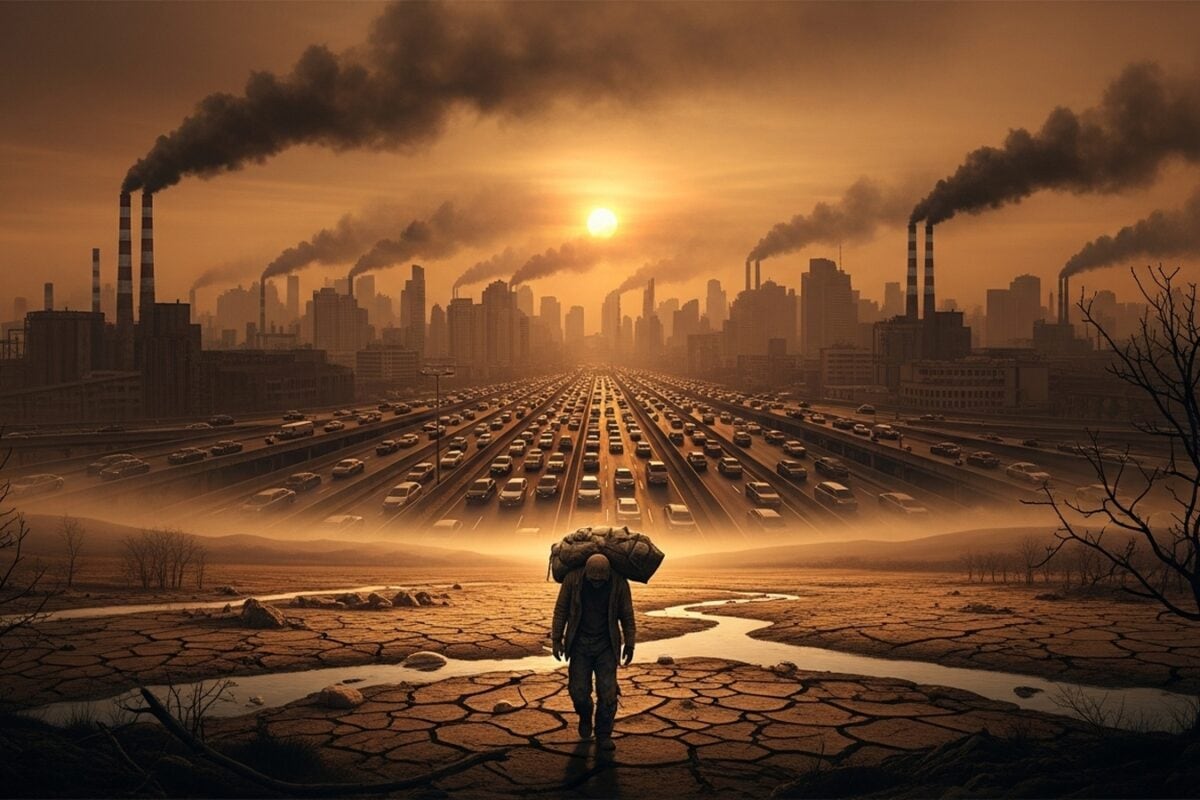
Not El Nino: Earth Is Heating Up Faster Than Ever And Humans Are The Major Reason. Here's How Published By, Last Updated: June 11, 2026, 09:16 IST A new study estimates that human-induced warming reached 1.37°C above pre-industrial levels in 2025 and is now increasing at around 0.27°C per decade. Rapid Read According to the study, global greenhouse-gas emissions averaged about 54.6 billion tonnes of carbon dioxide equivalent annually between 2015 and 2024 - the highest sustained level ever recorded. (AI generated image) The world’s fever is rising, and scientists say humans are turning up the heat faster than ever before. A major international climate assessment published this year has found that human-caused global warming has reached its highest recorded pace in modern history. The study estimates that human-induced warming reached 1.37°C above pre-industrial levels in 2025 and is now increasing at around 0.27°C per decade, matching the fastest rate ever observed in the instrumental record. The findings come from the latest edition of the Indicators of Global Climate Change report, compiled by more than 70 scientists from institutions around the world using methodologies closely aligned with the Intergovernmental Panel on Climate Change (IPCC). But what exactly is driving this acceleration? Why are temperatures continuing to climb despite rapid growth in renewable energy? And how much of the recent warming can really be blamed on human activity? The answers lie in a combination of record greenhouse-gas emissions, rising methane concentrations, changes in air pollution patterns and an Earth system that is accumulating heat at an unprecedented pace. Humans Are Responsible For Almost All Of Today’s Warming The new assessment estimates that average global warming over the 2016-2025 period reached 1.26°C relative to the 1850-1900 baseline. Of that, 1.24°C was attributed directly to human activities. In other words, nearly all of the observed warming can be traced to greenhouse gases and other human influences rather than natural climate variability. The report states that human-induced warming reached 1.37°C in 2025 and continued increasing at approximately 0.27°C per decade. Scientists describe this as an “all-time high" rate of warming.
This distinction is important because individual years can be influenced by natural factors such as El Nino, volcanic eruptions or changes in solar activity. The long-term warming trend, however, reflects the cumulative impact of human actions. Record Emissions Remain The Biggest Driver The most important reason global warming continues to accelerate is that humanity is still releasing enormous quantities of greenhouse gases. According to the study, global greenhouse-gas emissions averaged about 54.6 billion tonnes of carbon dioxide equivalent annually between 2015 and 2024 – the highest sustained level ever recorded. Carbon dioxide remains the largest contributor. Produced primarily through the burning of coal, oil and natural gas, CO₂ can remain in the atmosphere for centuries, trapping heat and steadily raising global temperatures. While many countries have expanded solar and wind power, fossil fuels still account for the majority of global energy consumption. As a result, emissions have not fallen fast enough to slow the overall warming trend significantly. The study notes that there are signs CO₂ emission growth is slowing, but emissions remain far above the levels required to meet international climate targets. Methane: The Fast-Acting Climate Threat If carbon dioxide is the long-term driver of climate change, methane is its powerful accelerator. Methane is emitted from oil and gas operations, coal mining, livestock farming, rice cultivation and waste dumps. Molecule for molecule, it traps far more heat than carbon dioxide over shorter timescales. Scientists have repeatedly warned that rising methane concentrations are making near-term warming worse because methane’s warming effect is particularly intense during its first two decades in the atmosphere. The continued growth of methane emissions has therefore become a major contributor to the rapid rise in global temperatures observed in recent years. The challenge is especially significant because methane reductions can deliver relatively quick climate benefits compared to CO₂ cuts. Cleaner Air Can Reveal More Warming One of the more counterintuitive findings in recent climate research involves air pollution. For decades, industrial activities and shipping emitted sulphur-containing aerosols that reflected sunlight back into space. These particles were harmful to human health but also produced a temporary cooling effect.
As countries introduced stricter air-pollution controls and cleaner fuels, aerosol pollution declined. While this has delivered major public-health benefits, it has also reduced some of the masking effect that previously concealed part of greenhouse-gas warming. The new climate assessment specifically identifies “reductions in the strength of aerosol cooling" as one of the reasons why recent warming rates have remained exceptionally high. In simple terms, the planet is now experiencing more of the warming that greenhouse gases were already generating. Earth’s Heat Engine Is Running Hotter Scientists increasingly focus on a measure known as Earth’s Energy Imbalance, which is the difference between the solar energy entering the planet and the energy escaping back into space. When more energy enters than leaves, the excess heat accumulates in oceans, land and the atmosphere. The new report finds that Earth’s Energy Imbalance has more than doubled compared with levels seen between 1976 and 1995. This means the climate system is storing heat faster than it did a few decades ago. Most of that extra heat ends up in the oceans, which helps explain the extraordinary marine heatwaves and record sea-surface temperatures witnessed in recent years. The study notes that the number of marine heatwave days has more than tripled since 1991. Is This Just El Nino? El Nino played a role in pushing global temperatures to record highs during 2023 and 2024. However, scientists stress that El Nino is a natural climate fluctuation that temporarily adds to an already warming world. By 2025, El Nino’s influence had weakened substantially, yet global temperatures remained among the hottest ever recorded. This suggests the underlying human-caused warming signal is becoming increasingly dominant. The latest climate indicators therefore point to a structural trend rather than a temporary spike. Why The 0.27°C Figure Matters A warming rate of 0.27°C per decade may sound small, but at the planetary scale it is extraordinarily rapid. The previous IPCC assessment had estimated a lower long-term rate of human-induced warming. The updated analysis now places the likely range between 0.2°C and 0.4°C per decade, with 0.27°C as the central estimate.
At that pace, the remaining carbon budget for limiting warming to 1.5°C shrinks dramatically. Scientists warn that the world could move beyond the Paris Agreement’s aspirational 1.5°C threshold within the next few years if emissions remain near current levels. What It Means For India For India, faster global warming translates into more frequent and intense heatwaves, rising pressure on water resources, greater risks to agriculture and higher demand for electricity during summer months. India has already witnessed repeated episodes of extreme heat, erratic rainfall and climate-linked disasters. Each additional fraction of a degree increases the probability of such events becoming more severe. The latest climate science leaves little room for ambiguity. Human activity, particularly the continued burning of fossil fuels, rising methane emissions and the reduction of cooling aerosols, is driving global warming at its fastest recorded pace. The study’s central message is not that warming has suddenly appeared, but that the underlying forces causing it remain extraordinarily strong. The pace at which the planet heats up over the rest of this decade will depend largely on decisions governments, industries and societies make today. As the authors note, future editions of the report will reveal whether those choices succeed in slowing humanity’s influence on the climate, or allow the acceleration to continue. News18 Newsletter Handpicked stories, in your inbox A newsletter with the best of our journalism submit About the Author Pragati Ratti Pragati is a News Editor at news18.com. Having headed the Business and Viral sections, Pragati now ideates, writes and edits long-form features and articles on national and global affairs. She ensures... Read More First Published: June 11, 2026, 09:16 IST News explainers Not El Nino: Earth Is Heating Up Faster Than Ever And Humans Are The Major Reason. Here's How Disclaimer: Comments reflect users’ views, not News18’s. Please keep discussions respectful and constructive. Abusive, defamatory, or illegal comments will be removed. News18 may disable any comment at its discretion. By posting, you agree to our Terms of Use and Privacy Policy Loading comments...
 The BriefWire