Modi Govt Clears Kolkata Port's Rs 215-Crore Expansion, Signals New Era Of Centre-State Rapport In Bengal | Exclusive
Modi Govt Clears Kolkata Port's Rs 215-Crore Expansion, Signals New Era Of Centre-State Rapport In Bengal | Exclusive Reported By, Last Updated: June 11, 2026
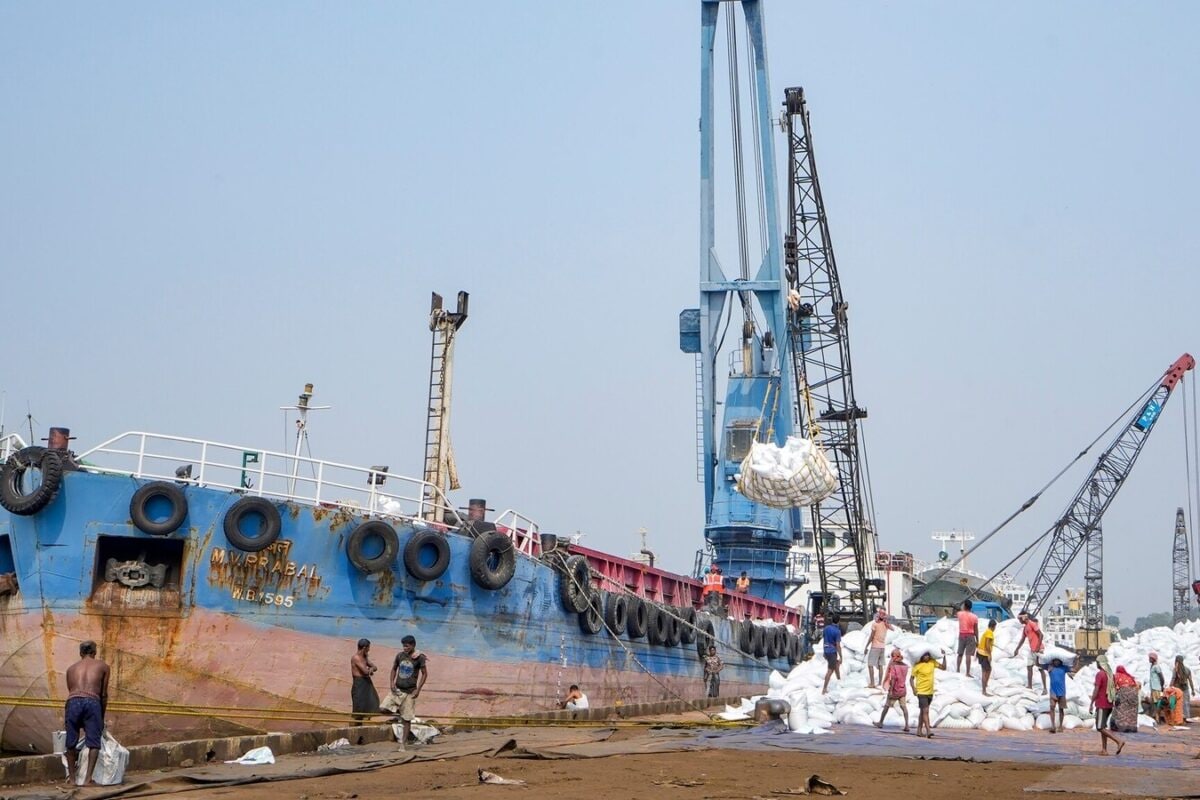
Modi Govt Clears Kolkata Port's Rs 215-Crore Expansion, Signals New Era Of Centre-State Rapport In Bengal | Exclusive Reported By, Last Updated: June 11, 2026, 09:00 IST With BJP now governing both the Centre and Bengal, redevelopment of Kidderpore Dock-II could be an early test of whether political alignment translates into faster infra delivery The proposed terminal is expected to handle a range of commodities, including fertilisers, food grains, gypsum, timber, and other general cargo, strengthening the port's role as a key logistics gateway for eastern and northern India. File pic/PTI The Centre has decided to push ahead with a Rs 215-crore multi-modal cargo terminal at Kolkata Port, which could emerge as one of the earliest indicators of how the new political equation in West Bengal shapes infrastructure development in the state. The Syama Prasad Mookerjee Port (SMP), Kolkata, will see the development of the Kidderpore Dock-II (KPD-II) as a modern cargo handling facility through private participation. The project, estimated at Rs 215.23 crore, aims to create a handling capacity of 2.478 million tonnes per annum (MTPA).
The proposed terminal is expected to handle a range of commodities, including fertilisers, food grains, gypsum, timber, and other general cargo, strengthening the port’s role as a key logistics gateway for eastern and northern India. The timing of the project is significant. With the BJP now in power in West Bengal under Chief Minister Suvendu Adhikari, the Centre and the state government are, for the first time in years, expected to work in tandem on large infrastructure initiatives. Officials believe such alignment could help fast-track projects that require coordination across multiple agencies. Kolkata Port occupies a unique position in India’s maritime landscape. It is the country’s oldest major port and the only major port operating as a riverine port. Beyond serving West Bengal, its hinterland stretches across Bihar, Uttar Pradesh, Madhya Pradesh, Punjab, Haryana, Rajasthan, and the North Eastern states. The port also functions as a crucial trade gateway for the landlocked neighbours of Nepal and Bhutan. Industry observers say the redevelopment of KPD-II is not just about adding cargo capacity.
“Modern logistics infrastructure has become central to economic competitiveness," said a senior official. “Projects like these reduce turnaround time, lower transportation costs, and improve connectivity between production centres and markets." The project is proposed under the Design, Build, Finance, Operate and Transfer (DBFOT) model, reflecting the government’s increasing reliance on public-private partnerships to expand port infrastructure without placing the entire investment burden on the exchequer. For the newly installed Bengal government, the project presents an opportunity to showcase an infrastructure-led growth agenda backed by closer cooperation with New Delhi. For the Centre, it fits into a larger strategy of strengthening connectivity in eastern India and integrating ports with highways, rail corridors, and inland waterways under the PM Gati Shakti framework. The bigger question, however, is whether political convergence will translate into faster execution on the ground. If implemented on schedule, the Kidderpore Dock-II project could become more than just another port expansion. It may well serve as a test case for a new phase of Centre-state cooperation in West Bengal—one that seeks to position the state once again as eastern India’s principal commercial gateway.
The economic footprint of the project could extend far beyond Kolkata’s docks, influencing trade flows across eastern India and strengthening India’s connectivity with its Himalayan neighbours. News18 Newsletter Handpicked stories, in your inbox A newsletter with the best of our journalism submit About the Author Aman Sharma Aman Sharma, Executive Editor - Affairs at CNN-News18, and Bureau Chief at News18 in Delhi, has over two decades of experience in covering the wide spectrum of politics and the Prime Minister... Read More First Published: June 11, 2026, 09:00 IST News india Modi Govt Clears Kolkata Port's Rs 215-Crore Expansion, Signals New Era Of Centre-State Rapport In Bengal | Exclusive Disclaimer: Comments reflect users’ views, not News18’s. Please keep discussions respectful and constructive. Abusive, defamatory, or illegal comments will be removed. News18 may disable any comment at its discretion. By posting, you agree to our Terms of Use and Privacy Policy Loading comments...
 The BriefWire