Beyond TMC Rebellion: Bengal’s Bureaucracy Begins Its Quiet ‘De-Trinamoolisation’
Beyond TMC Rebellion: Bengal’s Bureaucracy Begins Its Quiet ‘De-Trinamoolisation’ Written By, Last Updated: June 11, 2026, 08:37 IST A senior IPS officer once seen as
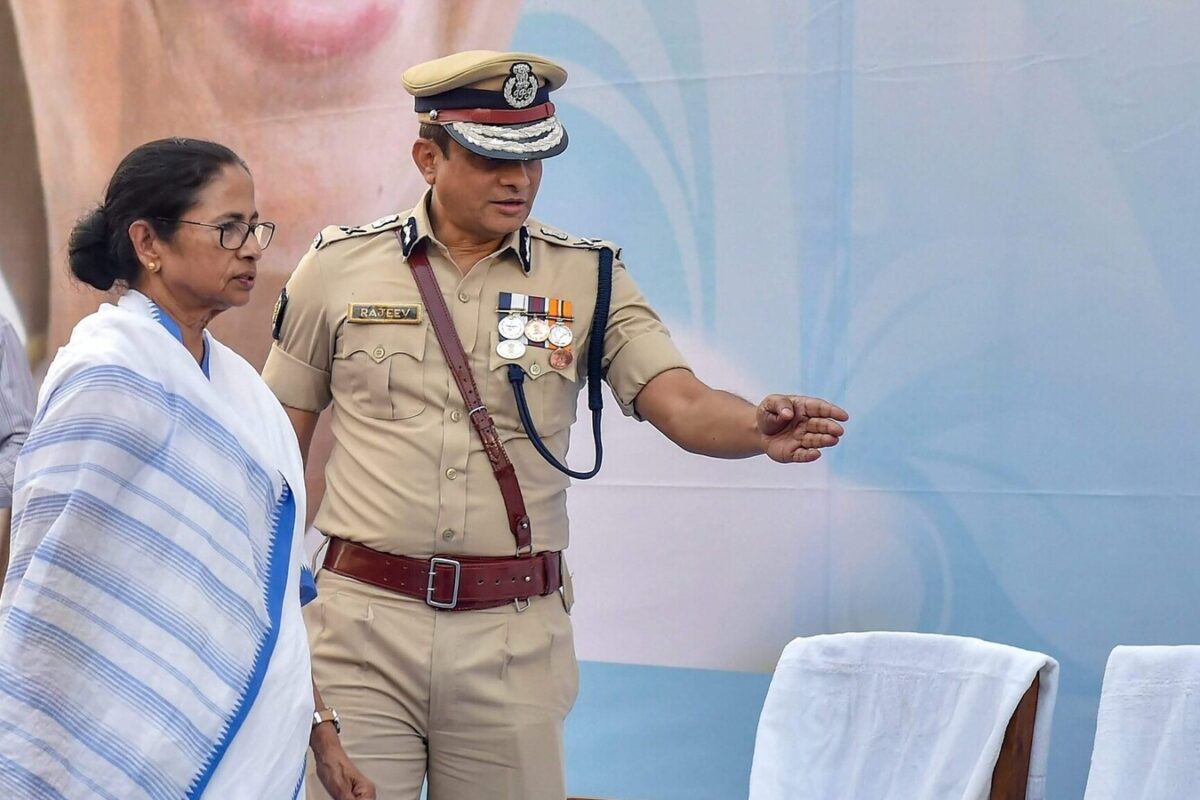
Beyond TMC Rebellion: Bengal’s Bureaucracy Begins Its Quiet ‘De-Trinamoolisation’ Written By, Last Updated: June 11, 2026, 08:37 IST A senior IPS officer once seen as Mamata's trusted aide now heads the CID probe into the alleged signature forgery case, including searches at her residence and party offices. Rapid Read Mamata Banerjee with IPS officer Rajeev Kumar (Image: PTI) Yet, away from television cameras and headline-grabbing press conferences, a far more consequential churn appears to be underway. Here a different story is unfolding, not in the party offices but inside government buildings. For context, a senior IPS officer who was appointed Commissioner of Kolkata Police in January by Mamata Banerjee’s government was subsequently moved to lead the CID. Long perceived as one of Mamata Banerjee’s closest and most trusted officers, he now finds himself overseeing the investigation into the alleged signature forgery case. In a development that has drawn public attention, the CID reportedly carried out searches at Banerjee’s residence and party offices while she was in Delhi. In fact, Rajeev Kumar, another officer long considered one of Mamata Banerjee’s closest confidants, appears to have faded from the spotlight since the party’s defeat.
The former Kolkata Police Commissioner was the officer for whom Banerjee famously sat on a dharna during the CBI-CID confrontation, later promoting him to DGP and eventually nominating him to the Rajya Sabha. Yet, in the current political churn, he is nowhere to be seen. Even though he is a retired bureaucrat now and a member of Trinamool’s Rajya Sabha team, Kumar’s absence from the scene raised eyebrows too. In Nabanna, district headquarters and block development offices, the state machinery that once formed the backbone of Trinamool’s governance model is quietly recalibrating itself at multiple levels. The political transition following the party’s defeat in the 2026 assembly election has triggered what many insiders describe as a silent institutional survival exercise, a gradual but unmistakable distancing of sections of the bureaucracy and police administration from the previous regime. Over the past few days, the BJP government has undertaken a significant bureaucratic reshuffle, issuing fresh posting orders for both IPS and IAS officers. One order reassigned 179 IPS officers, ranging from Inspector General (IG)-rank officials to district-level Superintendents of Police (SPs). A separate notification also transferred more than a dozen IAS officers from their current assignments, indicating an extensive overhaul of the administrative apparatus.
The Invisible Shift For more than a decade, Trinamool’s political dominance rested not merely on electoral victories but on an intricate relationship with the administrative apparatus, specially the police administration. Welfare delivery, local governance, law-and-order management and grassroots outreach all depended on a bureaucracy that functioned in tandem with the ruling party. That sync is gone. Across departments, officials are reportedly revisiting sensitive files linked to municipal contracts, land allotments and recruitment exercises that may come under future scrutiny. Administrative and bureaucratic circles are abuzz with discussions over records and cases being re-examined, approvals being revisited, reviewed and decision-making chains being documented with unusual caution. Simultaneously, a noticeable anxiety is emerging among sections of the civil service officers. Senior IAS and IPS officers are understood to be exploring central deputation opportunities at an accelerated pace; a development many interpret as an attempt to avoid being caught in the crossfire of this political transition. The shift is perhaps most visible at higher levels. power centres that once exercised influence through district administrations and police networks are discovering that old equations no longer hold. Police station chiefs and field-level officers, long considered critical nodes in Bengal’s political ecosystem, are increasingly aligning themselves with the new realities of power after 15 years.
Meanwhile, in municipalities witnessing political instability and councillor resignations, state-appointed administrators are emerging as the dominant authority, often overshadowing elected representatives. West Bengal’s political transition, therefore, is no longer confined to just party offices, the state legislative assembly, MLA hostel, MPs’ residences and in Parliament. News18 Newsletter Handpicked stories, in your inbox A newsletter with the best of our journalism submit About the Author Madhuparna Das Madhuparna Das, Associate Editor (policy) at CNN News 18, has been in journalism for nearly 14 years. She has extensively been covering politics, policy, crime and internal security issues. She has co... Read More First Published: June 11, 2026, 08:31 IST News india Beyond TMC Rebellion: Bengal’s Bureaucracy Begins Its Quiet ‘De-Trinamoolisation’ Disclaimer: Comments reflect users’ views, not News18’s. Please keep discussions respectful and constructive. Abusive, defamatory, or illegal comments will be removed. News18 may disable any comment at its discretion. By posting, you agree to our Terms of Use and Privacy Policy Loading comments...
 The BriefWire