24-year-old PhD student spotted a strange signal from space and uncovered one of astronomy's greatest discoveries
The strange signal from space that led to the discovery of pulsars The discovery of pulsars Why pulsars became so important The Nobel Prize controversy
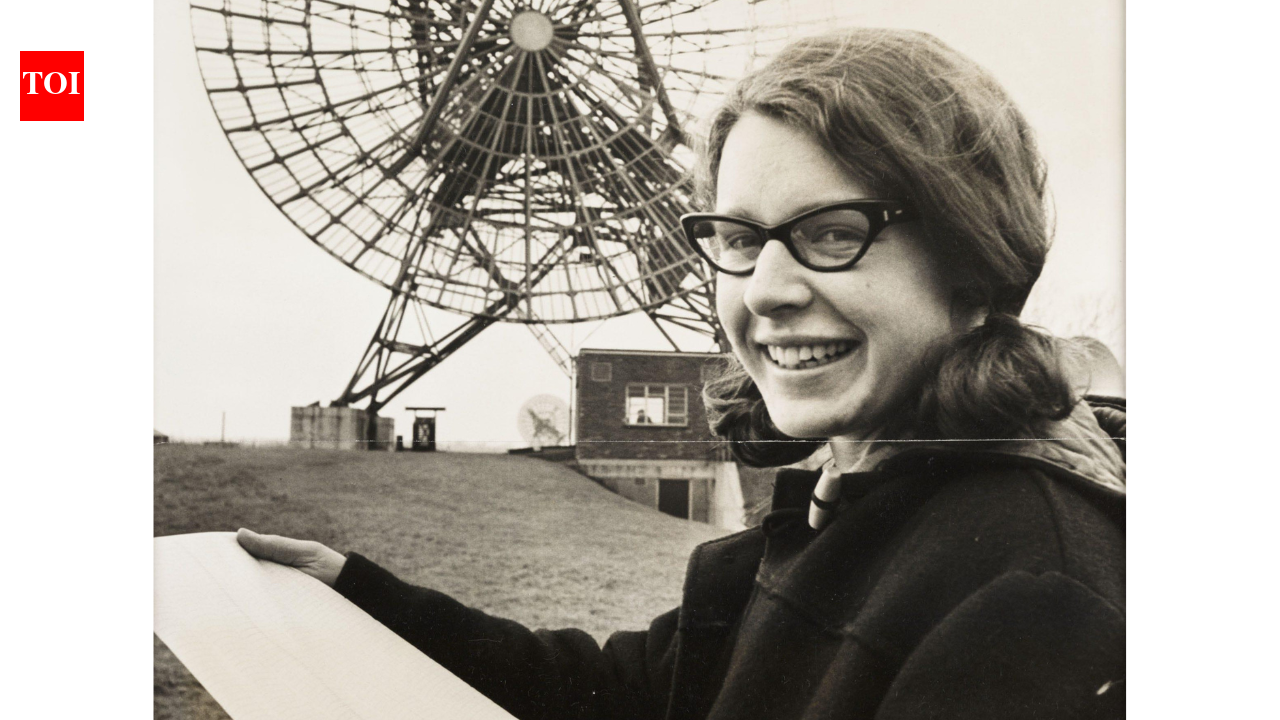
The strange signal from space that led to the discovery of pulsars The discovery of pulsars Why pulsars became so important The Nobel Prize controversy Recognition beyond the Nobel Prize A discovery that still shapes astronomy today In the summer of 1967, a 24-year-old PhD student at the University of Cambridge noticed something unusual hidden within mountains of radio telescope data. The signal appeared as a regular pulse, repeating with astonishing precision and refusing to fit any known astronomical explanation. For months, scientists struggled to understand what they were seeing, even joking that it might be a message from extraterrestrials. The student, Jocelyn Bell Burnell, had unknowingly stumbled upon one of the most important discoveries in modern astronomy: pulsars, the rapidly spinning remnants of dead stars that would transform scientists' understanding of the universe.At the time, Bell Burnell was working with the Interplanetary Scintillation Array, a large radio telescope built to study distant radio sources. The telescope generated vast amounts of paper chart recordings that had to be examined manually.While reviewing the data, Bell Burnell noticed what she later described as a small "bit of scruff" that looked different from ordinary background noise. Unlike random interference, the signal appeared at the same place in the sky and repeated at remarkably regular intervals.Its consistency immediately suggested that something unusual was happening.Instead of dismissing the anomaly, Bell Burnell continued investigating, a decision that would ultimately lead to a historic breakthrough.The mysterious signal repeated every 1.337 seconds with incredible precision.
No known natural object was capable of producing such regular pulses.Because of its unusual nature, members of the research team jokingly referred to the source as "LGM-1," short for "Little Green Men 1." Although the nickname reflected curiosity rather than genuine belief, it highlighted how difficult the signal was to explain.The alien hypothesis quickly faded when Bell Burnell and her colleagues discovered additional sources producing similar pulses in different regions of the sky. It became increasingly clear that the phenomenon had a natural astrophysical origin.Scientists eventually concluded that the signals were coming from neutron stars, the collapsed cores left behind when massive stars explode as supernovae.These objects pack more mass than the Sun into a sphere only about 20 kilometres across. As they spin at extraordinary speeds, powerful beams of radiation stream from their magnetic poles. If those beams sweep past Earth, they appear as regular pulses, much like the flashing beam of a lighthouse.The newly discovered objects became known as pulsars, short for "pulsating radio sources."Their discovery provided the first direct evidence that neutron stars, previously considered largely theoretical, actually existed.The discovery opened an entirely new field of astrophysics.Pulsars allowed scientists to study matter under some of the most extreme conditions found anywhere in the universe.
Their immense density, strong magnetic fields and rapid rotation created natural laboratories for testing the laws of physics.Over the following decades, pulsars helped researchers investigate stellar evolution, verify predictions of Einstein's Theory of Relativity and improve understanding of how massive stars end their lives.Some pulsars are so stable that they rival atomic clocks in precision, making them valuable tools for scientific research.The discovery was published in the journal Nature in 1968. Bell Burnell's supervisor, Antony Hewish, played a major role in designing the telescope and leading the project, while Bell Burnell made the crucial observation that identified the unusual signals.In 1974, the Nobel Prize in Physics was awarded to Antony Hewish and Martin Ryle for their contributions to radio astronomy and the discovery of pulsars. Bell Burnell was not included among the recipients.The decision generated debate that continues today. Many scientists and historians have argued that Bell Burnell's role in recognising and investigating the signal deserved Nobel recognition. The episode has become one of the most frequently discussed examples of scientific credit and recognition in modern history.Although she never received a Nobel Prize, Bell Burnell's achievements have been widely celebrated.She became one of the world's most respected astronomers, serving in numerous leadership positions and receiving many prestigious awards.
In 2018, she was awarded the $3 million Special Breakthrough Prize in Fundamental Physics for her role in discovering pulsars.Rather than keeping the money, she donated the entire prize to create scholarships for women, ethnic minorities and refugee students pursuing careers in physics.The gesture earned widespread admiration throughout the scientific community.Nearly six decades after Bell Burnell first noticed the strange signal, pulsars remain among the most important objects in astronomy.Scientists continue using them to probe the behaviour of matter under extreme conditions, search for gravitational waves and explore some of the deepest mysteries of the cosmos. What began as a faint anomaly on a strip of paper in 1967 became one of the defining discoveries of modern astrophysics.
 The BriefWire