Rawalakot Siege: Joint Awami Action Committee Activates 'Plan B' to Encircle Key PoJK Sectors | Exclusive Details
Rawalakot Siege: Joint Awami Action Committee Activates 'Plan B' to Encircle Key PoJK Sectors | Exclusive Details Reported By, Last Updated: June 10, 2026, 22:48
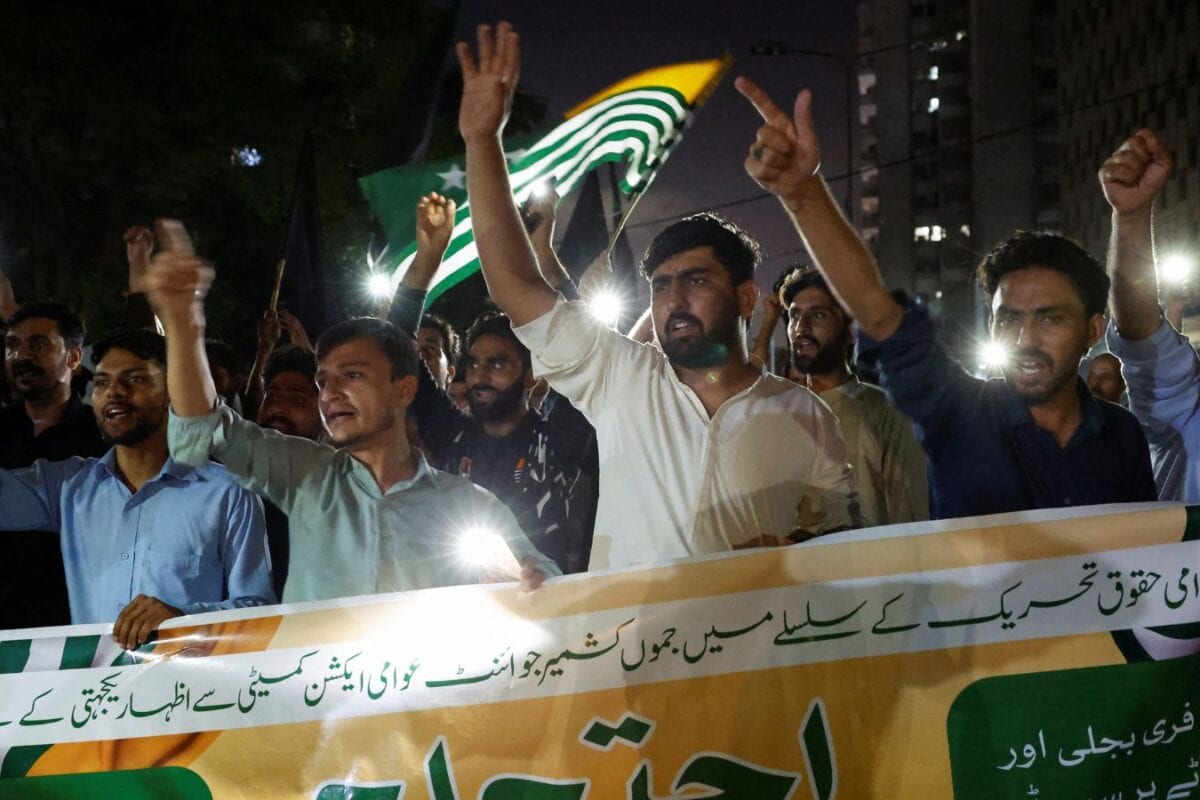
Rawalakot Siege: Joint Awami Action Committee Activates 'Plan B' to Encircle Key PoJK Sectors | Exclusive Details Reported By, Last Updated: June 10, 2026, 22:48 IST Despite the intensifying violence, massive protest convoys stretching across multiple districts have successfully reached the entry points of Rawalakot Thousands of demonstrators advance resolutely toward Muzaffarabad demanding the immediate acceptance of people’s power. (File pic/Reuters) The geopolitical landscape across Pakistan-occupied Jammu and Kashmir (PoJK) has reached a critical flashpoint as the high-stakes “Long March" spearheaded by the Joint Awami Action Committee (JAAC) concluded its second tumultuous day. The situation on the ground has deteriorated rapidly, with day two marked by intensifying clashes near Muzaffarabad, where Pakistani security forces and Awami Committee protesters engaged in a direct exchange of gunfire. In a catastrophic escalation linked to the ongoing unrest, a military helicopter crash has reportedly killed 21 Pakistani troops, severely compounding the security crisis gripping the region.
Despite the intensifying violence, massive protest convoys stretching across multiple districts have successfully reached the entry points of Rawalakot, creating one of the largest public mobilisations ever witnessed in the territory. As thousands of demonstrators advance resolutely toward Muzaffarabad demanding the immediate acceptance of people’s power, the JAAC leadership has officially activated its strategic “Plan B", effectively surrounding Rawalakot and other vital sectors. In a massive show of strength outside Rawalakot, protesters have vowed not to retreat, halting their sprawling convoys just outside the city lines under strict instructions to await final orders from their high command. This aggressive encircling manoeuvre has forced a significant administrative pivot from the state, with the Prime Minister of Pakistan-occupied Jammu and Kashmir being granted formal approval to open direct negotiations with the agitating Joint Awami Action Committee in a bid to defuse the spiralling crisis. However, the prospects of a swift diplomatic resolution remain highly volatile as protest leaders deliver a defiant, ultimatum-driven message under the rallying cry of “Watan Ya Kaffan" (Homeland or Shroud).
The Awami Action Committee has explicitly rejected the initial negotiations proposal put forward by the Prime Minister, firmly vowing that the state must surrender to their core demands before any formal talks can commence. Setting an unyielding benchmark for the resumption of dialogue, the Action Committee has dictated the immediate withdrawal of the government ban on their organisation as the non-negotiable first condition for entering into negotiations. While negotiations are still tentatively expected to resume now that protest leaders have temporarily halted the advancing convoys outside Rawalakot, the administrative apparatus remains under immense duress. The highly organised execution of Plan B by the JAAC has effectively penalised regional administrative control, leaving the government with virtually no choice but to deliberate on the protesters’ terms. As the regional capital and its surrounding districts remain besieged by an unprecedented sea of demonstrators, the next move by the JAAC command structure will design the immediate political and security future of the region.
News18 Newsletter Handpicked stories, in your inbox A newsletter with the best of our journalism submit About the Author Manoj Gupta Group Editor, Investigations & Security Affairs, Network18 First Published: June 10, 2026, 22:46 IST News world Rawalakot Siege: Joint Awami Action Committee Activates 'Plan B' to Encircle Key PoJK Sectors | Exclusive Details Disclaimer: Comments reflect users’ views, not News18’s. Please keep discussions respectful and constructive. Abusive, defamatory, or illegal comments will be removed. News18 may disable any comment at its discretion. By posting, you agree to our Terms of Use and Privacy Policy Loading comments...
 The BriefWire