Hezbollah Beyond State Control: Lebanon E Deputy PM Akar | Exclusive
Hezbollah Beyond State Control: Lebanon E Deputy PM Akar | Exclusive Reported By, Last Updated: June 10, 2026, 17:35 IST Zeina Akar Adra says Israel
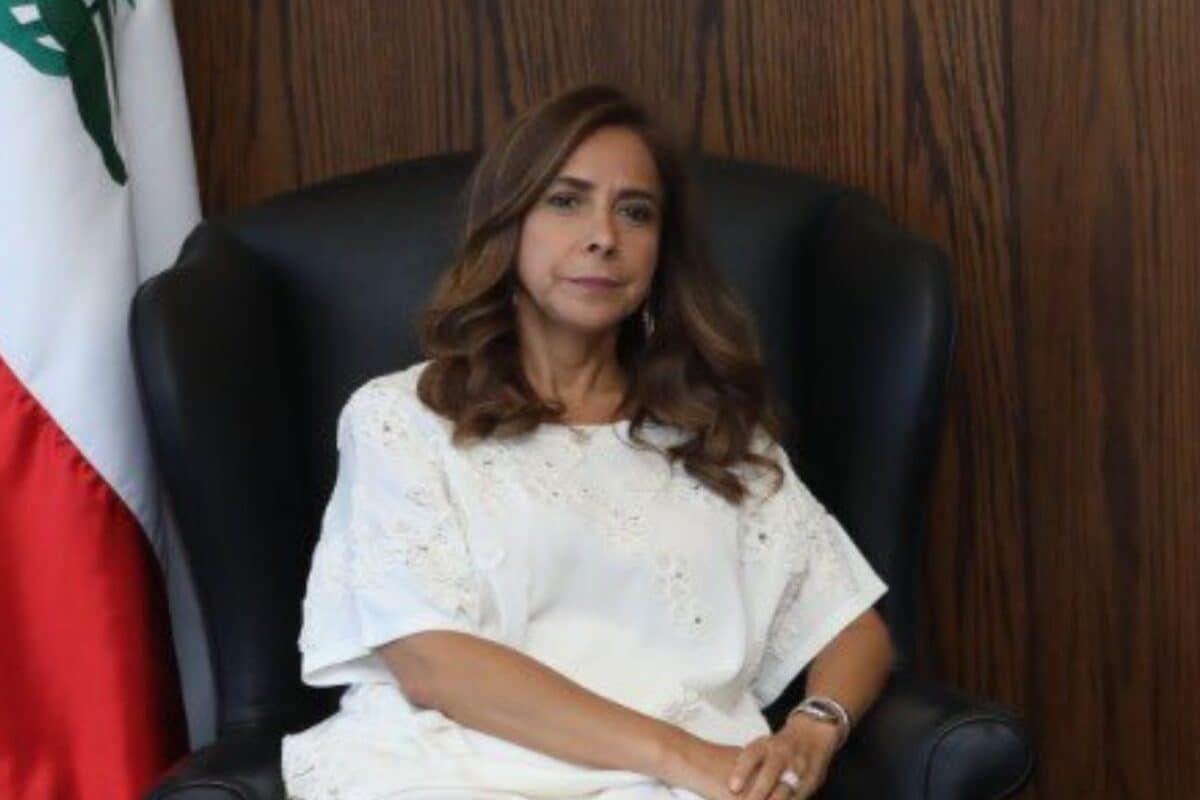
Hezbollah Beyond State Control: Lebanon E Deputy PM Akar | Exclusive Reported By, Last Updated: June 10, 2026, 17:35 IST Zeina Akar Adra says Israel has weakened Hezbollah militarily, but remains embedded in Lebanon’s reality, adding that US is not a neutral broker Rapid Read Zeina Akar Adra. (X) Israel’s latest strikes in southern Lebanon have once again pushed the region to the brink, with Iran retaliating soon after, raising fresh fears of a wider war. What was already a fragile ceasefire now looks increasingly meaningless on the ground. Even within Washington’s closest alliances, cracks are beginning to show, with US President Donald Trump reportedly calling Israeli Prime Minister Benjamin Netanyahu “crazy" in a recent phone call, pointing to growing frustration over how far this escalation could go. To better understand how Beirut is viewing this rapidly escalating situation, CNN-News18 spoke to Lebanon’s former Deputy Prime Minister and Defence Minister, Zeina Akar Adra, who didn’t shy away from addressing the central fault line: Hezbollah. “The state’s ability to control Hezbollah has historically been limited," she says, underscoring the uncomfortable reality at the heart of Lebanon’s crisis. She also reflects a broader sentiment in the country that the US is “not a neutral broker", with many believing Washington has tilted towards Israel. Adra further speaks about India’s role, describing it as “respected", while calling for stronger backing for ceasefire enforcement, civilian protection, and Lebanon’s sovereignty. Right now, is Lebanon at war or in a ceasefire that no one is respecting? Lebanon is not officially at war, but it is difficult to describe the current situation as a genuine or fully respected ceasefire. While an agreement may exist on paper, repeated violations by Israel, ongoing military operations, and continued attacks in southern Lebanon have severely undermined its credibility. For many Lebanese, especially those in the South, the reality feels closer to an ongoing conflict than a stable ceasefire. Entire villages have been destroyed or heavily damaged, and civilians continue to bear the brunt of the violence. The casualties include children, women, students, humanitarian workers, Civil Defence personnel, Red Cross volunteers, and members of the Lebanese Armed Forces. As a result, the situation is widely seen not as a functioning ceasefire, but as an unresolved conflict that persists despite formal agreements and diplomatic efforts. What is the future of the truce talks now, with the US and Israel at loggerheads and US–Iran relations still strained? And which capital has the greatest leverage over ending this conflict today: Washington, Tehran, or Tel Aviv? The future of the truce talks remains uncertain, as the conflict is deeply tied to broader regional dynamics involving the United States, Israel, and Iran. As long as tensions between Washington and Tehran persist, any progress is likely to remain slow and fragile. In terms of leverage, Washington continues to be the key external actor given its political, military, and diplomatic influence, as well as its ability to shape decisions in Israel and across the region.
That said, no durable settlement is possible without factoring in Iran’s interests and influence. Israel, as the occupying power, also holds significant control on the ground and can either facilitate or undermine any agreement through its actions. Ultimately, a sustainable resolution will require some level of alignment among all three capitals, even if Washington remains the primary broker. Was the US an honest broker in this ceasefire, according to you, or did it tilt too much towards Israel? Many Lebanese believe the United States tilted significantly toward Israel. There is a strong perception that Washington had the leverage to restrain Israeli military actions but chose not to use it decisively, allowing widespread destruction, civilian casualties, and displacement to continue despite ceasefire efforts. For many in Lebanon, the US prioritised Israel’s “security concerns" and strategic objectives over the protection of Lebanese civilians and the enforcement of the ceasefire. As a result, Washington is often seen not as a neutral broker, but as a party more closely aligned with Israel’s position. Speaking of Hezbollah, which is widely seen as a powerful armed actor in Lebanon: Has Israel’s military campaign been able to weaken the group so far, or has it reinforced its narrative of resistance? Israel’s military campaign has clearly weakened Hezbollah in military and operational terms, inflicting significant losses on its leadership, infrastructure, and capabilities. However, it has neither eliminated the group nor addressed the underlying political and security conditions that led to its emergence and continued role. Whether the campaign has reinforced Hezbollah’s narrative of resistance depends largely on perspective. Among its supporters, the conflict has strengthened that narrative. Among many other Lebanese, it has raised serious questions about the cost of maintaining an armed group outside state authority and the broader consequences for the country. At the same time, continued Israeli operations, the occupation of positions in southern Lebanon, and the incomplete implementation of agreed arrangements risk fuelling further resentment. This could not only reinforce Hezbollah’s narrative but also encourage the rise of other groups claiming resistance, while further weakening the authority of the Lebanese state. Many countries, including the US, designate Hezbollah as a terrorist organisation. Do you personally see them as a resistance force or a liability that is dragging Lebanon into war? And can your government actually control what Hezbollah does militarily? Hezbollah remains one of the most divisive issues in Lebanon. Some see it as a resistance movement that protects the country, while others view it as a liability that has repeatedly drawn Lebanon into costly conflicts. In my view, decisions of war and peace should rest solely with the Lebanese state. However, society remains deeply split, with many supporting Hezbollah’s role and others believing its actions expose the country to unnecessary instability. The Lebanese state’s ability to control Hezbollah militarily has historically been limited, making this one of the country’s most serious sovereignty challenges.
At the same time, many Lebanese point to Israel’s repeated violations of international agreements and UN resolutions, as well as the incomplete implementation of the November 27, 2024, agreement, including its failure to fully withdraw from positions in southern Lebanon. These factors continue to fuel tensions and complicate efforts to strengthen state authority and achieve lasting stability. With Hezbollah widely seen as aligned with Iran, which has reportedly struck Kuwait and Bahrain to expand the conflict, what does this wider regional escalation mean for Lebanon’s security and its relations with the Arab world? The wider regional escalation increases the risk of Lebanon being drawn into conflicts that are not directly tied to its national interests. It also complicates its relations with the Arab world, where many expect the Lebanese state to be the sole authority over decisions of war, peace, and foreign policy. For Lebanon, the priority should be to stay out of regional confrontations, strengthen state institutions, preserve internal stability, and rebuild ties with the Arab world, which remain essential for the country’s economic and political recovery. Is there a possibility of full-scale ground war in southern Lebanon? What does victory look like for Beirut? A “full-scale ground war" cannot be ruled out, but it is not in the interest of either Lebanon or Israel given the human, economic, and political costs. Large parts of southern Lebanon have already suffered extensive destruction, with dozens of villages heavily damaged or destroyed, thousands of homes lost, and entire communities displaced. For many in the South, the reality of war is already here. That said, the risk of a broader and more prolonged escalation will remain as long as tensions persist and no durable political solution is reached. For Beirut, victory is not a military concept. It means preserving Lebanon’s sovereignty, securing a lasting ceasefire, ensuring the withdrawal of Israeli forces, enabling displaced residents to return home, rebuilding affected areas, and restoring the state’s full authority over decisions of war and peace. However, if there is no victory or ceasefire, and this conflict drags on for another six months, what does Lebanon look like? If the conflict continues for another six months without a genuine ceasefire or political breakthrough, Lebanon will face deeper economic strain, further destruction in the South, more displacement, and rising social and political tensions. Recovery and reconstruction will become even more difficult, while confidence in state institutions continues to erode. The longer the conflict drags on, the greater the risk of instability, not just for Lebanon but for the wider region as well. India is part of the UN peacekeeping mission in Lebanon. Are you looking for a bigger diplomatic role from India, or more support on the ground? If you had to request India for one concrete step today, what would it be? India has earned considerable respect in Lebanon through its role in UNIFIL and its balanced diplomacy.
If I were to request one concrete step, it would be for India to continue advocating for full respect of the ceasefire, the protection of civilians, and Lebanon’s sovereignty. Looking ahead, India could also play a stronger role in maintaining stability in southern Lebanon, particularly if the mandate or role of UNIFIL evolves in the future. Pakistan hasn’t been able to deliver a successful truce talk yet. So, would you want Pakistan to stay involved in future negotiations, or should the process shift to other players? Pakistan, along with Saudi Arabia, Egypt, Qatar, and other Arab countries, continues to play a constructive diplomatic role and is respected by many in the region. Any country that can help promote dialogue, reduce tensions, and support stability should remain engaged in the process. For Lebanon, the key issue is not who leads the negotiations, but whether they deliver a credible and lasting ceasefire. That will require the involvement of all influential actors capable of moving the parties toward a sustainable solution. The US and Europe have strictly opposed Iran’s nuclear enrichment programme. Do you believe Tehran’s nuclear programme is defensive, as it claims, or is it pushing the region toward a nuclear flashpoint? Iran maintains that its nuclear programme is peaceful. Regardless of its stated intent, however, the issue has contributed to rising regional tensions and concerns about proliferation. At the same time, it is important to note that Israel possesses nuclear weapons and has not joined the Nuclear Non-Proliferation Treaty (NPT). For decades, Israeli leaders have warned that Iran is close to acquiring a nuclear weapon, while assessments by US intelligence agencies and reports from the IAEA have generally not concluded that Iran currently has an active nuclear weapons programme. The priority should be a diplomatic solution that prevents nuclear proliferation while addressing the legitimate security concerns of all parties. News18 Newsletter Handpicked stories, in your inbox A newsletter with the best of our journalism submit About the Author Sukanya Saha TV Anchor Sukanya Saha is a television anchor at CNN-News18 who regularly attends major geopolitical summits and tracks foreign affairs with a close eye on shifting global power dynamics. With over eight years... Read More First Published: June 10, 2026, 17:29 IST News world Hezbollah Beyond State Control: Lebanon E Deputy PM Akar | Exclusive Disclaimer: Comments reflect users’ views, not News18’s. Please keep discussions respectful and constructive. Abusive, defamatory, or illegal comments will be removed. News18 may disable any comment at its discretion. By posting, you agree to our Terms of Use and Privacy Policy Loading comments...
 The BriefWire