Pak-made bigger drones carrying drugs, arms sighted in Punjab for 3 months
Punjab's security establishment is grappling with a new and increasingly sophisticated cross-border threat as Pakistan-based smuggling networks deploy larger drones capable of carrying heavier consignments
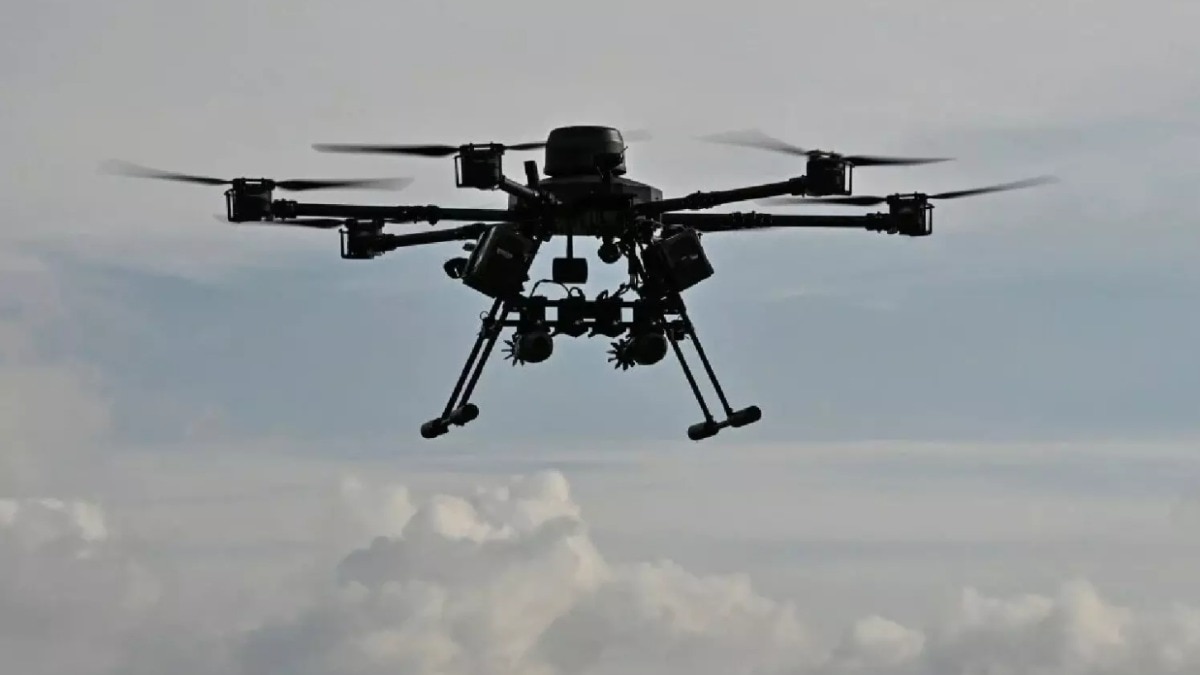
Punjab's security establishment is grappling with a new and increasingly sophisticated cross-border threat as Pakistan-based smuggling networks deploy larger drones capable of carrying heavier consignments of drugs, arms and ammunition into India, raising fresh concerns ahead of an election year. Security agencies tracking activity along Punjab's 553-km international border say the nature of drone intrusions has changed dramatically over recent months. What began as sporadic attempts using small commercial drones has evolved into a technologically advanced operation involving high-capacity platforms, satellite communications and sophisticated navigation systems. Read Full Story The development has triggered discussions among Punjab Police, the Border Security Force (BSF) and intelligence agencies, with senior officials assessing how best to counter what is emerging as one of the state's most significant security challenges. BIGGER DRONES, LARGER PAYLOADS According to security sources, Pakistan-based handlers and ISI-linked networks are increasingly relying on larger drone platforms such as the DJI Mavic 3 series and Air 3S variants. Unlike smaller drones used in previous years, these systems can transport multiple kilograms of heroin in a single flight, operate over longer distances and utilise advanced navigation capabilities. Officials say many of these drones are programmed to automatically return to their launch points if subjected to jamming attempts, making interception far more difficult. The shift has allowed smugglers to move larger consignments while reducing the number of flights needed to penetrate Indian airspace. Sources familiar with the security grid said the issue has become a major topic of discussion among border security agencies, with further consultations involving Punjab Police chief Gaurav Yadav expected.
STARLINK RECOVERY RAISES ALARM One of the biggest warning signs emerged on May 24 when Punjab Police's Counter Intelligence unit dismantled a drug smuggling network in Ferozepur district. Four accused were arrested and police recovered 28.12 kg of heroin, Rs 9.5 lakh in suspected drug proceeds and a Starlink satellite communication device. Security officials believe the recovery may signal the next phase of cross-border smuggling operations. Sources say satellite-based internet connectivity could allow smugglers to maintain real-time communication with handlers across the border, improve drone navigation and reduce dependence on radio-frequency communication systems that can be intercepted or jammed. Officials involved in anti-drone operations say traditional "soft kill" techniques may prove less effective against satellite-linked systems. "We so far rely on soft kill methodology but for satellite-controlled drones, there has to be a radar," a source familiar with the operations said. DRONE INCURSIONS CONTINUE TO RISE The BSF has repeatedly reported a rise in drone incursions along the Punjab border. Most payloads are dropped in agricultural fields near the border before being collected by local operatives linked to smuggling syndicates. Joint operations involving the BSF and Punjab Police have led to multiple recoveries of heroin consignments ranging from a few hundred grams to several kilograms. Sources said that during Operation Sindoor, hundreds of drones were detected across the border region. Although some anti-drone assets were temporarily shifted to Jammu and Kashmir, they were subsequently redeployed in Punjab as the threat intensified.
Officials say many of the smaller drones seen earlier have now been replaced by larger Chinese-made platforms capable of carrying heavier payloads. PUNJAB'S ANTI-DRONE SHIELD UNDER REVIEW Punjab was the first state in India to deploy a dedicated anti-drone network behind BSF positions along the international border. The state police procured nine indigenous "Baaj Akh" anti-drone systems from Electronics Corporation of India Limited at a cost of around Rs 51.4 crore. Three units were deployed in August 2025, while the rollout of the remaining six was planned in later phases. The systems combine 4D surveillance radar, radio-frequency detection sensors, electro-optical and infrared cameras, automated alerts, jamming capabilities and GPS spoofing technology. However, officials admit the rapidly changing nature of the threat has forced a reassessment. A senior Punjab Police officer, speaking on condition of anonymity, said the systems' operational range was limited to one to two kilometres. "Officials realised that the opponent had upgraded while the technology with inputs from Europe was already outdated just a few months down the line," the officer said. The remaining six systems have not yet been procured as authorities seek upgraded technology. "We asked the company to halt the other six. We wanted upgrades on our mobile units and wanted new technology on the ones which were to be provided, not the ones which had previous technology," the officer said. HEROIN SEIZURES TELL THE STORY The scale of heroin seizures linked to drone operations reflects the growing challenge facing security agencies.
Official figures show heroin recoveries rising from 10 kg in 2021 to 148 kg in 2022, 103 kg in 2023, 236 kg in 2024 and 468 kg in 2025. In 2026 alone, more than 516 kg of heroin had already been seized by June 8. Authorities have also recovered 139 drones this year. Security officials caution that the figures may represent only a fraction of the actual activity along the border. "The seizures may not reflect the reality. This may just be the tip of the iceberg as the border is vast and frequency of drones has only increased every year," an official said. ELECTION-YEAR SECURITY CHALLENGE With Punjab moving closer to another electoral cycle, security agencies are increasingly concerned about the convergence of narcotics trafficking, terror financing and rapidly evolving drone technology. Officials fear that heavy-payload drones, satellite-enabled communications and sophisticated cross-border networks could complicate law-and-order management during a politically sensitive period. The growing threat is now forcing agencies to rethink border security strategies, invest in next-generation detection systems and strengthen coordination between the BSF, Punjab Police and intelligence agencies. For security planners, Punjab's border is no longer merely a smuggling route. It has become a testing ground for increasingly advanced technologies that could shape the next phase of cross-border threats. Ends
 The BriefWire