'Disclosure Day': For Steven Spielberg, aliens are not just fiction
As the filmmaker releases a new film on extraterrestrials, here's a brief history of modern alien conspiracies and why scientists are now taking UFO reports
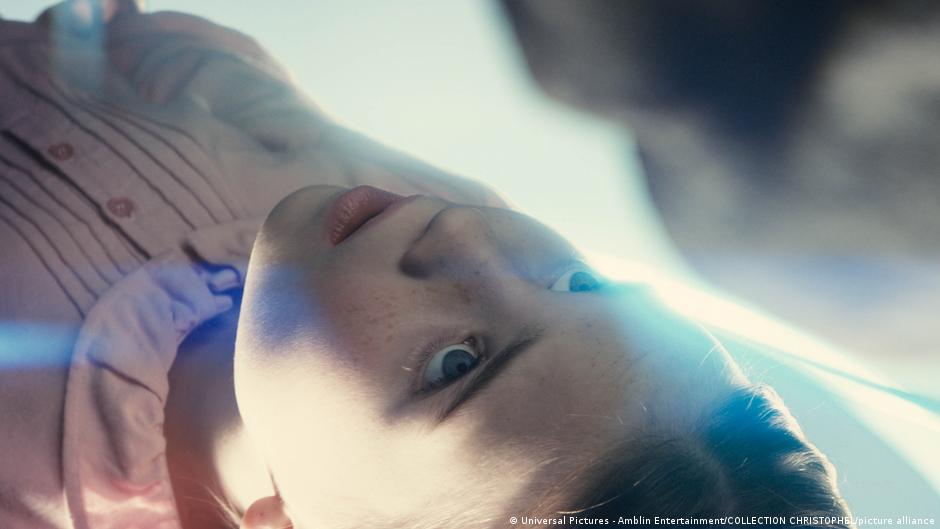
As the filmmaker releases a new film on extraterrestrials, here's a brief history of modern alien conspiracies and why scientists are now taking UFO reports seriously. Are we alone in this universe? Amid all the unanswered questions related to alien life, Steven Spielberg has more than any other filmmaker shaped the vision that humanity's first encounter with extraterrestrials could be a peaceful and profound experience — as opposed to a threatening invasion. Spielberg's "Close Encounters of the Third Kind" (1977) and "E.T. the Extra-Terrestrial" (1982) are iconic movies that fundamentally redefined the science fiction genre. Just like those films, "Disclosure Day" has been described by its lead star, Josh O'Connor, as "a film about hope and humanity and understanding," fitting right into the filmmaker's wondrous view on the phenomenon of extraterrestrial life. 'Overwhelming circumstantial evidence' In "Disclosure Day," O'Connor plays the role of a cybersecurity whistleblower who is determined to reveal the truth about aliens to the rest of the world. He joins forces with a Kansas City TV meteorologist (Emily Blunt), who is suddenly overcome by a mysterious extraterrestrial force during a live weather report. Emily Blunt and Josh O'Connor star in 'Disclosure Day' Image: Universal Pictures - Amblin Entertainment/COLLECTION CHRISTOPHEL/picture alliance For Spielberg, even though the film will be labeled as science fiction, he doesn't see "Disclosure Day" as purely fictional: "It's much more reflective of the world as it is evolving and discoveries that are being made as we speak," he said in an interview with Associated Press. "I've been a believer since I made 'Close Encounters' 50 years ago," Spielberg said, adding that with the "overwhelming circumstantial evidence" that has been gathered over the past decades, he even accepts that extraterrestrials have already attempted to establish contact with us.
As most sightings have been explained as natural phenomena or hoaxes, discussing unidentified flying objects (UFOs) has long been perceived as a fringe topic, fueled by conspiracy theories and pop culture. But in recent years, the scientific community has increasingly taken a data-driven, rigorous approach to studying what is now known as unidentified anomalous phenomena (UAPs). The film also reflects current debates about transparency, disinformation and the relationship between faith and science Image: Universal Pictures - Amblin Entertainment/COLLECTION CHRISTOPHEL/picture alliance As a longtime follower of reports of alleged alien encounters, Spielberg was inspired for his new film by the 2023 House Subcommittee on Security hearing on UAPs. One of the witnesses was former Air Force intelligence officer David Grusch. The whistleblower testified that the government was concealing a multi-decade UAP program that captures and reverse-engineers found technological objects. The Pentagon has since released two massive batches of declassified UAP files; a third release is planned for the near future. While the documents do not provide evidence of alien spacecraft, alien bodies or a government reverse-engineering program, they do demonstrate that many sightings remain unresolved due to insufficient data. The files contain decades of reports, including a testimony by a senior US intelligence officer describing mysterious "orange orbs flaring up and down," as well as a video filmed by a US military drone over Syria in 2021, which suddenly accelerates as if going into warp speed before vanishing. Harvard scientist sees study of unexplained phenomena as a duty "I do think it's the obligation of scientists to pay attention to anomalies, especially if they are reported by reliable authorities," Avi Loeb, a prominent Harvard astrophysicist who advocates for the scientific search for extraterrestrial intelligence, told DW following the release of the second batch of Pentagon files in May.
Examining the 51 new UFO videos released by the Pentagon To view this video please enable JavaScript, and consider upgrading to a web browser that supports HTML5 video "What is clear to me is that throughout recent decades, this subject was discussed extensively among military personnel, intelligence officers, people within the Pentagon and potentially also high-level politicians within the US government," Loeb added. He argued that even if the unknown aircraft seen in the footage had been developed by humans, "if the US intelligence agencies and the Pentagon are not familiar with the kind of motion that it exhibits, at the very least it poses a national security threat, because apparently someone else on Earth was capable of developing such an object." The most famous alien conspiracies in modern history For decades, UFO incidents have occupied a unique place between science fiction, government secrecy and conspiracy theory. The 1947 Roswell incident is arguably the most famous case of alien conspiracy in modern history. A rancher discovered unusual debris on his property in New Mexico, and the military initially issued a press release claiming it had recovered a "flying disc," only to retract the statement and explain that the object was a weather balloon. The International UFO Museum and Research Center in Roswell largely focuses on the 1947 incident in that city Image: Alex Milan Tracy/NurPhoto/ZUMA/picture alliance This contradiction fueled decades of speculation. In the late 1970s and 1980s, witnesses emerged claiming that alien bodies had been recovered and that the government had covered up the truth. The US government later explained that the debris came from a classified program designed to detect Soviet nuclear tests. Despite this explanation, many conspiracy theorists believe Roswell was the site of the first confirmed alien crash and subsequent cover-up.
Area 51, a highly classified military installation used to test advanced aircrafts, is also at the center of many alien conspiracies. The secrecy surrounding the base, combined with frequent reports of strange lights and experimental aircraft, has made Area 51 a centerpiece of UFO mythology. Highly classified Area 51: During the Cold War, the US government fueled alien conspiracies to mask its top-secret aerospace program Image: John Locher/AP/picture alliance Influential alien abduction stories include the 1961 testimony of Betty and Barney Hill, a couple who both described under hypnosis being taken aboard a spacecraft and examined by nonhuman beings, after seeing a strange object in the sky while driving through New Hampshire. A more recent chapter in UFO history emerged from testimonies from US military pilots who observed in 2004 a white, capsule-shaped object — later nicknamed the "Tic Tac" — performing unusual maneuvers off the coast of California. Videos supporting their testimony were released to the public years later. Government investigations acknowledged that the objects remained unidentified. Unlike older conspiracies, the Tic Tac incident involves radar data, military sensors and official government reports, making it one of the most extensively documented modern UFO cases. For Avi Loeb, following scientific methodology requires ruling out known optical phenomena before claiming technological origins; the Tic Tac sighting may simply be a byproduct of camera glare. But even if countless sightings have been explained or debunked over the years, Loeb is not deterred from pursuing his research: "Even if one in a million objects that we look at is not from this Earth — that would be the biggest discovery ever made by humanity." Edited by: Brenda Haas
 The BriefWire