Do Allies Spy On Each Other? What The US-Israel Espionage Row Reveals
Do Allies Spy On Each Other? What The US-Israel Espionage Row Reveals Published By, Last Updated: June 10, 2026, 15:23 IST US media reports claim
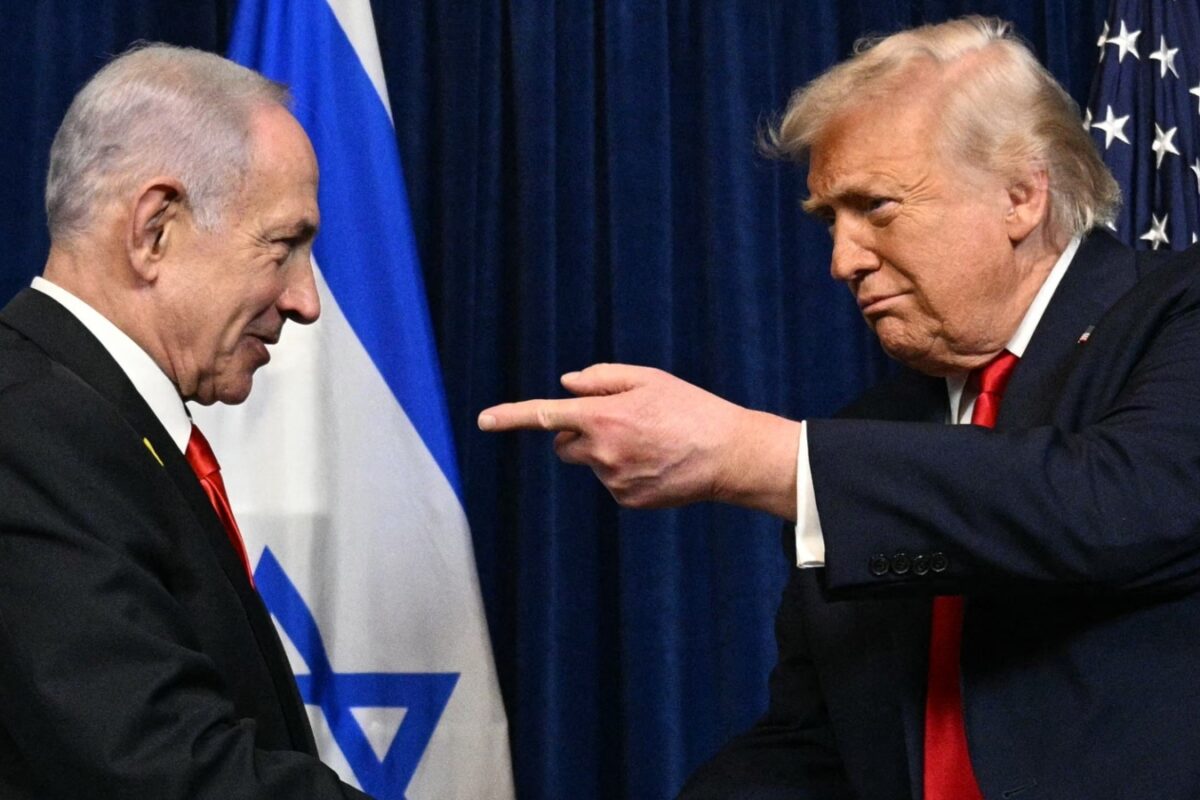
Do Allies Spy On Each Other? What The US-Israel Espionage Row Reveals Published By, Last Updated: June 10, 2026, 15:23 IST US media reports claim Israel has been upgraded to a 'critical' counterintelligence threat, but past cases show even close allies have long watched each other. Rapid Read US President Donald Trump with Israeli Prime Minister Benjamin Netanyahu. (AFP file photo) An espionage row has opened between the United States and Israel after US media reports claimed that the Pentagon’s intelligence arm has placed Israel in its highest category of counterintelligence concern. According to reports, the Defense Intelligence Agency upgraded Israel’s threat level from “high" to “critical" over concerns that Israeli intelligence agencies have stepped up efforts to gather information on US officials, military personnel and policy discussions. The reports were first published by NBC News and followed by The New York Times. The US government has denied the reports, while Israel has called them “completely false". The controversy is sensitive because Israel remains one of Washington’s closest military and intelligence partners, with the US providing major military aid, weapons support and diplomatic backing. What Is Israel Accused Of? The central reported allegation is that Israel’s intelligence agencies have allegedly increased efforts to collect information on US military officials, government personnel and policy discussions. According to NBC News, the Defense Intelligence Agency recently raised Israel’s counterintelligence threat level from “high" to “critical". The concern centres on Israeli attempts to gain access to US thinking on Iran at a time when Washington is trying to pursue diplomacy to end the conflict. NYT said, “An intensified Israeli effort to learn about US positions in talks with Iran has crossed a line, according to some American officials." The reported targets include US officials involved in shaping or understanding Washington’s Iran policy. NYT reported that these included Trump envoy and key negotiator Steve Witkoff, Pentagon policy official Elbridge A Colby and one of his deputies, Michael P DiMino IV. The NYT report also referred to incidents in which US defence personnel working in Israel allegedly found software installed on their phones that could tap their communications.
How Have The US And Israel Responded? Israel has denied the allegations. According to NBC News, the Israeli embassy in Washington said it was “completely false" that Israel spies on US government officials or American institutions. “Israel does not gather intelligence on American entities, let alone US government officials," NBC quoted an Israeli embassy spokesperson as saying. A White House official also reportedly dismissed the NBC report, saying the “entire story is false and sourced to someone who doesn’t have any knowledge of what’s going on". Why Is This Row Happening Now? The timing of the report is crucial. The controversy comes against the backdrop of the US-Israel war with Iran, which has now dragged on for more than 100 days. Washington is seeking a diplomatic exit from the conflict, while Israel has taken a harder line and remains opposed to talks that could limit its military freedom against Iran. US President Donald Trump and Israeli Prime Minister Benjamin Netanyahu have publicly diverged in their approach. Washington wants to extricate itself from the war amid political pressure, while Israel is still pushing to topple the Iranian government, Al Jazeera reported. The Iran talks are therefore at the heart of the matter. Andreas Kreig, a professor at King’s College London, told Al Jazeera that Israel is “deeply concerned" about the direction of US negotiations with Iran. “From the Israeli perspective, the recent conflict with Iran was effectively a joint US-Israeli war, yet the United States is now in a position to shape the diplomatic endgame," he said. Kreig said Israel’s concern is that Washington could agree to a long-term diplomatic arrangement with Iran that may constrain Israel’s ability to act militarily in the future. “The principal Israeli concern is that Washington could agree to a deal that establishes an enduring diplomatic framework, potentially lasting years or even decades, which would constrain Israeli freedom of military manoeuvre against Iran in the future," he told Al Jazeera. Is Espionage Between Allies Unusual? Not entirely. German intelligence expert Erich Schmidt-Eenboom told DW that even friendly nations regularly conduct intelligence activities against one another.
He said this was especially true in the case of the United States and Israel. “There have been repeated Mossad operations in the United States as part of the fight against international terrorism that were not coordinated with the FBI. Conversely, Israel has always been an interesting target for the Security Agency’s electronic surveillance, especially during all wars," he said. Has Israel Been Accused Of Spying On The US Before? Yes. The most prominent case is that of Jonathan Pollard, a civilian intelligence analyst working for the US Navy. He was arrested in 1985 after passing classified information to Israeli handlers. He later pleaded guilty to espionage and was sentenced to life in prison. Pollard served 30 years before being released on parole in 2015. When he was allowed to leave for Israel in 2020, Prime Minister Benjamin Netanyahu personally greeted him at the airport. Schmidt-Eenboom told DW, “That was quite an insult to the Americans." Another case emerged in 2004, when Lawrence Franklin, a political analyst at the US Department of Defense, was accused of passing confidential information about US policy towards Iran to Israel through the pro-Israel lobbying organisation AIPAC. According to DW, Franklin was convicted in the case, though Israel and AIPAC denied the allegations. The issue surfaced again after the 2013 Edward Snowden disclosures, when leaked US intelligence documents exposed wide-ranging surveillance by the Security Agency (NSA). According to The Guardian, one leaked document referred to a Intelligence Estimate that ranked Israel as the third-most aggressive intelligence service against the US. Has The US Spied On Allies Too? Yes. The United States has also faced major allegations of spying on friendly governments. The Snowden disclosures revealed that the NSA had monitored several allies, including then-German Chancellor Angela Merkel and former French presidents Jacques Chirac, Nicolas Sarkozy and Francois Hollande. After it emerged in 2013 that Merkel’s phone had been monitored, she said, “Spying on friends is never acceptable." But Germany’s own foreign intelligence service, the BND, was later found to have spied on allied countries, governments and institutions for decades. In 2023, leaked Pentagon documents suggested that US intelligence agencies had monitored internal discussions within the South Korean government.
Both sides denied the claims and said the documents were largely forged, without detailing which parts they considered false. Why Does This Matter For Trump And Netanyahu? The controversy lands at a time when Trump is reportedly trying to pressure Israel to halt escalation, including in Lebanon, while Netanyahu wants room to continue military action. Al Jazeera reported that tensions between Trump and Netanyahu had surfaced in recent days, amid reports that the US president called the Israeli prime minister “f****ing crazy" over Israel’s escalation in Lebanon. DW cited Schmidt-Eenboom as saying that the public emergence of the intelligence row could give Trump a way to put diplomatic pressure on Israel without directly antagonising pro-Israel constituencies in the US. “Given the midterms in November, however, he cannot afford to antagonize the Israeli lobby in the US, for example by simply cutting military aid to Israel," Schmidt-Eenboom said. He argued that if Israel is seen as violating US interests through intelligence activity, Trump could have more room to push Netanyahu on the war and Lebanon. “Now the US president has the opportunity to exert pressure on Israel to halt the bombings and withdraw troops from southern Lebanon," he told DW. News18 Newsletter Handpicked stories, in your inbox A newsletter with the best of our journalism submit About the Author Karishma Jain Karishma Jain, Chief Sub Editor at News18.com, writes and edits opinion pieces on a variety of subjects, including Indian politics and policy, culture and the arts, technology and social change. Follo... Read More First Published: June 10, 2026, 15:23 IST News world Do Allies Spy On Each Other? What The US-Israel Espionage Row Reveals Disclaimer: Comments reflect users’ views, not News18’s. Please keep discussions respectful and constructive. Abusive, defamatory, or illegal comments will be removed. News18 may disable any comment at its discretion. By posting, you agree to our Terms of Use and Privacy Policy Loading comments...
 The BriefWire