12 Years Of Modi Government: 10 Schemes That Changed Everyday Life For Millions
12 Years Of Modi Government: 10 Schemes That Changed Everyday Life For Millions Published By, Last Updated: June 10, 2026, 11:19 IST As PM Modi
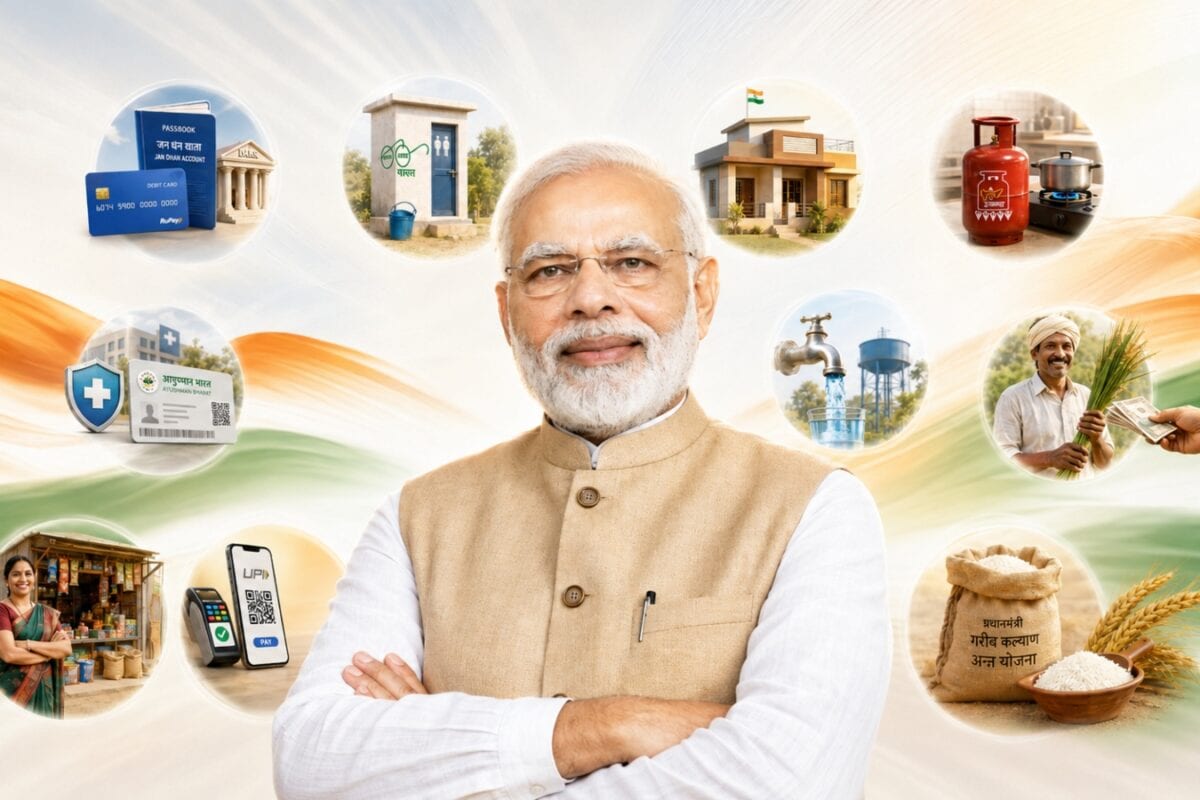
12 Years Of Modi Government: 10 Schemes That Changed Everyday Life For Millions Published By, Last Updated: June 10, 2026, 11:19 IST As PM Modi becomes India’s longest-serving elected Prime Minister, here is a look at 10 welfare and delivery-focused schemes that reshaped daily life for crores of Indians. 12 years of Modi government. (AI-generated image). Prime Minister Narendra Modi on Wednesday marked a major political milestone, becoming India’s longest continuously serving elected Prime Minister after completing 4,399 consecutive days in office and surpassing Jawaharlal Nehru’s elected tenure. The milestone comes as the Modi government completes 12 years in power, a period in which welfare delivery has become one of the central pillars of its governance model. From bank accounts and toilets to LPG cylinders, health cover, pucca houses, tap water and digital payments, several schemes launched or expanded since 2014 have changed how millions of Indians access basic services. हमारी सरकार के बीते 12 वर्ष विश्वास, विकास और जनकल्याण को समर्पित रहे हैं। 140 करोड़ देशवासियों के आशीर्वाद और राष्ट्र प्रथम की भावना से हमने युवाओं, महिलाओं और अपने किसान भाई-बहनों को सशक्त बनाने में कोई कोर-कसर नहीं छोड़ी है। यह हमारे अथक प्रयासों का ही परिणाम है कि… pic.twitter.com/URtsOWF4BT— Narendra Modi (@narendramodi) June 9, 2026 Here are 10 major schemes and initiatives from the Modi government years that changed everyday life for crores of Indians. Pradhan Mantri Jan Dhan Yojana: Bank Accounts For The Unbanked Launched on August 28, 2014, the Pradhan Mantri Jan Dhan Yojana (PMJDY) became the foundation of the Modi government’s financial inclusion push. The scheme aimed to provide a basic bank account to every unbanked adult. Accounts opened under PMJDY come with a free RuPay debit card, an in-built accident insurance cover of Rs 2 lakh and an overdraft facility of up to Rs 10,000, giving millions of people access to formal banking and emergency support. More than 58.3 crore beneficiaries have opened accounts under the scheme so far, with a balance of over Rs 3 lakh crore lying in these accounts. The network of 13.55 lakh Bank Mitras has also helped extend branchless banking services, especially in rural and semi-urban areas. The real importance of Jan Dhan was not just account opening. It created the base for direct benefit transfers, allowing welfare payments and subsidies to reach beneficiaries directly, including during the Covid-19 pandemic. Swachh Bharat Mission: Dignity And Safety For Women The Swachh Bharat Mission was launched on October 2, 2014, as a nationwide cleanliness and sanitation movement, but its most visible impact was inside rural homes.
For millions of women, the construction of household toilets meant an end to the daily indignity and safety risks of open defecation. It gave women greater privacy, reduced the need to step out before dawn or after dark, and brought sanitation into the centre of public health and gender dignity. More than 12 crore toilets have been built under Swachh Bharat Mission Grameen, while 753 districts have been declared ODF+. An ODF+ district is one that sustains its open defecation-free status while also ensuring solid and liquid waste management. The mission has also pushed village-level waste systems. More than 5.34 lakh villages now have solid waste management arrangements and 5.54 lakh villages have liquid waste management arrangements, showing how the scheme moved from toilet construction to wider rural sanitation. PM Awas Yojana: Pucca Homes For Poor Families The Pradhan Mantri Awas Yojana, implemented through its rural and urban arms — PMAY-Gramin and PMAY-Urban — focused on affordable housing for the poor. The scheme sought to help families move from kutcha houses or insecure living spaces to pucca homes with better access to basic amenities. For many beneficiaries, the house was not just shelter but also a long-term asset. Under PMAY-G, the government has set a cumulative target of 4.95 crore rural houses. As of August 2025, 2.82 crore houses had been completed out of 4.12 crore allocated, according to PIB. Under PMAY-U, 125.31 lakh houses have been sanctioned and 98.1 lakh completed, according to the official urban housing dashboard. A significant feature of the scheme has been the focus on women’s ownership or co-ownership in many cases, giving women in poor households a stronger claim over family assets. Pradhan Mantri Ujjwala Yojana: Cleaner Fuel The Pradhan Mantri Ujjwala Yojana was launched in May 2016, with the initial aim of providing LPG connections to five crore below-poverty-line beneficiaries. Before the scheme, many rural and low-income households depended on firewood, cow-dung cakes or other biomass fuels for cooking. This meant women often spent long hours collecting fuel and faced daily exposure to smoke inside kitchens. Under Ujjwala, over 10 crore LPG connections had been provided as of July 2025, according to PIB. The scheme helped many households shift towards cleaner cooking fuel, while the government has said women save two to three hours daily that were earlier spent collecting firewood. Ayushman Bharat PM-JAY: Health Cover Against Medical Debt Ayushman Bharat Pradhan Mantri Jan Arogya Yojana, launched in September 2018, is one of the Modi government’s biggest healthcare initiatives. The scheme provides eligible families with free hospital treatment of up to Rs 5 lakh per year, helping poor and vulnerable households access secondary and tertiary care without falling into debt during serious illnesses, surgeries and hospital admissions.
More than 44 crore Ayushman cards have been created and over 10 crore hospital admissions have been authorised, according to the PM-JAY dashboard. The scheme also has more than 36,000 empanelled hospitals. Jal Jeevan Mission: Tap Water In Rural Homes Launched in 2019, the Jal Jeevan Mission aimed to provide functional household tap connections to rural homes and ensure safe drinking water supply in villages. The scheme addressed one of the most basic problems in rural life: the daily burden of fetching water, often carried by women and girls. By expanding piped water supply, the mission sought to improve convenience, health and dignity in rural homes. When the mission began, only 3.23 crore rural households, or 16.7 per cent, had tap water connections. According to PIB, over 12.59 crore additional rural households have since been provided tap water connections, taking the total coverage to about 15.83 crore rural households, or around 81.8 per cent. The programme also connects welfare delivery with public health. Access to clean drinking water can reduce dependence on unsafe sources and help lower the risk of waterborne diseases in areas affected by contaminated water. PM-KISAN: Direct Income Support For Farmers The Pradhan Mantri Kisan Samman Nidhi scheme provides direct financial support to eligible farmer families. Under the scheme, Rs 6,000 per year is transferred directly into farmers’ bank accounts in instalments. For small and marginal farmers, this amount can help meet seasonal expenses related to seeds, fertiliser, farm inputs or household needs. The government graphic shared around the 12-year milestone said Rs 4.3 lakh crore had been transferred under PM-KISAN. It also highlighted other farmer-focused measures, including MSP payments and Kisan Credit Cards. The importance of PM-KISAN lies in its use of direct benefit transfer, reducing the role of intermediaries and making income support more predictable for eligible beneficiaries. Pradhan Mantri Mudra Yojana: Credit For Small Businesses The PM Mudra Yojana was designed to support micro and small entrepreneurs through collateral-free loans. The scheme has been used by small traders, vendors, service providers and young entrepreneurs looking to start or expand businesses such as tailoring units, food stalls, mobile repair shops, boutiques and small retail outlets. According to the government graphic, Rs 40 lakh crore worth of Mudra loans have been provided. The scheme’s appeal comes from its focus on self-employment, particularly for people who may not have access to formal credit or large business networks. For many beneficiaries, Mudra loans have acted as working capital, helping them buy equipment, stock or basic infrastructure. Digital India And UPI Digital India has been one of the defining governance shifts of the last decade, with the government pushing online services, digital identity, digital payments and paperless access to documents.
Unified Payments Interface (UPI) became the most visible part of this transformation. In May 2026, UPI processed 23.2 billion transactions worth Rs 29.90 lakh crore, according to NPCI data. From street vendors and auto drivers to shopping malls and restaurants, QR-code payments are now part of everyday transactions across India. Digital platforms such as DigiLocker have also made access to official documents simpler. As of March 5, 2026, DigiLocker had 67.63 crore users, while more than 950 crore documents had been issued through the platform, according to PIB. The broader impact has been felt in welfare delivery as well. Bank accounts, Aadhaar-linked systems and digital payments helped create an infrastructure through which subsidies, benefits and services could be delivered more directly. PM Garib Kalyan Anna Yojana: Free Foodgrain Support The Pradhan Mantri Garib Kalyan Anna Yojana became one of the most important welfare measures during and after the Covid-19 pandemic. The scheme provides free foodgrains to eligible beneficiaries under the Food Security Act, offering food security support to poor households during periods of economic stress. The Centre extended the scheme for five years from January 1, 2024, for about 81.35 crore beneficiaries. Under the scheme, Antyodaya Anna Yojana households are entitled to 35 kg of foodgrains per month, while Priority Household beneficiaries receive 5 kg per person per month. As of October 2025, 78.90 crore beneficiaries were receiving free foodgrains, according to PIB. For millions of low-income families, the scheme has been central to household food security. News18 Newsletter Handpicked stories, in your inbox A newsletter with the best of our journalism submit About the Author Karishma Jain Karishma Jain, Chief Sub Editor at News18.com, writes and edits opinion pieces on a variety of subjects, including Indian politics and policy, culture and the arts, technology and social change. Follo... Read More First Published: June 10, 2026, 11:19 IST News india 12 Years Of Modi Government: 10 Schemes That Changed Everyday Life For Millions Disclaimer: Comments reflect users’ views, not News18’s. Please keep discussions respectful and constructive. Abusive, defamatory, or illegal comments will be removed. News18 may disable any comment at its discretion. By posting, you agree to our Terms of Use and Privacy Policy Loading comments...
 The BriefWire