How China's chokehold on rare earth threatens US military might
China's stronghold on vital minerals like gallium, germanium, antimony, and tungsten raises serious concerns regarding US military effectiveness. US weapons at risk How US plans
China's stronghold on vital minerals like gallium, germanium, antimony, and tungsten raises serious concerns regarding US military effectiveness. US weapons at risk How US plans to counter China's mineral leverage Join conversation View All Comments → Share your thoughts in the comments Post Comment Be respectful · TOI community guidelines China may have found a way to put pressure on America's military power without firing a single missile.Its dominance over critical mineral supplies is threatening the industrial backbone of the US defence sector. Thousands of components used in weapons ranging from F-35 fighter jets and B-2 stealth bombers to nuclear-powered submarines depend on materials that Washington cannot easily replace.According to a report by The War Zone (TWZ), an assessment by the Special Competitive Studies Project (SCSP), based on supply-chain intelligence from technology firm Exiger, has identified significant vulnerabilities across the US military's weapons inventory.The assessment examined nearly nine million components across 3,000 weapons systems and found more than 28,000 components containing four critical minerals across approximately 1,400 systems.The four minerals identified in the assessment are gallium, germanium, antimony and tungsten.
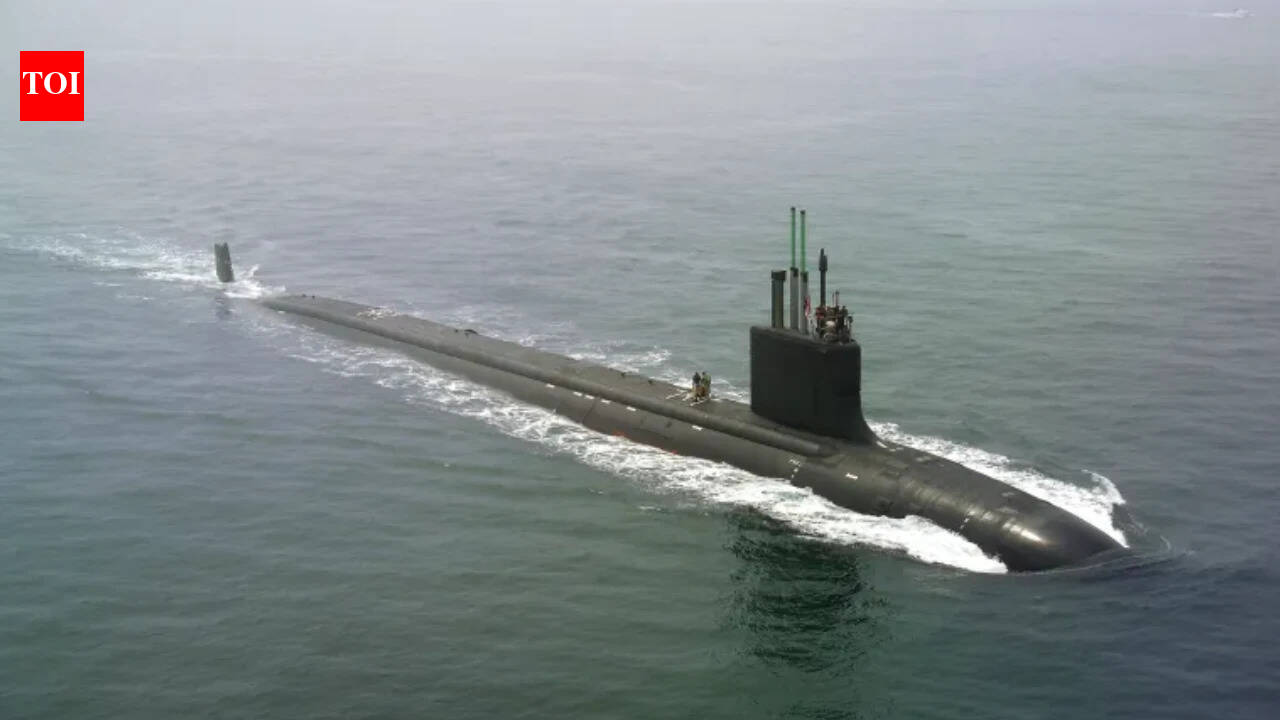
They are used in a range of military applications, including advanced radar systems, night-vision equipment, ammunition, semiconductors and missile components.Their importance lies in their role in manufacturing specialised parts that are difficult to replace quickly, making uninterrupted access to these materials crucial for the US defence industry.Gallium is used in advanced semiconductors and radar systems, while germanium is essential for infrared optics, night-vision equipment and electro-optical sensors.Antimony is used in ammunition, explosives and electronic components, while tungsten is required for armour-piercing ammunition, warheads and high-temperature applications.According to figures cited in the TWZ report, China controls up to 99% of gallium production, around 68% of refined germanium production, nearly half of antimony production and up to 80% of tungsten supply.The vulnerability extends across some of America's most important military platforms. The Virginia-class nuclear-powered attack submarine is among the most exposed, with the assessment identifying more than 300 components containing the four minerals, including 190 that require germanium.Each submarine also requires approximately 9,200 pounds of these elements, compared with around 900 pounds for an F-35 fighter jet.The B-2 Spirit stealth bomber is another major concern, with 782 components containing the identified minerals.
The report also highlights the F/A-18 Hornet family, including the EA-18G Growler, which has around 3,800 individual parts requiring steel castings.The KC-135 Stratotanker follows with 2,570 such parts, while the B-52 Stratofortress, C-130 Hercules and C-5 Galaxy face additional vulnerabilities involving specialised manufacturing processes and components.Washington is attempting to reduce its dependence on Chinese supplies by building domestic production capacity and creating strategic reserves.The White House's $12 billion Project Vault aims to stockpile rare earths and other critical minerals,
while the Pentagon has committed $18 million to expand germanium refining capacity at a Utah facility sevenfold. The US Army is also offering long-term leases on military land to companies setting up critical mineral processing facilities.However, replacing China's established supply chain will not be easy. The TWZ report notes that opening a new mine in the US takes an average of 29 years, highlighting the gap between Washington's immediate defence requirements and its long-term plans to secure domestic mineral supplies.
 The BriefWire