'An Exception To Global Trend': Ram Nath Kovind Hails PM Modi's Record-Breaking Tenure
'An Exception To Global Trend': Ram Nath Kovind Hails PM Modi's Record-Breaking Tenure Published By, Last Updated: June 10, 2026, 09:42 IST President Ram Nath
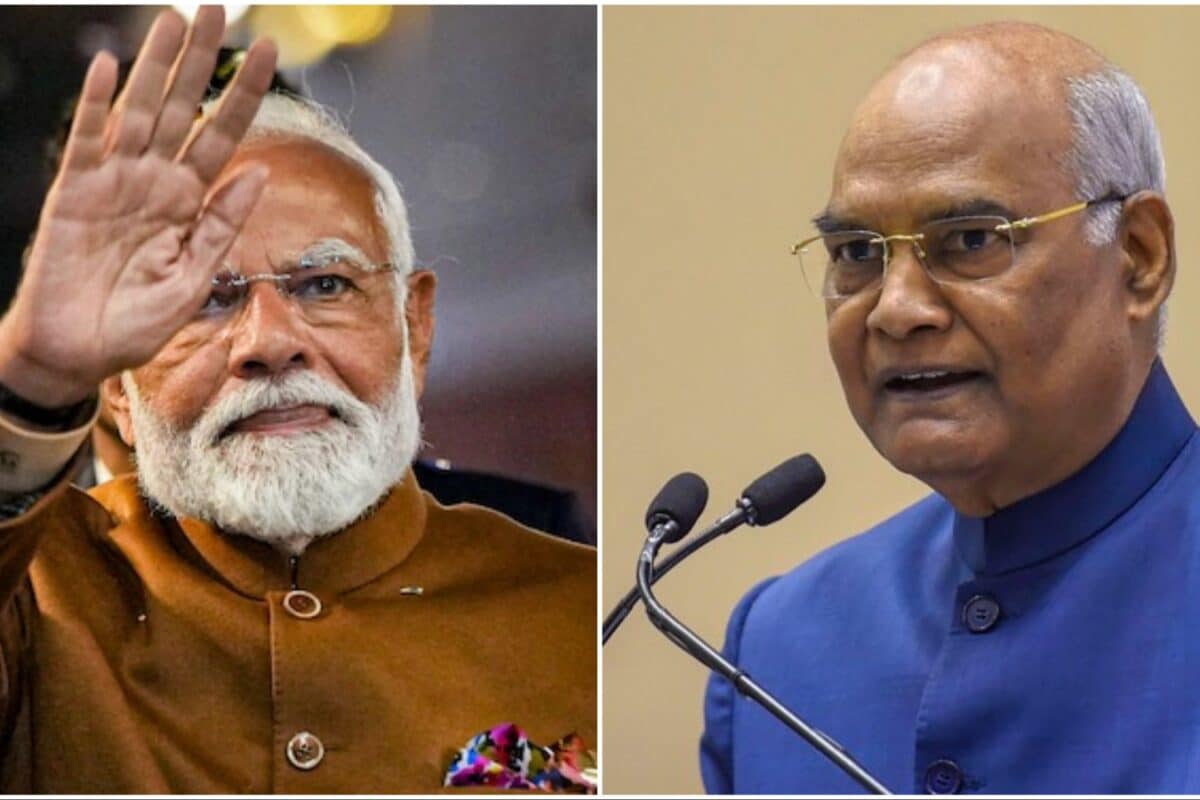
'An Exception To Global Trend': Ram Nath Kovind Hails PM Modi's Record-Breaking Tenure Published By, Last Updated: June 10, 2026, 09:42 IST President Ram Nath Kovind says PM Modi's 12-year tenure reflects a broader political, cultural and civilisational shift in post-Independence India. Rapid Read File photos of PM Modi/Ramnath Kovind (PTI) As PM Narendra Modi on Wednesday became India’s longest-serving democratically elected Prime Minister, surpassing Jawaharlal Nehru’s record of continuous service in office, former President Ram Nath Kovind described the development as a defining moment in India’s post-Independence journey and argued that the significance of the milestone extends far beyond the number of days spent in office. In an opinion article published in the Hindustan Times, Kovind said June 10, 2026, marks “a special occasion in the history of India after Independence" as PM Modi surpassed Nehru’s tenure and became the country’s longest continuously serving democratically elected Prime Minister. According to Kovind, while the achievement is historic in itself, “PM Modi’s being a tenure longer than that of Nehru does not capture the more important dimensions of what may be called the watershed period for India since Independence." The former President argued that India’s political trajectory underwent a decisive shift after PM Modi assumed office on May 26, 2014. He wrote that the country had moved towards an expression of “Indian-ness" envisioned by leaders such as Mahatma Gandhi, Sardar Vallabhbhai Patel, BR Ambedkar, Rajendra Prasad, C Rajagopalachari and KM Munshi. In his article, Kovind contrasted PM Modi’s governance model with what he described as the Nehruvian economic framework.
Referring to Rajagopalachari’s criticism of the post-Independence economic structure, he wrote that PM Modi had advanced a development model that moved away from the “quota, permit and licence raj" associated with the “command and control" economy. The former President also highlighted what he viewed as a shift in political discourse regarding India’s democratic traditions. Citing Ambedkar’s remarks in the Constituent Assembly, Kovind noted that democratic practices existed in ancient Indian institutions long before modern Western democracies emerged. According to the article, PM Modi has consistently asserted at international forums that India is the “mother of democracy," drawing attention to India’s ancient democratic ethos. Kovind wrote that “the world is waking up to this fact of India being not only the most ancient but also the largest and most vibrant democracy." INDIA’S ELECTORAL SCALE AND MODI’S POPULARITY The former President pointed to the scale of India’s democracy, noting that the country’s electorate now stands at nearly 100 crore voters. He observed that this figure is almost three times India’s total population at the time of Independence. Kovind also underlined the growing complexity of India’s electoral landscape. He noted that 744 political parties participated in the 2024 general election, compared to just 53 in the country’s first general election in 1951-52. Against that backdrop, he argued that sustaining public trust and meeting rising expectations had become significantly more challenging for contemporary political leaders. “To measure up to such rising expectations and sustain a robust bond of trust with the people is an exceptional success of Modi," Kovind wrote, adding that the Prime Minister’s approval ratings had remained consistently high.
He further argued that while many world leaders enjoyed lengthy tenures during the mid-20th century, political leadership in the 21st century has generally become more short-lived, making Modi “an exception to the global trend." ‘MENTAL DECOLONISATION’ AND CULTURAL CONFIDENCE A substantial portion of Kovind’s article focused on what he described as India’s effort to overcome the legacy of colonial rule. He argued that despite India’s rich civilisational heritage, a sense of inferiority persisted after Independence due to the influence of colonial institutions and attitudes. According to Kovind, English continued to be treated as the primary language of power while Indian languages, traditions and cultural expressions were often undervalued by sections of the elite. The former President wrote that PM Modi had brought Indian languages, cultural symbols and traditional belief systems to the forefront of public discourse. “There is a visible pride among the people in being Indian and expressing Indian-ness," he said, adding that members of the Indian diaspora had shared similar sentiments during his interactions abroad. Referring to a speech delivered by PM Modi in November 2025, Kovind noted that the Prime Minister had called for a decade-long national effort to achieve “mental decolonisation" by 2035 and urged Indians to shed what he described as a colonial mindset rooted in Thomas Macaulay’s legacy. Kovind quoted PM Modi as saying that “India isn’t just an emerging market, it is emerging as a confident new model." Kovind concluded his article by highlighting what he described as a generational shift in perception.
Recounting a conversation with a young relative, he wrote that the boy told him that while the older generation had grown up in “Nehru’s India", his generation was growing up in “Modi’s Bharat" and believed it was “better off for it." The Prime Minister completed 4,399 continuous days in office on June 10. To mark the occasion, NDA chief ministers, deputy chief ministers and senior leaders from 22 NDA-ruled states and Union Territories gathered at Bharat Mandapam in New Delhi for a meeting chaired by PM Modi. The conclave was expected to review flagship government schemes, infrastructure projects, progress towards the ‘Viksit Bharat’ vision for 2047 and other key governance priorities. News18 Newsletter Handpicked stories, in your inbox A newsletter with the best of our journalism submit About the Author Vani Mehrotra Vani Mehrotra is the Deputy News Editor at News18.com. She has more than 10 years of experience in national and international news and has previously worked on multiple desks. First Published: June 10, 2026, 09:42 IST News india 'An Exception To Global Trend': Ram Nath Kovind Hails PM Modi's Record-Breaking Tenure Disclaimer: Comments reflect users’ views, not News18’s. Please keep discussions respectful and constructive. Abusive, defamatory, or illegal comments will be removed. News18 may disable any comment at its discretion. By posting, you agree to our Terms of Use and Privacy Policy Loading comments...
 The BriefWire