The Modi Legacy In Your Pocket: Everyday Digital Services That Changed India In The Past 12 Years
The Modi Legacy In Your Pocket: Everyday Digital Services That Changed India In The Past 12 Years Published By, Last Updated: June 10, 2026, 09:52
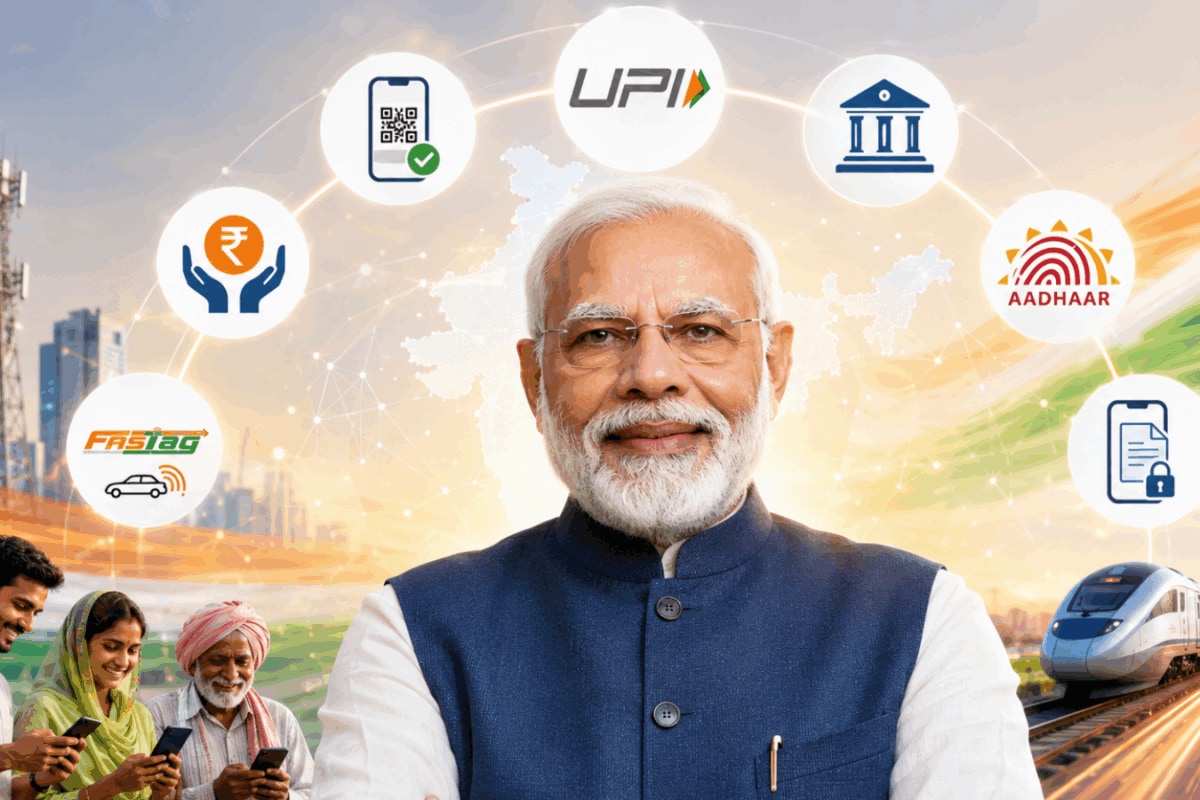
The Modi Legacy In Your Pocket: Everyday Digital Services That Changed India In The Past 12 Years Published By, Last Updated: June 10, 2026, 09:52 IST The story of the Modi years is, in many ways, the story of India's digital public infrastructure that has transformed how citizens interact with money, govt and public services. Rapid Read As PM Narendra Modi completes 12 years in office, his most enduring legacy may be found in the simple act of scanning a QR code, downloading a document or receiving a government payment. (AI generated image) Twelve years ago, carrying a thick wallet, standing in bank queues, collecting physical documents and waiting days for government services was a normal part of Indian life. Today, millions of Indians pay for a cup of tea with a QR code, store official documents on their phones, cross toll plazas without stopping, receive government benefits directly into bank accounts and file taxes online in minutes. As Prime Minister Narendra Modi completes 12 years in office, one of the most visible changes in India is more than a highway, a bridge or a government building. It is the smartphone in the hands of ordinary citizens. The story of the Modi years is, in many ways, the story of India’s digital public infrastructure – often called the India Stack – that has transformed how citizens interact with money, government and public services. UPI Revolution: The QR Code That Replaced Cash Perhaps nothing captures India’s digital transformation better than UPI. In 2016, UPI was a little-known payment platform. A decade later, it has become the backbone of India’s retail economy. According to official data, UPI processed more than 200 billion transactions in 2025-26 and now accounts for around 85 per cent of India’s retail digital payment volume. Transaction values crossed Rs 314 lakh crore in FY26. From vegetable vendors and tea stalls to shopping malls and hospitals, QR codes have become as common as cash registers.
The significance lies not merely in the volume but in behaviour. Small-value transactions that once relied entirely on cash have moved into the digital ecosystem. UPI is now used for grocery shopping, fuel purchases, taxi fares, utility bills and even roadside snacks. Jan Dhan: The Bank Account That Became A Gateway Digital payments would have struggled without bank accounts. The government’s financial inclusion push through the Jan Dhan programme brought hundreds of millions into the formal banking system. Combined with Aadhaar and mobile connectivity, this created the JAM (Jan Dhan-Aadhaar-Mobile) architecture that became the foundation for digital governance. For many low-income households, the first bank account became the first step toward receiving subsidies, pensions and welfare benefits directly. DBT: Welfare Without Middlemen One of the biggest administrative changes has been Direct Benefit Transfer (DBT). Instead of moving funds through multiple layers of bureaucracy, benefits are transferred directly into beneficiaries’ bank accounts. Government data shows DBT transfers have crossed Rs 44 lakh crore across hundreds of schemes, while leakages caused by duplicate or ghost beneficiaries have been significantly reduced. For millions of beneficiaries, this means welfare payments arrive directly on their phones through SMS alerts. A Digital Locker In Every Pocket Losing important documents once meant endless paperwork. DigiLocker changed that equation. Citizens can now store driving licences, educational certificates, insurance documents, PAN details and vaccination certificates digitally. DigiLocker has grown to more than 53 crore users and billions of issued documents. For students applying to universities, job seekers submitting certificates or drivers stopped at checkpoints, the ability to access verified documents instantly has reduced dependence on physical paperwork. FASTag: The Toll Plaza Revolution Until recently, highway travel often meant long queues at toll booths. FASTag transformed that experience by enabling automatic toll deduction through RFID technology. Vehicles can now pass through dedicated lanes without stopping, reducing waiting times, fuel consumption and congestion.
The system has become nearly universal across India’s national highway network and has fundamentally altered long-distance road travel. The Tax Return That Moved Online Filing taxes was once associated with paperwork and visits to tax offices. Today, most income tax returns are filed digitally. Pre-filled forms, Aadhaar integration and online verification have significantly simplified compliance for salaried taxpayers and businesses. The shift may not attract headlines, but it represents one of the largest digitisation exercises in public administration. Vaccination Certificate That Became A Global Model During the Covid-19 pandemic, India built one of the world’s largest digital vaccination management systems through CoWIN. Citizens could register online, book vaccination slots and download digitally verifiable certificates within minutes. The platform handled hundreds of millions of users and demonstrated how digital infrastructure could be deployed rapidly at national scale during a crisis. Government Services On A Smartphone Applications that once required visits to government offices are increasingly available online. Through platforms such as UMANG and other digital portals, citizens can access thousands of government services ranging from utility payments to certificates and registrations. UMANG alone serves crores of registered users and offers access to services across multiple ministries. The cumulative effect has been to reduce friction between citizens and the state. The Rise Of Digital Identity At the foundation of many digital services lies Aadhaar. With more than 142 crore enrolments, Aadhaar has become the world’s largest biometric identity system. It supports authentication for banking, welfare delivery, telecommunications and numerous public services. Supporters argue that it has improved efficiency and reduced duplication in service delivery. India Stack Goes Global Perhaps the most remarkable aspect of India’s digital journey is that it is now being studied internationally. UPI has expanded beyond India’s borders and is operational in several countries for cross-border payment connectivity. Global institutions increasingly cite India’s Digital Public Infrastructure model as a case study in using technology to scale governance and financial inclusion.
More Than An App Story The digital transformation of the last decade is often measured in transaction volumes, user registrations and savings figures. Those numbers are indeed staggering: hundreds of billions of digital payments, crores of beneficiaries receiving direct transfers and hundreds of millions accessing digital services. But the larger story is behavioural. The average Indian today expects to pay instantly, receive government benefits directly, access documents digitally and complete many official tasks through a smartphone. From applying for a passport applying for an Aadhaar, everything now happens in minutes on your smartphones. That expectation did not exist at this scale in 2014. As PM Narendra Modi completes 12 years in office, his most enduring legacy may not be found in a government office or even in a flagship project. It may be found in the simple act of scanning a QR code, downloading a document or receiving a government payment – everyday actions that millions of Indians now perform without a second thought. News18 Newsletter Handpicked stories, in your inbox A newsletter with the best of our journalism submit About the Author Pragati Ratti Pragati is a News Editor at news18.com. Having headed the Business and Viral sections, Pragati now ideates, writes and edits long-form features and articles on national and global affairs. She ensures... Read More First Published: June 10, 2026, 09:52 IST News india The Modi Legacy In Your Pocket: Everyday Digital Services That Changed India In The Past 12 Years Disclaimer: Comments reflect users’ views, not News18’s. Please keep discussions respectful and constructive. Abusive, defamatory, or illegal comments will be removed. News18 may disable any comment at its discretion. By posting, you agree to our Terms of Use and Privacy Policy Loading comments...
 The BriefWire