Modi surpasses Nehru's elected-tenure record, enters 13th year as PM
Prime Minister Narendra Modi has crossed a significant political milestone, surpassing the tenure record set by India's first Prime Minister, Jawaharlal Nehru, in terms of
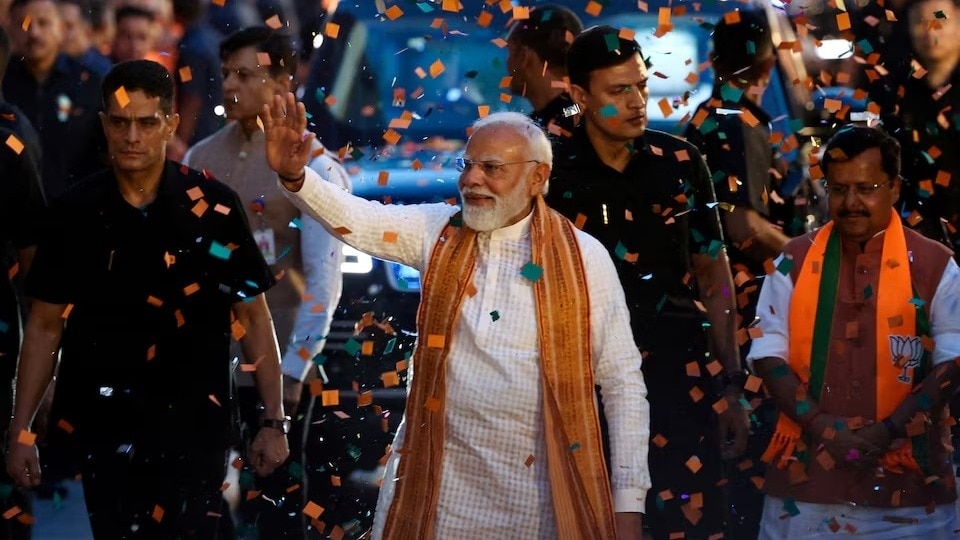
Prime Minister Narendra Modi has crossed a significant political milestone, surpassing the tenure record set by India's first Prime Minister, Jawaharlal Nehru, in terms of leading an elected government after the Constitution came into force. Having first taken office on May 26, 2014, Modi has now completed 4,399 consecutive days as Prime Minister. The milestone places him ahead of Nehru's 4,398-day tenure as the head of an elected government formed after the first general elections in 1952. Read Full Story Nehru, who was sworn in as Prime Minister on May 13, 1952 following India's first Lok Sabha election, served continuously for 4,397 days in that capacity until May 1964. While Nehru remained Prime Minister from August 15, 1947 until his death on May 27, 1964, historians generally distinguish between his tenure as head of the interim government and his period leading an elected government after the adoption of the Constitution and the first general election. The latest milestone comes as Modi enters his third consecutive term in office after being sworn in again on June 9, 2024, following the NDA's victory in the Lok Sabha elections.
A POLITICAL MILESTONE The achievement underscores Modi's enduring political influence and the BJP's electoral success over the past decade. Under his leadership, the party has expanded its footprint across much of the country and remains a dominant force in national politics. Winning three consecutive mandates and remaining in office for more than 12 years places Modi among the most successful political leaders in independent India's history. However, the record also marks the beginning of a new phase for the Prime Minister, with expectations increasingly focused on delivering long-term economic and developmental goals. THE CHALLENGE AHEAD As Modi begins the next chapter of his tenure, the government's focus remains centred on its "Viksit Bharat 2047" vision -- an ambitious roadmap aimed at transforming India into a developed nation by the centenary of Independence. Among the government's key priorities are sustaining high economic growth, expanding manufacturing, strengthening infrastructure, promoting semiconductor production, developing green hydrogen capabilities, and accelerating digital governance initiatives. The government has also set its sights on making India one of the world's largest economies in the coming years.
Policymakers have repeatedly stated their goal of overtaking Germany and Japan to position India behind only the United States and China in terms of economic size. India's startup ecosystem has also expanded dramatically over the past decade, while the government is pushing for growth in emerging sectors such as space technology, artificial intelligence and advanced manufacturing. VISION 2047 AND INFRASTRUCTURE PUSH The broader Vision 2047 programme envisages a major transformation of India's infrastructure and economic landscape over the next two decades. Projects such as high-speed rail corridors, expressway networks, modern railway stations, logistics hubs and digital public infrastructure are being positioned as key pillars of that strategy. The government has also emphasised skilling India's young population, viewing human capital development as essential to sustaining long-term growth and enhancing India's global competitiveness. On the foreign policy front, India has sought a more active role in global affairs in recent years, projecting itself as a voice of the Global South while seeking greater influence in international institutions, including a permanent seat on the UN Security Council. FROM INSTITUTION-BUILDING TO EXPANSION The comparison between Nehru and Modi reflects two distinct phases of India's post-independence journey.
Nehru's tenure was defined by nation-building in the aftermath of Partition, the establishment of democratic institutions and the creation of scientific, educational and industrial infrastructure. Institutions such as the IITs, AIIMS, major public sector enterprises and large infrastructure projects trace their origins to that period. Supporters of the current government argue that Modi's tenure has focused on expanding and modernising that foundation through digital transformation, infrastructure development, welfare delivery reforms and efforts to boost domestic manufacturing. At the same time, analysts note that the government faces significant challenges, including job creation, managing coalition dynamics, sustaining growth amid global economic uncertainties and addressing rising expectations from a young population. As PM Modi moves beyond a record-setting tenure, the central question is no longer how long he remains in office, but whether his government's Vision 2047 agenda can deliver the transformation it promises over the next two decades. Ends
 The BriefWire