Why hasn't India banned Paraquat, a toxic herbicide rejected by much of the world?
A chemical so toxic that even a few drops can prove fatal to humans, and for which no antidote exists anywhere in the world, continues
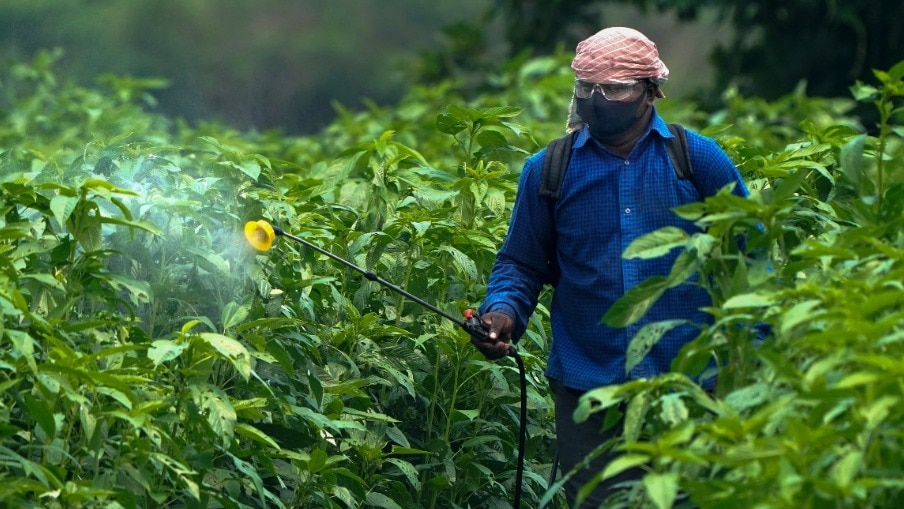
A chemical so toxic that even a few drops can prove fatal to humans, and for which no antidote exists anywhere in the world, continues to be sprayed across Indian farms. The chemical in question is the herbicide Paraquat Dichloride. Due to its extreme toxicity and potentially deadly impact on human health, many developed and developing countries have completely banned it. Yet in India, critics argue that weak regulatory oversight has allowed its widespread use to continue. Read Full Story The key question raised by campaigners is: if 74 countries have already deemed Paraquat too dangerous and banned it, why is it still being used in Indian agriculture? A HISTORY OF PARAQUAT Paraquat was first synthesised in 1882 by two Austrian scientists. Initially known as "methyl viologen," it was used as a chemical dye for textiles and other materials. At the time, its toxic properties were not fully understood. Its herbicidal properties were discovered in 1955 by British scientists working at Imperial Chemical Industries (ICI) laboratories in Berkshire, UK. Researchers found that the chemical could rapidly dry out and kill plants. Following this discovery, ICI commercialized the product and began large-scale production in 1961.
It was launched globally in 1962 under the brand name Gramoxone. Ironically, the countries associated with its discovery and development later moved to ban it. Austria prohibited its use in 1993, while the UK banned its sale and application in 2007 due to health concerns. Critics point out that although the UK banned Paraquat domestically, production continued for export to developing countries, including India. Another notable example is Switzerland, home to agrochemical giant Syngenta, one of the major manufacturers of Paraquat. Switzerland banned the herbicide in 1989. China followed suit in 2017, prohibiting its domestic use despite later becoming the owner of Syngenta. According to the article, Syngenta has informed Indian stakeholders that it plans to stop global production of Paraquat by the end of June 2026. However, other manufacturers continue to produce the chemical, and India has not imposed a nationwide ban. WHY HAS INDIA NOT BANNED IT? The article questions why India continues to allow the use of a substance banned in numerous countries. Besides Austria, the UK and Switzerland, several European Union countries including France, Germany, Italy and Spain banned Paraquat in 2007.
Brazil, Thailand and Malaysia imposed bans in 2020, Canada in 2023, and countries such as Vietnam, South Korea and Taiwan have also prohibited its use. Supporters of a ban argue that these countries have found agricultural alternatives without compromising crop productivity. PARAQUAT IN INDIA Paraquat entered India during the Green Revolution period, when increasing agricultural productivity and reducing labour costs became policy priorities. The Central Insecticides Board and Registration Committee (CIBRC) approved Paraquat Dichloride 24 per cent SL for use in only nine crops Tea Potato Cotton Rubber Coffee Paddy Wheat Maize Grapes The article questions why India continues to permit the chemical despite bans elsewhere. THE ANUPAM VERMA COMMITTEE In 2013, the Union Agriculture Ministry constituted a committee to review 66 pesticides that had been banned in other countries but remained registered in India. The committee was headed by former Indian Agricultural Research Institute professor Dr Anupam Verma. According to the article, the committee's 2015 review effectively allowed Paraquat to remain in use, subject to conditions involving safety standards, packaging requirements and medical preparedness. Critics argue that many of these safeguards have not been implemented effectively in the field.
CONCERNS OVER FARM USE The article claims that more than 100 metric tonnes of Paraquat Dichloride are used annually in India. It further alleges that in parts of Rajasthan and Madhya Pradesh, farmers use Paraquat to rapidly dry standing moong crops before harvest in order to reduce labour costs. Critics argue that such practices could increase the risk of residues entering the food chain. The article also highlights that there is currently no specific antidote for Paraquat poisoning, making exposure particularly dangerous. THE BROADER DEBATE The piece argues that India's continued approval of Paraquat raises questions about regulatory priorities, public health safeguards and pesticide oversight. It calls for greater scrutiny of the herbicide's use and asks why a substance banned in many countries remains legally available in Indian agriculture. Note: The article presents a strongly critical view of Paraquat and India's regulatory framework. Its claims and conclusions reflect the perspective of the original author and should be considered alongside scientific assessments, regulatory reviews and official responses. Ends
 The BriefWire