POK on edge, Zojila cheer in India: The tale of two Kashmirs divided by LoC
Rawalakot, Muzaffarabad and Mirpur. These towns in Pakistan-occupied Kashmir (POK) have been rocked by unrest, detentions and killings that have challenged Islamabad's authority in the
Rawalakot, Muzaffarabad and Mirpur. These towns in Pakistan-occupied Kashmir (POK) have been rocked by unrest, detentions and killings that have challenged Islamabad's authority in the region. Just a hundred kilometres to the east, across the Line of Control (LoC), the mood is one of progress. Not protests. Engineers in Baltal, Sonamarg and Minamarg on Tuesday met deep beneath the Himalayas to celebrate the breakthrough of the strategically vital Zojila Tunnel in Jammu and Kashmir. The engineering marvel is expected to result in Asia's longest bidirectional tunnel upon completion. The all-weather Zojila Tunnel will connect J&K to Ladakh. Read Full Story The two developments, unfolding almost simultaneously on opposite sides of the LoC, show the divergent paths of the two parts of Kashmir, territories that Pakistan's misadventures in 1947 split into two different realities. While the entire Union Territories of Jammu and Kashmir, and Ladakh, Gilgit-Baltistan and the Shaksgam Valley are integral parts of India and are central to its territorial sovereignty, Pakistan has continued to occupy parts of the region since 1947. On one side, POK is witnessing unrest over governance, inflation, political representation and allegations of state repression. On the other, India marked a major infrastructure milestone with the breakthrough of the 13.15-km Zojila Tunnel. The project follows a decade of infrastructure expansion and public investment in Jammu and Kashmir. Once operational, the tunnel would end the annual winter isolation of vast areas beyond the Zojila Pass in Ladakh. Most importantly, the contrast goes beyond just the Zojila Tunnel or a single agitation. Over the last decade, Jammu and Kashmir has seen sustained investments in highways, tunnels, railways, power projects and tourism infrastructure. The Z-Morh Tunnel, Chenab Rail Bridge, Jammu-Udhampur-Srinagar-Baramulla Rail Link and Zojila Tunnel are part of India's broader push to improve connectivity and integrate remote areas with the rest of the country.
Meanwhile, POK has witnessed recurring protests over electricity tariffs, wheat prices, governance and political representation. A growing public anger against Islamabad's handling of the region has often been highlighted in these protests in POK. ONE REGION ON EDGE, ANOTHER BREAKS THROUGH Tuesday, June 9, was a day of two headlines. In POK, authorities moved to block a planned long march by the banned Joint Awami Action Committee (JAAC), days after deadly clashes in Rawalakot killed dozens. Official reports put the death toll at 11, though some activists and reports claimed a significantly higher number of casualties. Internet services have been suspended, hundreds have been detained, and security forces remain deployed across the region amid fears of further unrest. In India, Union Minister Nitin Gadkari attended the final breakthrough of the Zojila Tunnel in Jammu and Kashmir, where workers excavating from the Kashmir and Ladakh sides finally met underground. The 13.15-km tunnel, located at an altitude of around 11,500 feet, will become one of the world's longest single-tube bi-directional road tunnels and provide year-round connectivity between Kashmir and Ladakh. The tunnel will reduce travel time across the snowbound Zojila Pass and ensure that Ladakh remains connected even during winters, when heavy snowfall shuts the highway for months. The Zojila Tunnel is expected to be operational by 2028. HOW SAME GRIEVANCES, EVERY YEAR, KEEP FUELLING PROTESTS IN POK However, the story of the two sides of Kashmir did not begin this week. For years, people of POK have protested over high electricity bills, inflation, prices of basic food items and the Pakistani establishment's dominance in governance and representation. The JAAC, which is at the fore of the current agitation, itself emerged as a movement against economic distress in POK. The protests then broadened as the Pakistan Punjab-led administration reserved 12 seats for non-residents and more autonomy.
The protests have now spread across POK's towns and cities, like, Rawalakot, Muzaffarabad, Mirpur. Protests have also been reported in the adjoining Federally-administered unit of Gilgit-Baltistan. Before the recent protests, the JAAC in 2025 led a region-wide shutter-down and wheel-jam strike across the region demanding subsidised flour, electricity, political reforms, and an end to official privileges. The protests led to violent clashes. At least 12 people were killed by the Pakistani forces. India described the unrest as a natural consequence of Pakistan's oppressive policies and plundering of resources in POK. In 2024, protests erupted in POK against rising prices of flour, electricity, and inflation. The protests turned violent. Tear gas and bullets were fired and hundreds of arrests were made. At least four Kashmiris lost their lives. In these protests, some protesters raised slogans for "azadi" or freedom from Pakistan. On the other hand, the last decade has seen major investments in connectivity in Jammu and Kashmir. A DECADE OF INFRA UPGRADE, DEVELOPMENT IN JAMMU AND KASHMIR Since the abrogation of Article 370 in 2019, Jammu and Kashmir has seen a rise in investment and infrastructure spending. Annual investments, which were below Rs 450 crore before 2021, touched a record Rs 5,824 crore in 2025-26. Investment proposals worth over Rs 1.6 lakh crore have been received by the Jammu and Kashmir administration. The transformation of Jammu and Kashmir has also extended to entrepreneurship. The UT had just 69 registered startups in 2020. By 2025-26, that number had crossed 1,300, aided by dedicated startup policies, incubators and seed-funding support, with the government now targeting 2,000 startups by 2027. Improved road, rail and digital connectivity, a tourism boom and policy reforms have together reshaped parts of the local economy. On the infrastructure front, the Zojila Tunnel is part of a wider upgrade push, which includes the Z-Morh Tunnel near Sonamarg, the Chenab Rail Bridge, new highways, upgraded border roads and the completion of the rail link connecting Kashmir with the rest of India.
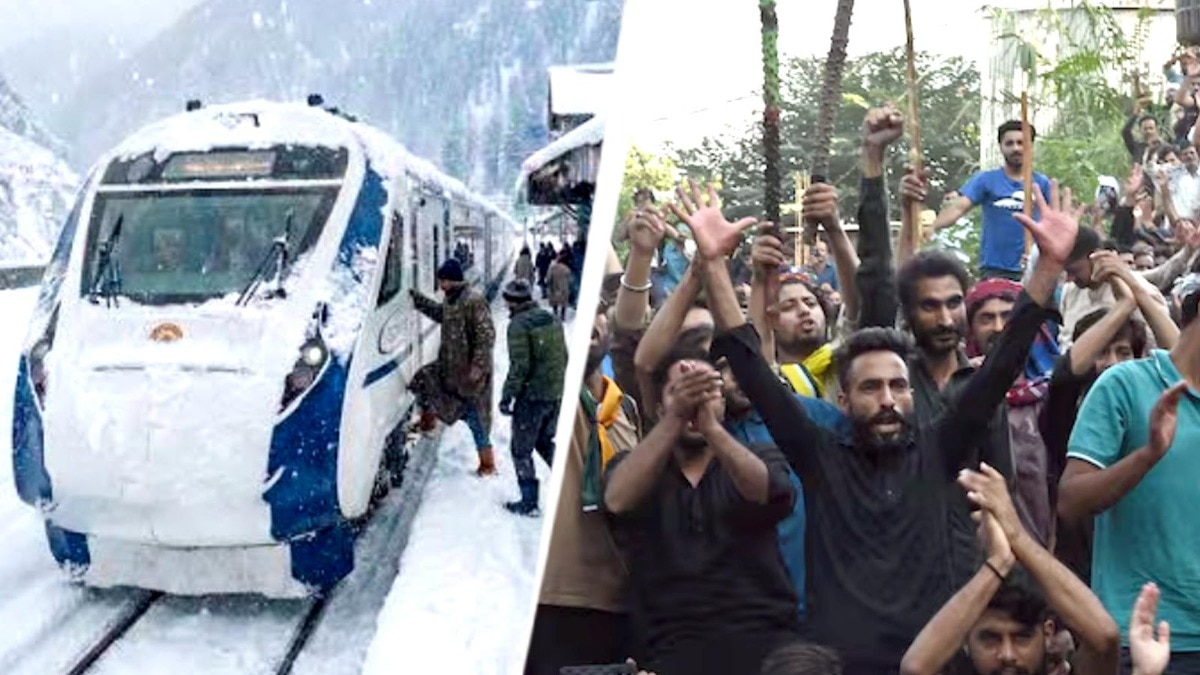
The sight of Vande Bharat trains running through snow-clad mountains and lush valleys of Kashmir is a spectacle that would have seemed unimaginable a few years ago. Together, these developments have reduced travel times, improved logistics, boosted tourism and strengthened troop deployment in the strategically sensitive region. As for Jammu and Kashmir's status as a Union Territory, the Centre has repeatedly maintained that this is a temporary arrangement. Home Minister Amit Shah has stated on the floor of Parliament that statehood will be restored to Jammu and Kashmir at an appropriate time. Security analysts argue that it is precisely this visible transformation in Jammu and Kashmir that fuels anxiety in Pakistan's establishment and becomes the backdrop to attempts to disrupt normalcy through attacks such as Pahalgam. Co-host of the Youtube Show 'India this Week', Khalid Baig, who said he recently visited Kashmir, contrasted what he called a "boring Kashmir" with a "burning POK". He said stone-pelting had become "a thing of history", claiming it had been more than 2,000 days since a young life was lost to violence. Baig pointed to packed cafes and restaurants, growing tourism and the Srinagar-Jammu railway link as signs of a "hard-earned peace" and a more aspirational youth. So, the developments of June 9 are unlikely to settle the political dispute over Kashmir. But they underline the contrast visible on the ground, which many choose to overlook. On Tuesday, as security forces and protesters prepared for a showdown in POK's Rawalakot, miners and engineers beneath the Zojila celebrated a breakthrough that would transform mobility in the region. The images from the two sides of Kashmir could hardly have been more different. Ends
 The BriefWire