PoK On The Boil: Why Deadly Protests Have Triggered An India-Pakistan War Of Words
PoK On The Boil: Why Deadly Protests Have Triggered An India-Pakistan War Of Words Published By, Last Updated: June 10, 2026, 09:07 IST The violence
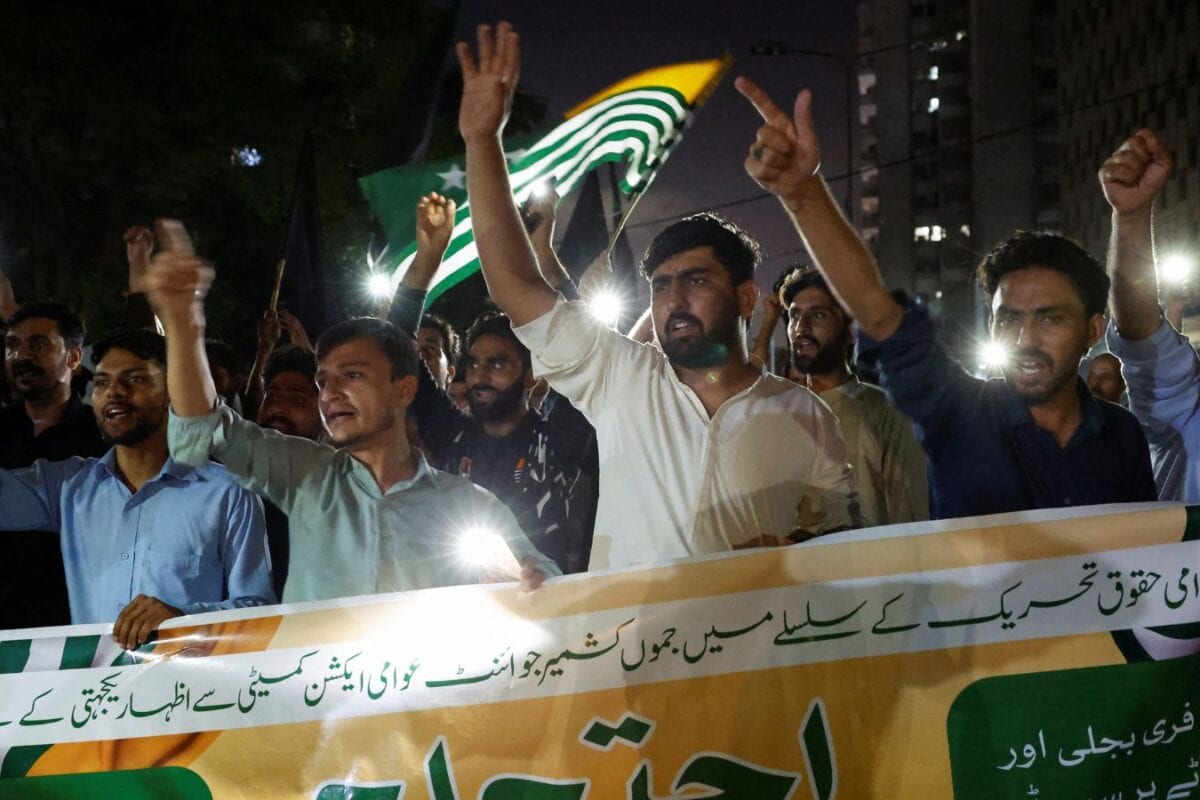
PoK On The Boil: Why Deadly Protests Have Triggered An India-Pakistan War Of Words Published By, Last Updated: June 10, 2026, 09:07 IST The violence was linked to demonstrations organised by Joint Awami Action Committee, a civil society coalition that Pakistani authorities recently declared a banned organisation Rapid Read The immediate trigger for the latest unrest was a dispute over 12 seats in the region’s legislative assembly that are reserved for refugees from Jammu and Kashmir who live in Pakistan. (Reuters) Pakistan-occupied Kashmir (PoK) is witnessing one of its most serious bouts of unrest in recent years, with violent clashes between protesters and security forces leaving hundreds dead and dozens injured. The turmoil has triggered a political crisis for Islamabad, drawn criticism from rights groups, and prompted India to launch a diplomatic offensive against Pakistan. What Happened? According to latest estimates, over 100 people have been killed and several injured since clashes broke out between protesters and security forces in several parts of Pakistan-administered Kashmir, with Rawalakot emerging as the epicentre of the unrest. The violence was linked to demonstrations organised by the Joint Awami Action Committee (JAAC), a civil society coalition that Pakistani authorities recently declared a banned organisation. Reuters reported that following the clashes, authorities imposed restrictions in several areas, suspended internet services in parts of the region and launched a crackdown on protest leaders. ALSO READ | India Calls Out Pakistan Over PoK Crackdown, Demands Global Accountability As Death Toll Crosses 30 The authorities subsequently issued arrest warrants against key JAAC figures and announced rewards for information leading to their capture. Who Is Behind The Protests? The protests have been spearheaded by the Joint Awami Action Committee, which first rose to prominence during large-scale demonstrations in 2024 over soaring electricity costs, wheat prices and broader economic grievances.
According to the Associated Press, the movement succeeded in forcing authorities to negotiate on several demands, helping it gain substantial public support. However, tensions never fully subsided, particularly over questions of political representation and governance. Pakistani authorities now argue that JAAC poses a threat to public order and national security. Protest leaders reject those accusations, insisting the movement represents local concerns and democratic aspirations. The Trigger: A Dispute Over 12 Assembly Seats While economic grievances helped build support for the movement, the immediate trigger for the latest unrest was a dispute over 12 seats in the region’s legislative assembly that are reserved for refugees from Jammu and Kashmir who live in Pakistan. ALSO READ | ‘No Food, Hundreds Detained’: PoK Activists Allege Massive Crackdown By Pakistan | Exclusive The Associated Press reported that JAAC and other local groups argue the arrangement gives non-residents disproportionate influence over political outcomes in Pakistan-administered Kashmir. Protest leaders claim the reserved seats dilute the political voice of local residents. Pakistan’s government, however, maintains that the seats are protected under constitutional arrangements and cannot simply be abolished. A court decision upholding the existing system reportedly intensified public anger and became a catalyst for fresh protests. Why Did The Situation Turn Violent? The circumstances surrounding the violence remain contested. Protesters have accused security forces of using excessive force against demonstrators. Pakistani authorities, meanwhile, contend that protesters turned violent and attacked government institutions and personnel. What is undisputed is the scale of the disruption. Demonstrations spread beyond Rawalakot to other towns, including Muzaffarabad and Mirpur. Businesses shut their doors, transport services were disrupted and strikes paralysed normal life across several districts. ALSO READ | Pakistan Threatens POK Protest Leaders With Murder Charges, Reopens 177 Cases | Exclusive Human rights organisations have also raised concerns.
Amnesty International called for restraint and expressed alarm over reports of mass arrests, internet restrictions and the use of force against protesters. Pakistan’s Response Islamabad has framed the unrest primarily as a law-and-order challenge. Authorities have defended the decision to ban JAAC, increased security deployments and launched operations against protest organisers. Some Pakistani officials have also alleged that elements within the protest movement maintain links with hostile foreign actors, although protest leaders have denied those allegations. At the same time, Pakistan-administered Kashmir prime minister Faisal Mumtaz Rathore has indicated that his government remains open to dialogue. However, he has also said certain constitutional issues, including the refugee-seat arrangement, are not open to negotiation. India’s Sharp Response India has used the crisis to highlight what it describes as Pakistan’s governance failures in PoK. Responding to the violence, Ministry of External Affairs spokesperson Randhir Jaiswal condemned the killings and accused Pakistan of suppressing dissent in the territory. “Pakistan’s efforts to blame India for its internal failures are doomed to fail," Jaiswal said, rejecting allegations that New Delhi had any role in fuelling the unrest. India has also urged the international community to take note of the situation. According to statements issued by the MEA, New Delhi believes the violence reflects deeper structural problems in Pakistan’s administration of the region and has called for accountability for alleged human rights violations. ALSO READ | ‘Pak Taking Away Our Rights, Haven’t Spoken To Kin In 24 Hours’: London Protesters Question Curbs In PoK The comments came after Pakistani officials and sections of the Pakistani media suggested that India was attempting to exploit the unrest. New Delhi dismissed those claims as misinformation designed to divert attention from developments on the ground. A Closer Look The current unrest is about more than a dispute over assembly seats.
Analysts say the protests reflect a wider accumulation of grievances related to governance, economic hardship, political representation and the relationship between local institutions and Islamabad. The fact that a movement that originally focused on bread-and-butter issues has evolved into a broader political confrontation underscores the depth of public frustration in parts of Pakistan-administered Kashmir. The immediate question is whether Islamabad opts for dialogue or doubles down on a security-led response. If authorities continue with arrests, restrictions and bans, observers warn the unrest could deepen further. On the other hand, renewed negotiations may help contain tensions, although the politically contentious issue of refugee representation appears unlikely to be resolved quickly. For now, Pakistan-administered Kashmir remains on edge. What began as a dispute over political representation has evolved into a broader test of governance, legitimacy and public trust in one of South Asia’s most politically sensitive regions. News18 Newsletter Handpicked stories, in your inbox A newsletter with the best of our journalism submit About the Author Apoorva Misra Apoorva Misra is News Editor at News18.com with over nine years of experience. She is a graduate from Delhi University's Lady Shri Ram College and holds a PG Diploma from Asian College of Journalism,... Read More First Published: June 10, 2026, 09:07 IST News explainers PoK On The Boil: Why Deadly Protests Have Triggered An India-Pakistan War Of Words Disclaimer: Comments reflect users’ views, not News18’s. Please keep discussions respectful and constructive. Abusive, defamatory, or illegal comments will be removed. News18 may disable any comment at its discretion. By posting, you agree to our Terms of Use and Privacy Policy Loading comments...
 The BriefWire