India’s Nuclear Weapons Bill Rose 12% In 2025: Where China And Pakistan Stand
India’s Nuclear Weapons Bill Rose 12% In 2025: Where China And Pakistan Stand Published By, Last Updated: June 10, 2026, 09:14 IST The world’s nine
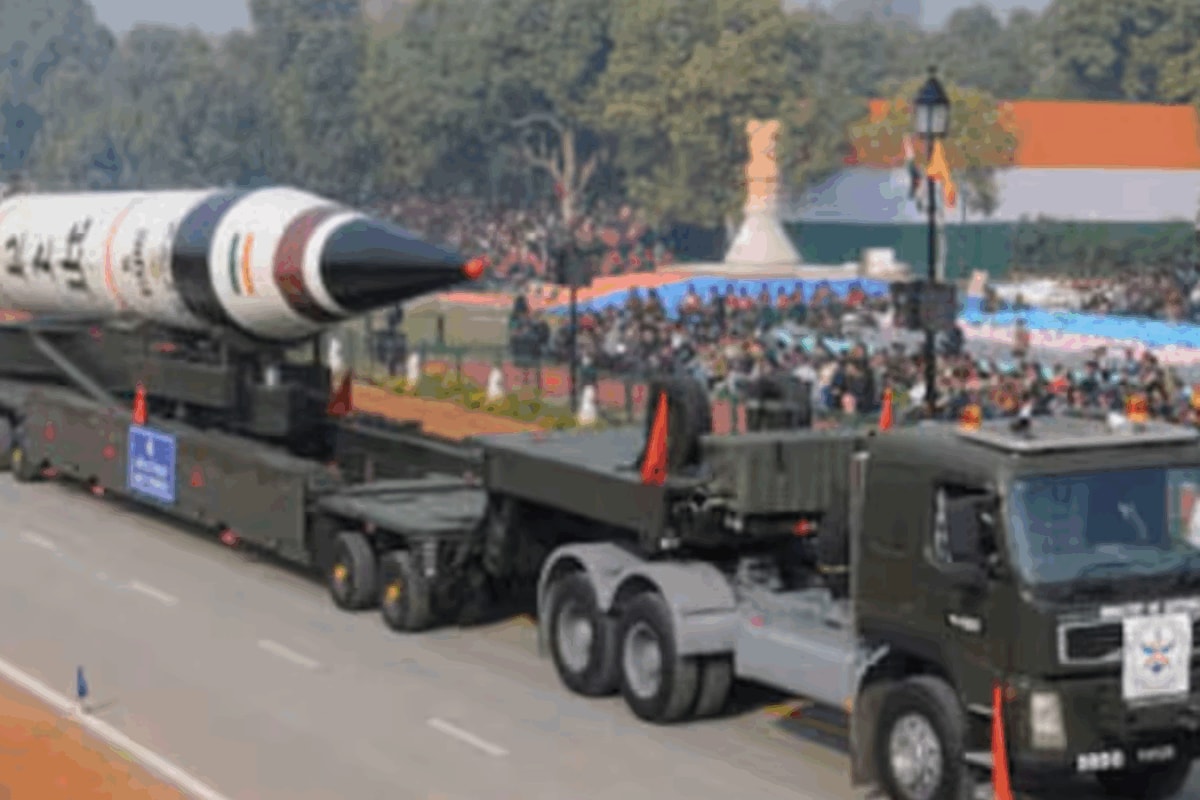
India’s Nuclear Weapons Bill Rose 12% In 2025: Where China And Pakistan Stand Published By, Last Updated: June 10, 2026, 09:14 IST The world’s nine nuclear-armed states spent nearly $119 billion in 2025, a record high. Here is where India stands against China and Pakistan. Rapid Read SIPRI estimates India’s arsenal at around 190 nuclear weapons, spread across a triad of land-based missiles, aircraft and sea-based systems. (Image: PTI) Nearly eight decades after the atomic bombings of Hiroshima and Nagasaki, the world’s nuclear powers are not scaling down. They are spending more, modernising faster and, according to experts, moving more weapons from storage towards potential use. The nine nuclear-armed states — the United States, Russia, China, Britain, France, India, Pakistan, Israel and North Korea — together spent nearly $119 billion on nuclear weapons in 2025, according to the latest report by the International Campaign to Abolish Nuclear Weapons (ICAN). The figure marks a record high and represents a 19 per cent jump from 2024. In absolute terms, nuclear weapons spending rose by nearly $16.8 billion in just one year. “A new nuclear arms race is upon us," the ICAN report warned. A separate report by the Stockholm International Peace Research Institute, or SIPRI, also raised concern over the direction of global nuclear arsenals. While the overall number of nuclear warheads has declined over the decades, SIPRI said the number of weapons available for potential use has increased. “Even though we have lower numbers of nuclear weapons, the level of nuclear dangers and nuclear risks are rising," SIPRI director Karim Haggag told AFP. Where India Stands India ranked sixth among the world’s nine nuclear-armed states in terms of nuclear weapons spending in 2025. According to the ICAN report, India spent an estimated $2.8 billion, or around Rs 246.7 billion, on nuclear weapons programmes during the year.
This was around 12 per cent higher than the previous year. India’s nuclear spending accounted for around three per cent of its overall defence budget, according to the report. In real-time terms, ICAN estimated that India spent around Rs 469,396 every minute on nuclear weapons activities in 2025. SIPRI estimates India’s arsenal at around 190 nuclear weapons, spread across a triad of land-based missiles, aircraft and sea-based systems. China remained the world’s second-largest nuclear weapons spender after the United States. Beijing spent an estimated $13.5 billion on nuclear forces in 2025, almost five times India’s estimated $2.8 billion expenditure. China’s arsenal is estimated at around 620 nuclear weapons, compared with India’s estimated 190. Because China does not publicly release detailed nuclear spending figures, ICAN estimated Beijing’s nuclear expenditure by calculating four per cent of its total military budget. SIPRI said China is expanding its nuclear arsenal faster than any other country. The report comes amid concerns that Beijing is moving towards a larger and more diversified nuclear force, including land-based missiles, strategic bombers and submarine-launched systems. “Intensifying geopolitical competition means a very strong incentive on the part of China to increase its reliance on nuclear weapons," Haggag told AFP. China’s nuclear programme is closely tied to state-controlled industrial entities. The China Nuclear Corporation oversees plutonium production and weapons development, while the China Aerospace Science and Technology Corporation is involved in intercontinental ballistic missile production. In financial terms, China spent approximately $25,744 every minute on nuclear weapons in 2025. Pakistan spent an estimated $1.5 billion on nuclear weapons in 2025, according to the ICAN report. That is lower than India’s estimated $2.8 billion expenditure. Pakistan’s nuclear arsenal is estimated at around 170 weapons, compared with India’s estimated 190. The report says Pakistan’s weapons are deployed mainly through land-based missiles and aircraft, while Islamabad continues to pursue improvements in sea-based nuclear capabilities.
Pakistan’s nuclear programme remains associated with state-run facilities, including Khan Research Laboratories. The spending comparison shows that India spends nearly twice as much as Pakistan on nuclear weapons. China’s estimated nuclear weapons expenditure in 2025 was almost nine times that of Pakistan. What The Numbers Show The United States remained by far the largest nuclear spender in 2025, allocating $69.2 billion to its nuclear forces. Washington spent more than all other nuclear-armed states combined. China followed with $13.5 billion, Britain with $12.6 billion, Russia with $9.5 billion and France with $7.7 billion. India came next at $2.8 billion, followed by Pakistan at $1.5 billion, Israel at $1.2 billion and North Korea at an estimated $656 million. Over the five-year period between 2021 and 2025, the nine nuclear-armed states together spent around $471 billion on their arsenals. The scale of spending becomes sharper when viewed in real-time terms. According to ICAN, nuclear weapons programmes consumed around $3,768 every second, more than $226,000 every minute and roughly $326 million every day in 2025. Why Experts Are Worried The concern is not only that nuclear-armed states are spending more. It is also that many are modernising delivery systems, extending the life of their arsenals and moving more weapons into operational readiness. SIPRI estimated that the total number of nuclear warheads stood at 12,187 at the start of 2025. But it warned that the number of weapons available for potential use had risen to 9,745. SIPRI also said global nuclear stockpiles are likely to begin increasing again in the coming years as dismantlement slows and deployment of new weapons accelerates. ICAN’s director of programmes and co-author of the latest report, Susi Snyder, said the scale-up in nuclear weapons programmes, along with fears that artificial intelligence could increase the risk of nuclear weapons use, was deeply alarming.
“To be perfectly honest, I’m terrified," she told AFP. Why Nuclear Weapons Spending Locks Countries Into Decades Of Costs A key argument in the ICAN report is that nuclear weapons spending is not limited to current budgets. Many systems being developed or inducted today are expected to remain in service for decades, creating financial and strategic commitments for future governments. China’s JL-3 submarine-launched ballistic missile is expected to remain active into the 2050s. Pakistan’s Shaheen-I missile programme is projected to remain operational around the same period. India’s Rafale-based deterrent capabilities could remain active until around 2072, based on historical service lives of comparable platforms, according to the report. The United States has even longer-term plans. Its Sentinel intercontinental ballistic missile programme is expected to remain operational beyond 2100, while new plutonium production facilities are designed for use until around 2120. ICAN argues that such programmes lock future governments into long-term spending obligations, even after current political leaders have left office. News18 Newsletter Handpicked stories, in your inbox A newsletter with the best of our journalism submit About the Author Karishma Jain Karishma Jain, Chief Sub Editor at News18.com, writes and edits opinion pieces on a variety of subjects, including Indian politics and policy, culture and the arts, technology and social change. Follo... Read More First Published: June 10, 2026, 09:13 IST News india India’s Nuclear Weapons Bill Rose 12% In 2025: Where China And Pakistan Stand Disclaimer: Comments reflect users’ views, not News18’s. Please keep discussions respectful and constructive. Abusive, defamatory, or illegal comments will be removed. News18 may disable any comment at its discretion. By posting, you agree to our Terms of Use and Privacy Policy Loading comments...
 The BriefWire