Fresh strikes on Tyre kill eight, as UN puts Lebanon destruction bill at $365 million, and rising
The assessment, conducted by the UN Development Programme (UNDP) in coordination with Lebanon’s Council for Scientific Research and other partners, also estimated that the damage
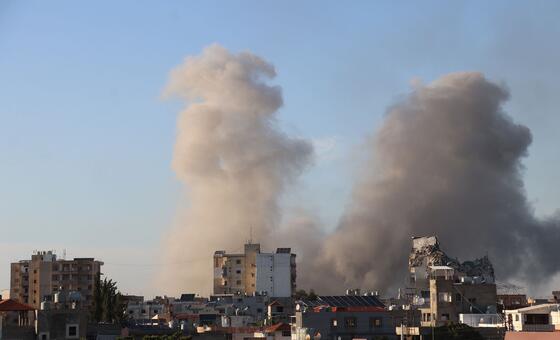
The assessment, conducted by the UN Development Programme (UNDP) in coordination with Lebanon’s Council for Scientific Research and other partners, also estimated that the damage generated nearly 649,000 cubic metres of debris. The findings come amid renewed concern over the mounting death toll and humanitarian suffering in Lebanon. According to media reports, Israeli air strikes hit the southern coastal city of Tyre, killing eight people. The Israeli military has reportedly issued new evacuation orders, including for the city’s Christian quarter for the first time. Guterres ‘deeply alarmed’ The developments came amid renewed calls for restraint from the UN Secretary-General. In a statement issued on Monday, António Guterres’ Spokesperson said the UN chief was “deeply alarmed by the renewed escalation in the Middle East” and urged all parties to “immediately stop attacks, exercise maximum restraint, and refrain from any action that could further inflame an already volatile situation.” Tweet URL UNHCR Southern suburbs The damage assessment relied on satellite imagery, artificial intelligence analysis and field verification to provide a snapshot of destruction so far in Beirut and Mount Lebanon.
It found that 146 buildings had been completely destroyed and 264 sustained partial damage. At the housing level, 3,168 units were destroyed and a further 4,437 damaged. Some of the heaviest destruction was recorded in Beirut’s southern suburbs and adjacent areas of Mount Lebanon, including Haret Hreik, Hadath, Chiyah, Burj el Barajneh, Laylaki and Choueifat-Amroussieh. UNDP said the findings would help national authorities and partners prioritise recovery and reconstruction efforts and support affected communities in returning to normal life. Humanitarian needs growing The damage assessment comes as UN agencies and partners warn that conditions continue to deteriorate despite the ceasefire reached in April. More than one million displaced people have been registered through Lebanon’s government relief platform since the escalation began on 2 March.
More than 134,000 internally displaced people remain in collective shelters, with 642 emergency shelters currently operational. Reports from humanitarian partners point to worsening insecurity, repeated displacement and increasing housing instability. Many households face overcrowding, homelessness or unsafe living arrangements. Children are among the most affected. Humanitarian agencies report growing levels of fear, anxiety, sleep disturbances and emotional distress linked to ongoing insecurity and uncertainty. Syrian refugees and other non-Lebanese communities also remain vulnerable, facing heightened protection risks and barriers to accessing safe shelter. Health system under strain The conflict has also placed additional pressure on Lebanon’s already fragile health system. According to the UN World Health Organization (WHO) and health-sector partners, attacks on healthcare have continued despite the ceasefire.
Since 2 March, 196 attacks affecting health services have been recorded, resulting in 131 deaths and 379 injuries. Some 50 attacks have affected health workers, facilities and patients since mid-April, further eroding the capacity of an already strained health system.
 The BriefWire