How 'Bengaluru Development' Became Karnataka’s Most Powerful Portfolio
How 'Bengaluru Development' Became Karnataka’s Most Powerful Portfolio Reported By, Last Updated: June 09, 2026, 21:41 IST For decades, chief ministers have preferred to retain
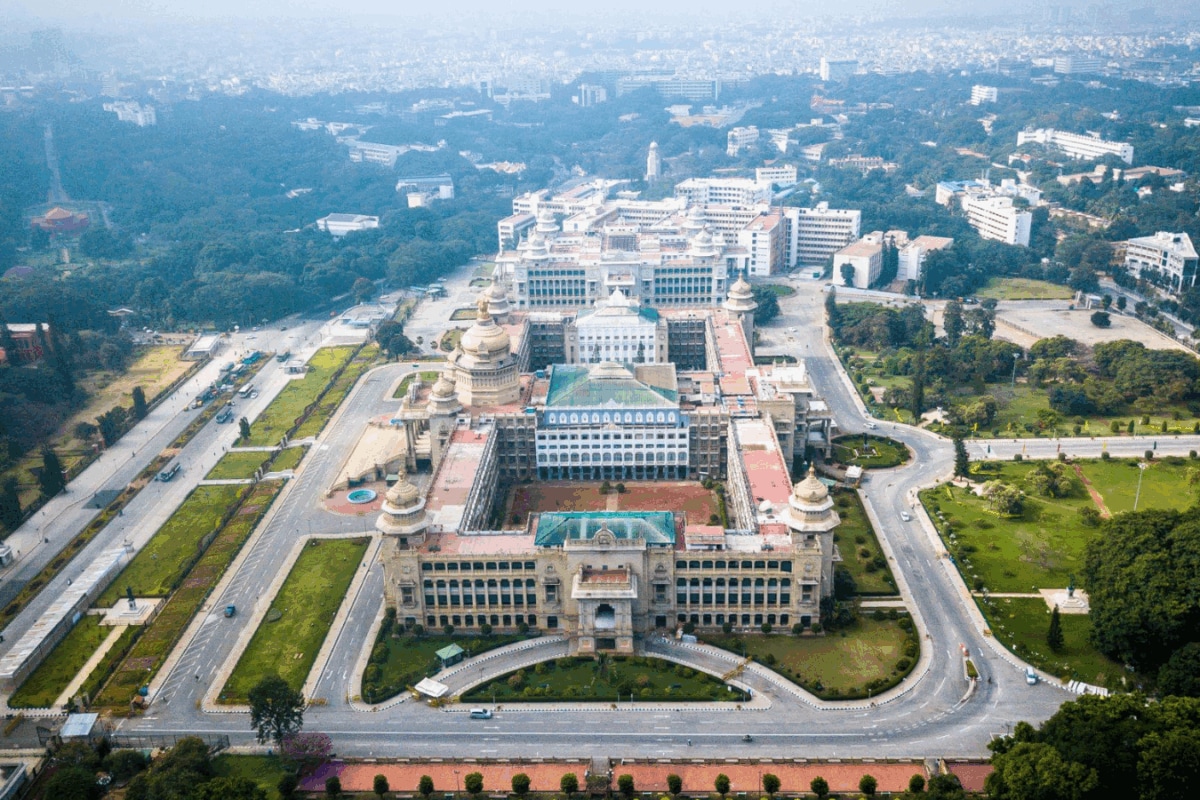
How 'Bengaluru Development' Became Karnataka’s Most Powerful Portfolio Reported By, Last Updated: June 09, 2026, 21:41 IST For decades, chief ministers have preferred to retain direct control over Bengaluru’s development machinery, irrespective of which party was in power The idea in 2015 was to bring Bengaluru’s major planning and development agencies under one umbrella. Representational image The recent power tussle within the Congress over the Bengaluru Development Ministry has once again highlighted why the portfolio is regarded as one of the most powerful and politically significant assignments in Karnataka. Alongside heavyweight departments such as Public Works, Water Resources, Revenue and Social Welfare, Bengaluru Development has long been viewed as a power centre within the government. The reason lies not merely in Bengaluru’s status as Karnataka’s capital but in the enormous influence that comes with controlling the agencies that shape the growth of India’s technology capital. For decades, chief ministers have preferred to retain direct control over Bengaluru’s development machinery, irrespective of which party was in power. Bengaluru is not merely another city. It is Karnataka’s economic engine, contributes a substantial share of the state’s revenues, and attracts billions of rupees in public and private investment every year. At the heart of the portfolio’s significance are agencies such as the Bengaluru Development Authority (BDA), Greater Bengaluru Authority (GBA), Bengaluru Metropolitan Region Development Authority (BMRDA), Bengaluru Metro Rail Corporation Limited (BMRCL), Bengaluru Water Supply and Sewerage Board (BWSSB), and several other urban infrastructure bodies. Together, they oversee land acquisition, layout approvals, township development, Metro expansion, road projects, water supply, and long-term urban planning. Control over these institutions effectively means control over some of the state’s largest infrastructure projects, land decisions, and development priorities. Political observers often point out that Bengaluru Development has never been merely an administrative portfolio. It offers visibility, influence, and ownership over projects worth thousands of crores. That is why successive chief ministers, including SM Krishna, BS Yediyurappa, HD Kumaraswamy, Siddaramaiah, and Basavaraj Bommai, were reluctant to part with it. The political importance of the portfolio grew significantly during SM Krishna’s tenure between 1999 and 2004.
As Bengaluru emerged as India’s IT capital under his ambitious “Bangalore Agenda", control over the city’s development machinery became synonymous with political visibility and governance credentials. The origins of the Bengaluru Development Ministry are interesting. Until 2015, Bengaluru’s development functions were spread across multiple departments and agencies, with Chief Ministers largely retaining direct control over the city’s key institutions. The Siddaramaiah government changed that by creating a dedicated Bengaluru Development Ministry and bringing several urban agencies under a single political authority. Congress leader KJ George became the first full-fledged Cabinet-rank Bengaluru Development Minister. While the move came shortly after his resignation as Home Minister amid the Deputy SP MK Ganapathy suicide controversy, where George was named by the officer in his video suicide note. George was forced to resign as an investigation was launched into the suicide. A dedicated, full-fledged ministry was set up; George was then given Bengaluru—a decision that was driven by a larger recognition that the city had become too important and complex to be managed through multiple departments. Karnataka’s capital required a dedicated political face to coordinate agencies dealing with land, infrastructure, transport, water supply, and urban planning. George’s appointment therefore marked the beginning of a new approach to Bengaluru’s governance. Even then, the portfolio largely remained in the hands of the state’s most powerful leaders. Yediyurappa retained Bengaluru Development and Town Planning for himself despite cabinet reshuffles. During the Congress-JD(S) coalition government, the portfolio was handled by the then Deputy Chief Minister G Parameshwara. When the Congress returned to power in 2023, Deputy Chief Minister DK Shivakumar was entrusted with Bengaluru Development in addition to Water Resources. Over the last two years, Shivakumar emerged as the face of several high-profile Bengaluru initiatives, including the tunnel road project, the Bengaluru Business Corridor, lake rejuvenation efforts, and governance reforms. In many ways, Bengaluru’s development agenda became closely associated with his political brand. Key agencies such as the BDA and BMRDA continue to remain under the charge of Chief Minister DK Shivakumar. Sources said Krishna Byre Gowda has conveyed his concerns to the Congress high command over the decision to keep the BDA and BMRDA outside the Bengaluru Development Department.
According to sources, he has argued that without these agencies under the ministry, effective coordination among the BDA, BMRCL, and other civic bodies could become difficult. He is understood to have pointed out that past experience has shown bureaucratic overlaps and jurisdictional conflicts between agencies often become hurdles to execution rather than facilitators of development, with Bengaluru ultimately bearing the brunt of such fragmentation. Sources said Byre Gowda has maintained that at a time when Bengaluru is grappling with mounting infrastructure pressures, severe traffic congestion, water shortages, monsoon flooding, and governance challenges, a dedicated minister with oversight over all major development agencies is essential to ensure swift coordination and accountability. Political commentator Sandeep Shastri, however, points out that historically, while Bengaluru Development Ministers may have been appointed, the most powerful agencies have often remained with the Chief Minister. “By and large, whichever minister has held the Bengaluru Development portfolio, the BDA and BMRCL have invariably been retained by the Chief Minister, irrespective of who occupied the post," he said. According to Shastri, when Shivakumar became Deputy Chief Minister in 2023, control over the Bengaluru Development apparatus formed part of the political understanding accompanying his elevation. “Now that the portfolio has gone to Krishna Byre Gowda, the Chief Minister appears to feel that some of the key agencies need to remain with him so that he can continue driving projects that are already underway. Ideally, the Bengaluru Development portfolio should be a comprehensive one. But politically, the Chief Minister believes that retaining certain agencies under his direct supervision will allow him to take ownership of the development work carried out through those institutions," he said. Shastri believes the situation also reflects the balancing act that often exists between the state leadership and the Congress high command. “Very often, a Chief Minister does not have complete freedom in deciding either the choice of ministers or the allocation of portfolios. There is always an attempt to balance the preferences of the central leadership with the Chief Minister’s own administrative and political priorities.
This appears to be a classic example of that process," he observed. The timing has only fuelled speculation. With discussions over future leadership equations, cabinet restructuring, and the balance of power within the Karnataka Congress continuing in the background, any redistribution of a portfolio as influential as Bengaluru Development is inevitably viewed through a political lens. Sources indicate that Chief Minister Shivakumar is keen that some of the flagship projects championed by him continue under his watch. These include the Bengaluru Business Corridor, formerly known as the Peripheral Ring Road project, and the proposed Bidadi Township project, both anchored by agencies that remain outside the Bengaluru Development Ministry. At the same time, Shivakumar’s pet project, the underground tunnel road, is linked to Bengaluru Smart Infrastructure Limited (B-SMILE) and also falls under the Bengaluru Development Ministry. Ironically, the current controversy revolves around the very principle on which the ministry was created. The idea in 2015 was to bring Bengaluru’s major planning and development agencies under one umbrella. A decade later, the debate is whether a Bengaluru Development Minister can effectively function if some of the city’s most powerful agencies remain outside the minister’s control. News18 Newsletter Handpicked stories, in your inbox A newsletter with the best of our journalism submit About the Author Rohini Swamy Rohini Swamy, Associate Editor at News18, has been a journalist for nearly two decades in the television and digital space. She covers south India for News18’s digital platform. She has previously wor... Read More First Published: June 09, 2026, 21:41 IST News cities bengaluru-news How 'Bengaluru Development' Became Karnataka’s Most Powerful Portfolio Disclaimer: Comments reflect users’ views, not News18’s. Please keep discussions respectful and constructive. Abusive, defamatory, or illegal comments will be removed. News18 may disable any comment at its discretion. By posting, you agree to our Terms of Use and Privacy Policy Loading comments...
 The BriefWire