Making Peace With War: 2025 Saw Most Armed Conflicts Since WW II, Says New Study
Making Peace With War: 2025 Saw Most Armed Conflicts Since WW II, Says New Study Written By, Last Updated: June 09, 2026, 18:59 IST The
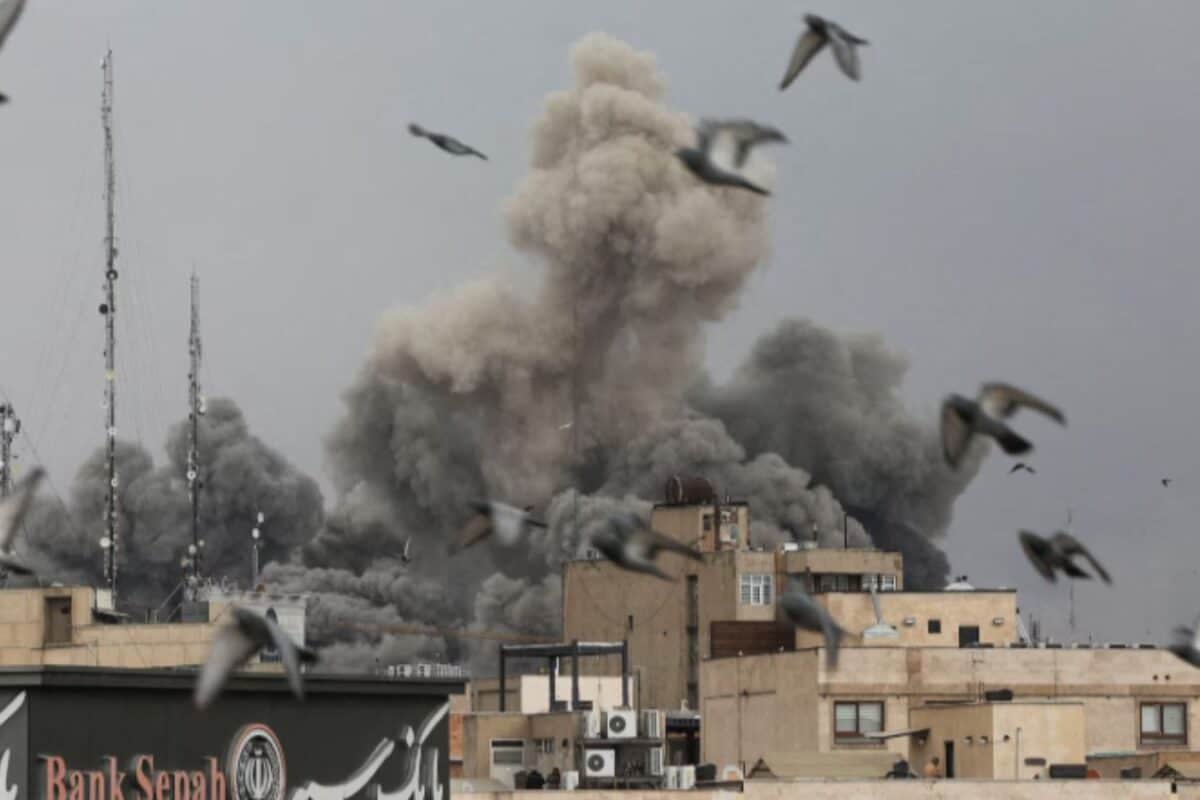
Making Peace With War: 2025 Saw Most Armed Conflicts Since WW II, Says New Study Written By, Last Updated: June 09, 2026, 18:59 IST The immediate fallout of this historic spike in warfare manifests in a severe, compounding global humanitarian crisis With multiple high-intensity battlefields active simultaneously, international aid corridors, supply chains, and relief budgets are strained beyond capacity. (Representational image: Reuters) The world witnessed a historic surge in state-based conflicts in 2025, marking the highest volume of active geopolitical warfare since the conclusion of the Second World War. According to a comprehensive study released by the Peace Research Institute Oslo (PRIO), the dramatic escalation in global hostilities has shattered long-standing post-Cold War security assumptions. The findings underscore a volatile fragmentation of the international order, where traditional diplomatic deterrence mechanisms are increasingly failing to contain territorial ambitions and regional rivalries, pushing global stability to a critical tipping point. A Post-World War II High in Global Warfare The data compiled by the Norwegian research institution reveals that the sheer number, intensity, and duration of active state-based conflicts in 2025 bypassed all previous cyclical peaks observed over the last eight decades.
For decades, global security frameworks successfully isolated or managed localised flashpoints. However, the contemporary landscape is defined by highly internationalised civil wars and direct interstate confrontations that resist conventional mediation efforts. Researchers point out that the current systemic breakdown is not isolated to a single continent but is rather a synchronised eruption of violence spanning Eastern Europe, the Middle East, sub-Saharan Africa, and parts of Asia. The Catalysts Behind the Escalation Several compounding factors drove the unprecedented conflict metrics recorded throughout the year. The primary driver remains the structural weakening of global regulatory bodies like the United Nations, alongside a noticeable decline in the enforcement capabilities of traditional superpower alliances. This governance vacuum has emboldened regional powers to pursue revisionist foreign policies and territorial adjustments through military force rather than multilateral arbitration. Furthermore, the proliferation of low-cost drone technology, advanced cyber warfare, and readily accessible proxy networks has significantly lowered the operational and financial barriers required to initiate and sustain prolonged military campaigns. Humanitarian Implications and Mass Displacement The immediate fallout of this historic spike in warfare manifests in a severe, compounding global humanitarian crisis.
With multiple high-intensity battlefields active simultaneously, international aid corridors, supply chains, and relief budgets are strained beyond capacity. The PRIO study highlights that the nature of modern urban warfare has drastically increased civilian casualty rates and triggered unprecedented waves of cross-border displacement. As populations flee active combat zones, neighbouring regions are grappling with severe migration pressures, threatening to destabilise local economies and provoke secondary political friction across Europe and Africa. The Changing Architecture of Peacekeeping The Norwegian analysis concludes with a sobering assessment of the future of international conflict resolution. The traditional playbook of brokering temporary ceasefires and deploying localised peacekeeping forces is proving largely ineffective against highly networked, multi-state proxy wars. To prevent this post-World War II peak from cascading into a broader global conflagration, security analysts maintain that the international community must rapidly pivot toward establishing a renewed, multipolar security architecture. Without a fundamental restructuring of international law enforcement and cross-border security guarantees, the high baseline of conflict observed in 2025 risks becoming the permanent, volatile normal for the foreseeable future.
News18 Newsletter Handpicked stories, in your inbox A newsletter with the best of our journalism submit About the Author Pathikrit Sen Gupta Pathikrit Sen Gupta is a Senior Associate Editor with News18.com and likes to cut a long story short. He writes sporadically on Politics, Sports, Global Affairs, Space, Entertainment, And Food. He tra... Read More First Published: June 09, 2026, 18:59 IST News world Making Peace With War: 2025 Saw Most Armed Conflicts Since WW II, Says New Study Disclaimer: Comments reflect users’ views, not News18’s. Please keep discussions respectful and constructive. Abusive, defamatory, or illegal comments will be removed. News18 may disable any comment at its discretion. By posting, you agree to our Terms of Use and Privacy Policy Loading comments...
 The BriefWire