Scotland changed its buildings forever to save disappearing birds: Tiny 'swift bricks' will now be built into new homes
The tiny bricks changing Scotland's new homes for birds Why swifts need help The science behind bird-friendly buildings A small brick with a big purpose
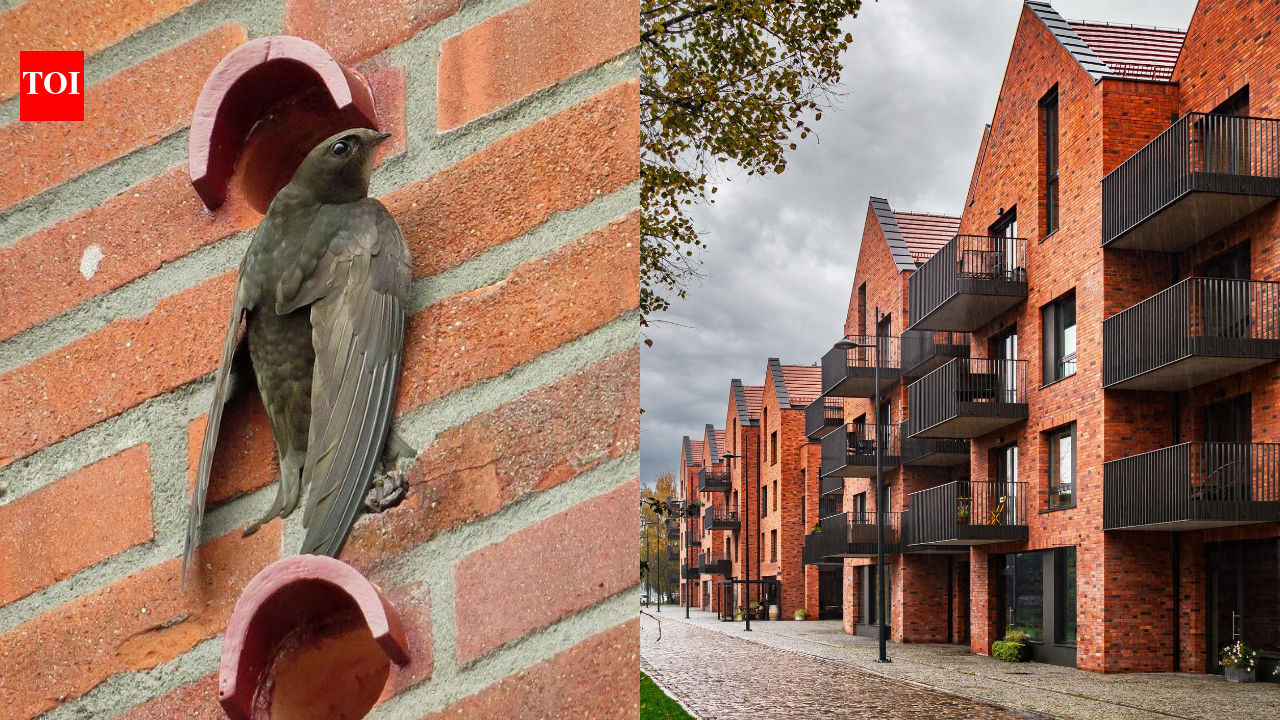
The tiny bricks changing Scotland's new homes for birds Why swifts need help The science behind bird-friendly buildings A small brick with a big purpose Scotland has become the first nation in the UK to legally require bird-friendly nesting spaces in new buildings, marking a significant step for urban wildlife conservation. The new measure centres on "swift bricks" – specially designed cavities built into walls that provide nesting sites for birds such as swifts, sparrows and starlings. Conservationists have long warned that modern construction methods are eliminating the gaps and crevices these species rely on for breeding. By integrating nesting spaces directly into buildings, Scotland hopes to help reverse decades of population declines while making biodiversity a standard feature of future developments.Swift bricks are hollow bricks or nesting cavities built directly into the walls of new buildings. From the outside they resemble ordinary bricks, but inside they contain a protected space where birds can safely nest.Unlike traditional bird boxes, swift bricks become part of the building itself and are designed to last for decades with little or no maintenance.
They can provide homes for several cavity-nesting species, including swifts, house sparrows and starlings.One of the biggest challenges facing many urban bird species is the loss of nesting habitat.Older buildings often contained small gaps beneath roof tiles, within masonry and around eaves. These spaces provided ideal nesting sites for birds. Modern construction techniques, however, prioritise energy efficiency and weatherproofing, resulting in tightly sealed buildings with few accessible cavities.As older structures are renovated or demolished, many birds are losing the nesting locations they have depended on for generations.The new requirement was introduced through Scotland's Natural Environment legislation, making the country the first in the UK to mandate swift bricks in new buildings where it is reasonably practical and appropriate.Supporters argue that the measure is a simple and cost-effective way to improve biodiversity without significantly affecting construction costs. Because the nesting spaces are installed during construction, they can be incorporated into buildings with minimal disruption.Conservation groups, including the Royal Society for the Protection of Birds (RSPB), welcomed the move, describing it as a major step towards creating wildlife-friendly communities.Swifts are among the UK's most remarkable birds.
They spend the vast majority of their lives in flight, feeding, sleeping and even mating while airborne.Despite their aerial lifestyle, swifts depend on secure nesting sites during the breeding season and often return to the same location year after year. When those sites disappear, breeding opportunities decline.In Scotland, swift populations have fallen dramatically over recent decades. Similar trends have been recorded across much of the UK, prompting growing concern among conservationists.The idea behind swift bricks is based on a straightforward ecological principle: species need suitable habitat to survive.When nesting opportunities disappear, bird populations can decline even if food remains available. By providing permanent nesting spaces within buildings, planners and conservationists hope to replace some of the habitat lost through modern development.Researchers increasingly view biodiversity-friendly architecture as an important tool for supporting wildlife in urban environments. Swift bricks represent one example of how small design changes can have a measurable ecological impact.Swift bricks typically cost only a small fraction of the overall cost of constructing a new home, yet they can provide nesting space for decades.Supporters believe that widespread adoption could create thousands of new nesting opportunities across Scotland in the coming years.
While the measure alone will not solve every challenge facing bird populations, it addresses one of the most significant and preventable threats: the loss of places to breed.As cities continue to grow, Scotland's decision could become a model for how future developments balance modern housing needs with the protection of wildlife.
 The BriefWire