I believed I was sleeping well, this fitness ring revealed just how wrong I was
While I write on technology and often have a ringside view of all that is happening in the world of personal tech and AI, I
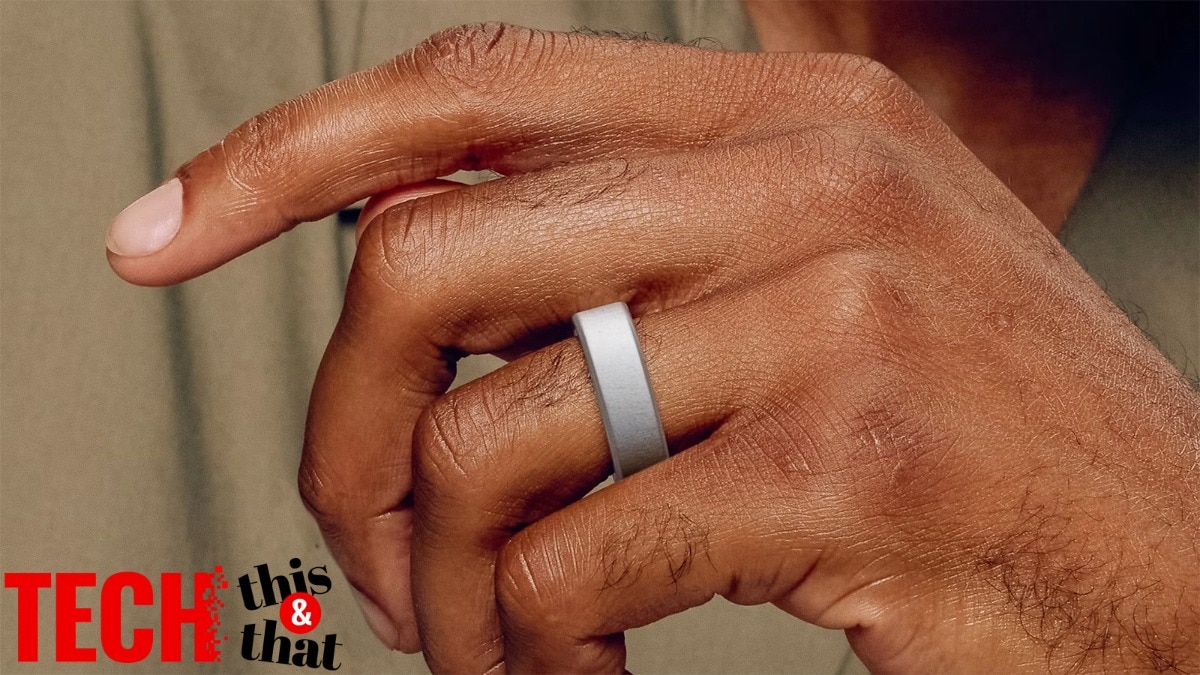
While I write on technology and often have a ringside view of all that is happening in the world of personal tech and AI, I am not an enthusiastic user of tech. In fact, I tend to avoid it. I believe I know personal tech too much, too well. And as the saying goes, familiarity breeds contempt. In the world of tech there are way too many “solutions” roaming around in search of problems. I mostly don’t have the kind of problems that some gadget or app can solve. Read Full Story Yet, recently I was proven wrong by a piece of technology — a fitness ring. To be specific, the one called Oura Ring 4, which I reviewed a few weeks ago. Although I sensed the potential and usability that the Ring would have for some people, I believed it would not be terribly useful to most. It looks nice and expensive on the finger with its titanium body and all the gadgetry inside it. Yet compared to something like Apple Watch, it is also limited in its feature set. But a bigger reason why I did not give the Ring 4 its full due in that review was also my belief that we have no need to collect so much data on ourselves and our bodies. With these devices, so often flaunting the latest tech and collecting data becomes the end goal. For example, taking 10,000 steps becomes the goal instead of feeling better and lighter. Similarly taking deep breaths and recording it in an app every hour becomes more important, sometimes even turning into an obsession that adds to, and not reduces, stress. Then there is esoteric data most people, who are generally healthy, don’t need to know. For example, you don’t need to track your blood oxygen level every hour, or every day, or even every week. Or your VO2 max. Or your gait length.
And so on. Long story short, I am not sold on cool gadgets and gazillion sensors. So, I put the Oura Ring 4 on my finger with skepticism. Several weeks later I believe that 24-hours fitness tracking is still somewhat unnecessary but if you must do it, maybe try to do it with the Ring 4, or something similar. It is the least intrusive way to do it, and arguably the most useful given how well the Ring 4 tracks sleep. Sleep. That is the main reason why I am now an evangelist for a good fitness ring. Before I started using the Ring 4, I only tracked my sleep once or twice, as part of reviewing a smartwatch or two. In general I find it cumbersome to wear something on the wrist while sleeping. But the Ring 4 is different. It is, given its size and shape, nonintrusive. And the data it collects is genuinely useful. The Oura Ring 4 collects a lot of useful data during sleep. It also proved me wrong. I have never been a great sleeper. But I also have not been particularly bad at it. Before I started using the Ring I believed I was sleeping between 7 to 8 hours every night, which meant adequate sleep. When I looked at the data, the Ring 4 told me I was wrong. Instead, it recorded that I was spending between 7 to 8 hours in bed but was sleeping only around 6 hours, which is apparently on the lower side. Before falling asleep and after waking up, while still in bed, I was scrolling news on my phone for tens of minutes. I knew it but never realised the extent of it until it was laid out as an irrefutable fact in the Oura app. Additionally, the Ring 4 collects data on quality of sleep. This is measured across several parameters. This data too helped explain why some days even after spending 8 hours in bed I woke up feeling groggy and lethargic.
The Ring 4 collects data on how much time I have spent in REM (Rapid Eye Movement) sleep, how much in deep sleep and how much awake, which I don’t even remember in the morning. It also calculates some key heart rate data — the resting heart rate and HRV — along with breaths per minute. These too reflect the quality of sleep, as well as detect sleep apnea, if any, by measuring blood oxygen and breathing regularity. Thankfully, I do not have sleep apnea but some nights, particularly after late-night exercise, I do get heart data that indicates lack of proper rest despite sleep. Two more key data points that Oura Ring 4 calculates are Chronotype and Sleep Debt. Chronotype is calculated after a few weeks of sleep data and it classifies the natural body clock that a person has. It is different for everyone. Once it has been calculated, the Ring 4 encourages you to stick to it by measuring your sleep midpoint with your personal Chronotype midpoint. In other words, it nudges you to go to bed around the same time every day. The Sleep Debt is measured after the Ring has figured out your typical sleep need after a few weeks of data. After a number has been set as a baseline, whenever your sleep duration is less than ideal, it gets added to debt. The overall effect of all this data, at least in my case, has forced me to change my belief in my sleep quality. Because what I believed did not reflect in the data. More crucially, what the data tells me in the morning indeed mirrors how I feel physiologically. Over a period of time, this data forces one to confront reality in a way they might not otherwise do. For example, now that I am guided by the Chronotype, I tend to go to sleep at the same time almost every night.
I am also more aware of my habit of picking up the phone while in bed and endless scrolling, and try to avoid it. The presence of Sleep Debt means that even though there are days when I incur debt, on weekends I aim to reset the needle back to zero. Is it all good and healthy and making me physiologically feel better? To be honest, I am not certain. And I believe I can’t be certain unless I have the means and desire to do what people like Dan Go and Bryan Johnson are doing, that is track every health measurement every minute. But I do know that I am sleeping slightly more in the last few weeks, that I am going to sleep more regularly, that I am beginning to form a rhythm, and that more often than not the data that the Ring app shows me in the morning also tends to correlate with how I am feeling that day. It might still not be worth the high price that the Ring 4 has in India — around Rs 30,000 — along with a monthly subscription of around Rs 600 for its data. But it is nonetheless useful and I am sure that people who don’t mind spending money on it will benefit from how it nudges users to get smarter about their sleep. At the same time, the Ring 4 is not the only game in town. There are other fitness rings, such as those made and sold by brands like Ultrahuman, Samsung, boAt. They likely offer similar — but not the same — functionality at a more aggressive price points and are worth looking into if a ring is what you want on your finger. Ends
 The BriefWire