Amazon techie shares 10 things he did sitting in India to get a Rs 1.8 crore job in UK
A software developer working at Amazon revealed the step-by-step strategy he claimed helped him land an international job package worth Rs 1.8 crore, all while
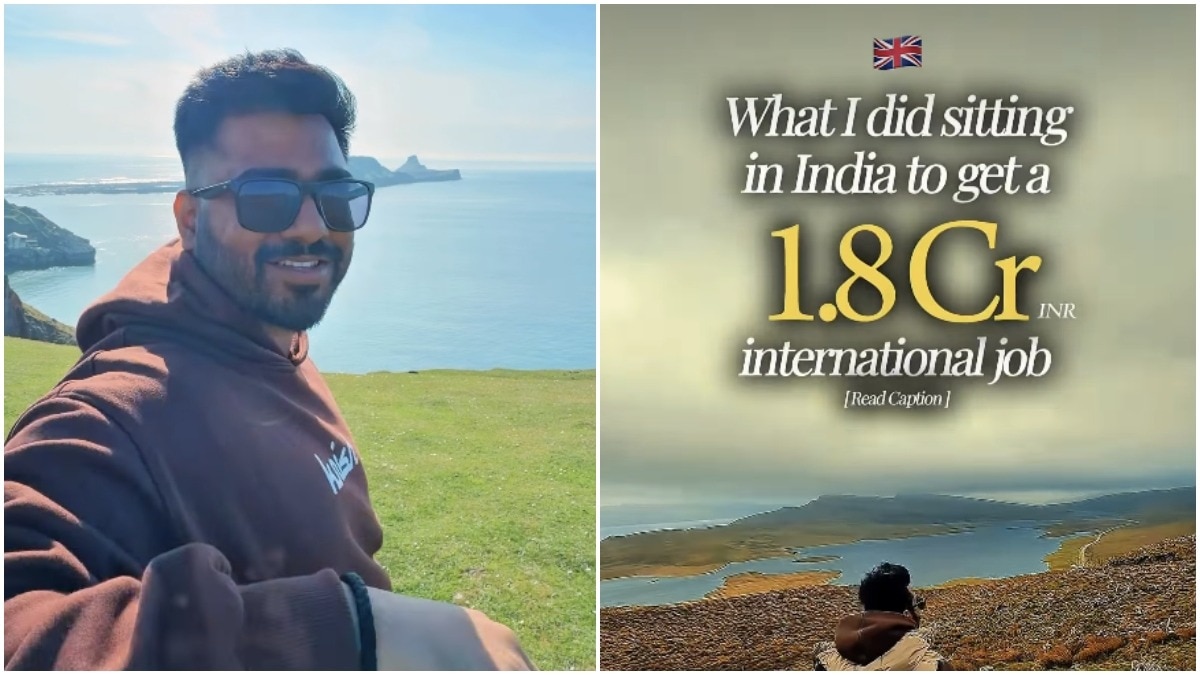
A software developer working at Amazon revealed the step-by-step strategy he claimed helped him land an international job package worth Rs 1.8 crore, all while sitting in India, without relocating or relying on overseas connections. Kartik Modi, a software engineer who regularly shared career advice and interview preparation tips on Instagram, posted a video detailing the roadmap he followed to secure a high-paying global role. Read Full Story The display text on the clip read, "What I did sitting in India to get a Rs 1.8 crore international job." In the video and accompanying caption, Modi stressed that his success was not the result of shortcuts or luck, but a structured preparation plan spread across several weeks. "No relocation. No network abroad. Just execution from my room," he wrote while breaking down the process he followed. According to Modi, the journey began with creating a target list of around 25 to 30 international companies that were actively sponsoring visas. He said he relied on platforms such as LinkedIn, Indeed and Levels.fyi to identify suitable opportunities and narrow down his options. Once he had a list of companies, Modi claimed he spent time studying dozens of job descriptions to identify recurring requirements.
By analysing nearly 40 listings, he noted the skills that appeared most frequently and used them to build a focused preparation roadmap instead of studying randomly. To stay disciplined, he divided his preparation into a 10 to 12-week plan. The first few weeks were dedicated to data structures and algorithms (DSA), followed by system design preparation, domain-specific knowledge and behavioural interviews. The final phase focused on mock interviews and job applications. For coding interviews, Modi said he deliberately avoided solving hundreds of questions. Instead, he concentrated on understanding patterns, mastering problem-solving approaches and practising how to clearly explain solutions during interviews. He credited resources such as LeetCode, NeetCode and InterviewBit for helping him prepare. He described system design as the "game changer" in his preparation. Modi focused on designing commonly discussed large-scale systems such as authentication platforms, payment systems, feeds, search engines and notification services. His preparation included learning about APIs, databases, caching mechanisms, system failures and trade-offs. Resources such as Grokking System Design, the System Design Primer on GitHub, AWS blogs and videos by Gaurav Sen were among the materials he used. Beyond technical preparation, Modi said he documented several real-world projects from his work experience, focusing on aspects such as scale, performance bottlenecks, latency issues and engineering decisions.
He maintained these notes on platforms like Notion and Google Docs so he could easily reference them during interviews. He also highlighted the importance of adapting to international interview styles. Rather than trying to guess answers, Modi said he focused on giving structured responses, communicating his thought process clearly and openly admitting when he did not know something. Another key step involved redesigning his resume. He created a one-page CV that emphasised measurable impact and achievements while avoiding what he described as traditional "Indian formatting." He used templates from Overleaf and ResumeWorded to align his resume with global hiring standards. Mock interviews, according to Modi, were non-negotiable. He completed between six and eight mock sessions and treated each one as an opportunity to identify and fix weaknesses before the real interviews. When it came to applications, he advocated a quality-over-quantity approach. Instead of mass applying, Modi said he targeted relevant positions and applied within a week of them being posted. The strategy, he claimed, eventually paid off. Modi revealed that he secured an international offer worth approximately Rs 1.8 crore annually while remaining in India throughout the process. Watch the video here The post received a whole lot of attention from professionals and aspiring software engineers.
Many users praised the structured approach, saying it demonstrated how preparation and consistency often matter more than shortcuts. Others pointed out that international opportunities were increasingly accessible to skilled candidates regardless of location, provided they understood what employers were looking for and prepared accordingly. Several commenters also emphasised that Modi's roadmap underscored the value of system design knowledge, mock interviews and clear communication skills, arguing that technical expertise alone is rarely enough to crack senior-level global roles. Others described his experience as proof that landing an international offer from India is possible when candidates focus on targeted preparation rather than applying indiscriminately to hundreds of jobs. For many job seekers, the biggest takeaway from Modi's post was his central message: securing a global role may not always require moving abroad first, but it does require a clear plan, disciplined execution and a willingness to prepare strategically. Ends
 The BriefWire