TMC Split, DMK-Congress Rift: How Opposition Turmoil Could Hand NDA An Edge In Parliament
TMC Split, DMK-Congress Rift: How Opposition Turmoil Could Hand NDA An Edge In Parliament Published By, Last Updated: June 09, 2026, 13:22 IST The NDA
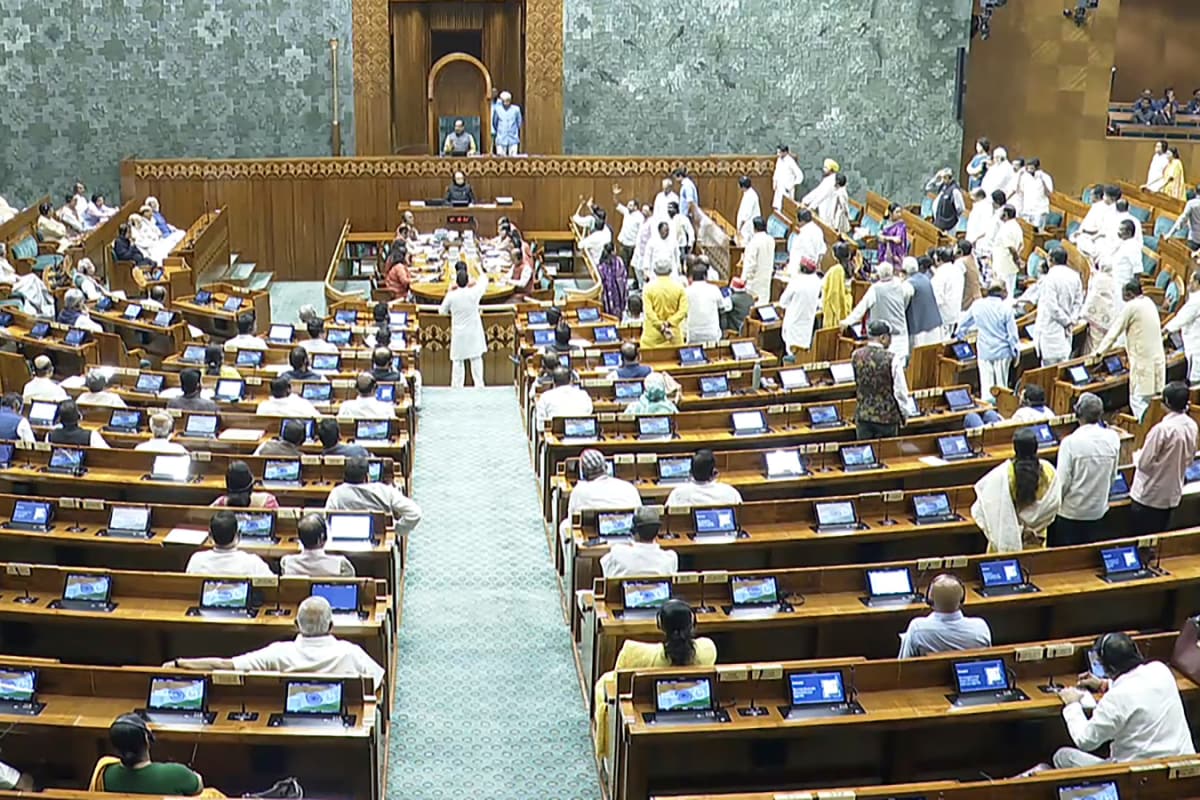
TMC Split, DMK-Congress Rift: How Opposition Turmoil Could Hand NDA An Edge In Parliament Published By, Last Updated: June 09, 2026, 13:22 IST The NDA could find itself closer than ever to the parliamentary strength it enjoyed during its peak years, before the 2024 Lok Sabha polls. Rapid Read Before the TMC rebellion, the NDA's effective strength in the Lok Sabha stood at around 342 MPs.(File photo) For nearly two years after the 2024 Lok Sabha election, the BJP-led NDA faced one significant parliamentary limitation despite returning to power: it has lacked the numbers required for major constitutional changes without support from outside parties. That arithmetic may now be changing rapidly. The reported rebellion by 20 Trinamool Congress MPs, the formal collapse of the Congress-DMK alliance, and the earlier shift of seven AAP Rajya Sabha MPs towards the NDA have together created a political situation that would have seemed improbable just months ago. The question now is whether the ruling alliance is gradually moving towards the kind of dominant parliamentary position that allows governments to pursue much larger structural changes. The Impact Of TMC Split At least 20 of the TMC’s 28 Lok Sabha MPs have reportedly written to Speaker Om Birla indicating their desire to support the NDA. The rebel group claims it has crossed the crucial two-thirds threshold required under the anti-defection law to seek recognition as a separate bloc. Under the Tenth Schedule, a split backed by at least two-thirds of a legislature party can avoid immediate disqualification proceedings. For TMC’s 28-member Lok Sabha contingent, the magic figure is 19. The rebels claim support from 20 MPs, putting them above that threshold. If the Speaker ultimately recognises such a breakaway formation, the impact extends far beyond Bengal politics. TMC has been one of the largest opposition parties in Parliament and one of the most vocal anti-BJP forces. A bloc of 20 MPs moving into the NDA camp or even providing stable outside support would represent one of the largest parliamentary shifts of the Modi era. The Parliament Maths The Lok Sabha currently has 543 elected members. For ordinary legislation, a simple majority is enough.
For a Constitutional Amendment Bill under Article 368, however, the government needs support from at least two-thirds of members present and voting, along with a majority of the total membership of the House. In practical political calculations, parties often use the benchmark of roughly 362 MPs – two-thirds of the full House strength – as the indicator of whether a government can comfortably push constitutional changes without depending on unpredictable outside support. Step One: The TMC Revolt The biggest immediate factor is the rebellion within the Trinamool Congress. Reports indicate that around 20 of TMC’s 28 Lok Sabha MPs have written to the Speaker expressing their willingness to support the NDA. If those 20 MPs formally shift their support to the government, the NDA’s tally rises from 293 to 313. The alliance would still remain 47 seats short of the two-thirds mark, but the distance would have narrowed substantially. This is why the developments in West Bengal are being watched so closely in New Delhi. The implications extend far beyond state politics. Step Two: What Happens If The DMK Extends Issue-Based Support? The second major variable is the DMK. The DMK’s break with Congress has dramatically altered the opposition landscape. The party has 22 MPs in the Lok Sabha. There is currently no indication that the DMK is considering joining the NDA. However, parliamentary politics often works through issue-based alignments rather than formal alliances. If the DMK decides to support the government on select legislation, particularly constitutional or institutional reforms, another 22 votes could effectively become available. That would take the tally to: 313 + 22 = 335 At that point, the NDA would be just 25 votes away from the 360 benchmark. Step Three: The Uddhav Sena Factor Another set of numbers being closely watched belongs to the Uddhav Thackeray-led Shiv Sena (UBT). The party currently has nine Lok Sabha MPs. If a split emerges and two-thirds of the MPs back the NDA, the government could potentially gain the support of six additional MPs. That would push the tally to: 335 + 6 = 341 The gap would then shrink to just 19 MPs.
What The April Constitution Vote Revealed An important clue about the government’s future prospects came during the Constitution Amendment Bill vote in April. The NDA’s core strength in Parliament was lower than the number of votes it actually secured. During that vote, the government managed to obtain support from 298 MPs, indicating that it was already receiving backing from some lawmakers outside its formal alliance. That means the NDA effectively attracted at least five additional votes beyond its stated strength. Applying the same trend to the current calculations produces a new figure: 341 + 5 = 348 At that stage, the government would be only 12 votes short of the 360 benchmark. In parliamentary terms, that is a remarkably small gap. How Small Parties Could Become Decisive Once the deficit narrows to around a dozen MPs, the role of smaller parties, independents and cross-voting becomes significantly more important. Several regional parties have historically taken issue-based positions rather than maintaining rigid alliance commitments. Even limited support from smaller formations could potentially bridge the remaining gap. This explains why the BJP has increasingly focused on outreach beyond its formal coalition partners. The strategy is no longer about finding one large ally. It is about accumulating support from multiple smaller sources. Rajya Sabha: The Other Half Of The Story The Lok Sabha is only part of the equation. Historically, many governments have struggled in the Rajya Sabha even after commanding comfortable Lok Sabha majorities. But here too, the numbers have been moving in the NDA’s favour. The biggest recent development was the shift of seven AAP Rajya Sabha MPs towards the ruling side. Following that development, the NDA’s support base in the Upper House reportedly rose to around 145 MPs. The two-thirds mark in the current Rajya Sabha works out to approximately 163 members, leaving the NDA 17 short. This explains why regional parties have suddenly become so important. Every additional bloc of MPs reduces the NDA’s dependence on a fragmented opposition. The developments inside the TMC could become important here as well. The Trinamool Congress had 13 Rajya Sabha MPs. One of them, Sukhendu Sekhar Roy, has already resigned.
There is speculation that he could re-enter the Upper House through a BJP-backed route. If additional Trinamool MPs follow a similar path, the NDA’s strength in the Rajya Sabha could rise further. The DMK also has a significant presence in the Upper House. The party currently holds eight Rajya Sabha seats. Just as in the Lok Sabha, issue-based support from these MPs could prove crucial during key votes. The BJP does not necessarily require a formal alliance with the DMK. Even conditional support on selected legislation could alter the arithmetic. That is one reason why the breakdown of the Congress-DMK relationship has attracted so much attention in Delhi. The Bigger Problem For Congress The larger issue for Congress is that the INDIA bloc was designed around three major regional pillars outside the party itself – DMK in Tamil Nadu, TMC in West Bengal, and AAP in Delhi and Punjab. Today, all three pillars have weakened or moved away from the original coalition structure. That leaves Congress increasingly dependent on its own numbers rather than a coordinated opposition alliance. Two years after the 2024 election appeared to weaken the BJP’s parliamentary dominance, a series of opposition fractures may end up giving the NDA something it did not have on election day: a realistic pathway towards the numbers needed for transformative legislation. News18 Newsletter Handpicked stories, in your inbox A newsletter with the best of our journalism submit About the Author Pragati Ratti Pragati is a News Editor at news18.com. Having headed the Business and Viral sections, Pragati now ideates, writes and edits long-form features and articles on national and global affairs. She ensures... Read More First Published: June 09, 2026, 13:22 IST News explainers TMC Split, DMK-Congress Rift: How Opposition Turmoil Could Hand NDA An Edge In Parliament Disclaimer: Comments reflect users’ views, not News18’s. Please keep discussions respectful and constructive. Abusive, defamatory, or illegal comments will be removed. News18 may disable any comment at its discretion. By posting, you agree to our Terms of Use and Privacy Policy Loading comments...
 The BriefWire