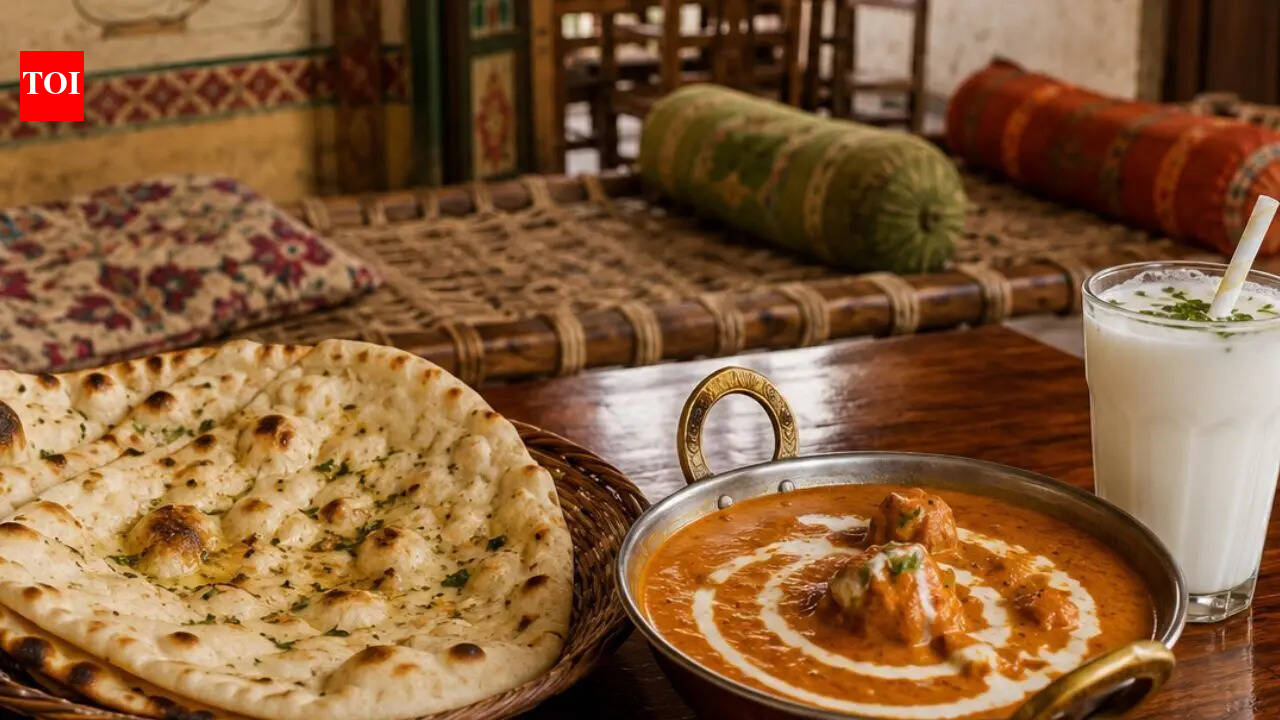
More than Butter Chicken: Why India can't stop craving Punjabi food
Authentic Punjabi Food Punjabi food continues to rule hearts A food that feels like home There is a sense of homeliness in Punjabi cuisine A
Authentic Punjabi Food Punjabi food continues to rule hearts A food that feels like home There is a sense of homeliness in Punjabi cuisine A Partition-that broke and built Old newspaper cuttings that show how Pindi has continued to stand tall all these seven decades Pindi: A legacy restaurant since 1948 Authentic Punjabi Vs Delhi Food The interiors of Ikk Panjab is a reminder of heritage and evokes nostalgia So what has changed about Punjabi food in all these years? Nostalgia on a plate Daryaganj: The need for a more expansive restaurant shows people look for comfort in timeless cuisines Before the proliferation of Chinese, Italian, and Continental eateries that now punctuate every street in India, there existed a more elemental culinary language- steaming bowls of dal tadka, flaky parathas slick with ghee, and thick, cooling lassis. These were not merely dishes but rituals, flavours that stitched together households and holidays, that lent a gentle, incandescent warmth to family outings and turned mundane evenings into pockets of solace. Punjabi food, with its unabashed richness and heartening simplicity, became for many the very definition of comfort on a plate.For children raised in the small towns of the 1980s and 1990s, the act of dining out carried a particular choreography. Menus were economical and decisive: largely divided between the robust, dairy-kissed gravies and breads of Punjab and the idlis, dosas, and filter coffee of South India. Each table felt like a crossroads of memory and appetite—where the aroma of simmering spices mingled with the giggles of cousins and the low hum of radio chatter.Beyond restaurants, another indulgence that rules the streets were the chaat counters and the vendors flipping kebabs over charcoal flames.Yet even amid that bustle, the homely call of Punjabi cuisine remained resolute, an edible emblem of family, celebration, and the small, enduring comforts that make a place feel like home.Then came the 1990s- a decade of sweeping transformation that was witnessed across the world. India’s economy underwent a dramatic shift fueled by globalization, liberalization, and rapid market expansion. International brands entered Indian markets, industries opened up, and the digital revolution began reshaping lifestyles, aspirations, and consumer choices. The impact was visible in the food industry as well. Slowly and almost silently, global fast-food chains, giant conglomerates, and international cuisines entered a country that had long been devoted to dhaba culture and homestyle meals.Change was inevitable. With growing exposure to international food, led to an evolution of taste. Plates once ruled by naan and shahi paneer gradually made space for momos, pancakes, chowmein, burgers, and pizza. But did Punjabi food fade into oblivion? Absolutely not. It stood its ground, continuing to draw people back whenever they sought comfort, warmth, familiarity, and a meal that nourished not just the body, but the soul. Punjabi food survived because it was never merely cuisine, it was emotion, hospitality, celebration, and home served together on a plate.Punjabi food feels like home, celebration, and belonging and yet remains deeply misunderstood.
So what exactly is Punjabi food? And what is not? Punjabi cuisine is basically the traditional food of the undivided Punjab, with roots that can be traced back over 3,000 years to the ancient Indus Valley Civilization. On this cuisine the impact of an agrarian economy can be easily seen.According to archaeologist Vasant Shinde, some of the earliest evidence of a dish resembling tandoori chicken dates back to the Harappan civilization around 3000 BCE. Excavations revealed keyhole-shaped ovens with central pillars that were used for roasting meat and baking bread. In Sushruta Samhita an oven called kandu finds a mention suggesting that early forms of tandoori cooking existed in the region centuries ago. Although tandoori cuisine originated in Punjab, it gained nationwide popularity after the Partition of India in 1947, when Punjabi communities migrated to cities such as Delhi and introduced their culinary traditions across the country.Milk products like chach and lassi, wheat based breads and even desserts and meat form an essential part of Punjabi cuisine. Rich dishes prepared with butter, cream, and ghee reflect both the agricultural prosperity of the region and the high-energy dietary needs of farmers. Punjab’s location at the crossroads of several invasions and empires also deeply influenced its food culture. Punjabi cuisine evolved through the combined influence of Mughal, Sikh, and local farming traditions. Due to the impact Mughals, gravies became rich, aroma became stronger due to the addition of expensive spices, and slow-cooked meat dishes found their way inside the kitchens. But the influence of Sikh and rural traditions helped maintain the balance, emphasisng on simplicity, generosity, and hearty meals prepared with locally grown ingredients.The Partition of India made a huge impact. It marked a defining turning point in the history of Punjabi food. As displaced refugees resettled across northern India, they established roadside eateries known as dhabas along the historic Grand Trunk Road. Due to limited refrigeration facilities, these dhabas specialized in serving fresh, hot, made-to-order comfort food such as Dal Makhani, Mah ki Dal, tandoori rotis, and simple curries.The migration of people from cities such as Lahore and Rawalpindi further enriched Punjabi cuisine by introducing robust meat preparations, spicy gravies, kebabs, and milk-based sweets that soon became widely popular throughout India. Today, Punjabi cuisine is celebrated worldwide for its bold flavors, rich textures, and deep cultural heritage. The owner of Pindi, one of the iconic Punjabi restaurants in Delhi's Pandara Market, Anuj Wadhwa looks back with nostalgia at a time when Delhi was less chaotic. He would often come to the restaurant—one of the few in Delhi then—with his grandfather and watch him not just run a thriving business but also display a heart of gold every now and then. "In those days, money was scarce and we saw several UPSC aspirants flocking to Pindi. Sometimes they would not have enough money, and my grandfather would still feed them lovingly. They would often order a half plate of vegetables or chicken and polish it off with 10-12 chapatis.
I don't know how many times I heard my grandfather tell them, 'Koi baat nai, jab paise aa jayen tab de dena.'" This probably is the true essence of Punjabi culinary tradition which gives it a distinct character!When Anuj's grandfather, Kasturi Lal Wadhwa, opened Pindi in 1954 on a piece of land allotted to him by the government—a gesture that could hardly heal the pain of Partition—he decided to recreate a part of his Rawalpindi in Delhi in the form of a restaurant. It was a place that not only served food but also preserved and nurtured the culture he had carried with him across the border."Delhi has its own cuisine, which is often confused with Punjabi cuisine", says Rajan Sethi, Managing Director of Bright Hospitality Private Limited (BHPL) and the owner of Ikk Panjab, a restaurant chain known for its authentic Punjabi food."India is a country where food changes every few kilometers. The undivided Punjab was enormous, it spanned approximately 357,000 to 358,000 square kilometers, an area roughly the size of modern-day Germany," says Sethi. He believes that while the cuisines of Lahore and Rawalpindi became widely popular after Partition, there remains a treasure trove of both vegetarian and non-vegetarian dishes from regions such as Tarn Taran, Patiala, Sialkot and Gujranwala that are yet to be fully explored."My wife, Deepika, travelled extensively across Punjab and spent several months exploring local food traditions. She brought back some truly precious recipes, collected from both roadside dhabas and family kitchens, many of which are now part of the menu at Ikk Panjab," he says. Sethi also points to the influence of his family's military background on the restaurant's identity. "My grandfather served in the Rajputana Regiment, so you will see a deep impact of our army background throughout the restaurant. Through the design elements, we wanted to create a reminder of our legacy, heritage and culture." Cultural influence and deep routed tradition is another reason Punjabi cuisine stands tall today.“While we have retained many of the vendors who worked with my grandfather, we have also evolved with changing times,” says Anuj Wadhwa. “Today, people look for ambience and service in addition to good food. Consistency is more important than ever, which is why we have focused on standardisation and maintaining the highest standards of cleanliness. We are also committed to minimising food waste—whatever remains at the end of the day is donated. At the same time, we have introduced a few contemporary additions to the menu, such as Olive Naan and Tandoori Broccoli, to cater to health-conscious diners.”Despite these changes, the restaurant's greatest strength remains its ability to evoke memories. “A large number of our guests are repeat customers,” says Wadhwa. “Many come here with their parents and grandparents. They know my grandfather, they know our story, and they return to relive those memories.” For generations of patrons, dining here is about far more than food. It is about reconnecting with family traditions, celebrating milestones, and revisiting moments from the past.
In a city that is constantly changing, the restaurant remains a cherished link to another era, proof that while tastes may evolve, the emotions attached to a meal can endure for a lifetime.Another popular restaurant, Daryaganj – By the Inventors of Butter Chicken and Dal Makhani known for its North Indian cuisine draws inspiration from the culinary legacy of the late Kundan Lal Jaggi, whose iconic recipes helped shape India's gastronomic identity. Founded by his grandson, Raghav Jaggi, along with restaurateur Amit Bagga, the restaurant pays tribute to the resilience, innovation and entrepreneurial spirit of Punjabi refugees who rebuilt their lives in Delhi after the Partition of 1947. Daryaganj recently launched Daryaganj Gold in New Delhi's Aerocity. According to Amit Bagga, the decision was driven by increasing demand and the need for a larger space where families and groups could celebrate special occasions comfortably. "Whenever there is a celebration, people almost invariably gravitate towards North Indian and Punjabi cuisine. It is comforting, familiar and deeply rooted in our culture. We wanted to create a spacious destination where guests could come together, enjoy a leisurely meal and celebrate life's moments. At the same time, we have introduced an exclusive menu featuring 15 unique dishes to cater to evolving tastes," he says.The restaurant's success is yet another reminder of the enduring appeal of Punjabi cuisine. Whether it is a nearly 70-year-old institution like Pindi or a relatively young brand like Daryaganj, Punjabi food continues to resonate across generations, proving that its rich flavours, warmth and sense of nostalgia remain firmly at the heart of India's dining culture.In an age of fleeting food trends, viral dishes and ever-changing dining habits, Punjabi cuisine has displayed a remarkable ability to endure. Its survival is not merely a testament to its rich flavours, but to the stories it carries within every bite—stories of migration, resilience, community and home. From the tandoors of ancient Punjab and the refugee-run dhabas of post-Partition India to the bustling restaurants of modern Delhi, Punjabi food has constantly evolved without losing its soul. Perhaps that is why, no matter how adventurous our palates become, we continue to return to it. A bowl of dal, a butter-soaked naan or a glass of lassi offers something far deeper than nourishment—it offers familiarity, comfort and a sense of belonging. For generations of Indians, Punjabi food has been the backdrop to family celebrations, late-night conversations and cherished memories.And as long as people seek warmth, generosity and the simple joy of sharing a meal, Punjabi cuisine will remain more than just food. It will remain a living legacy, one that continues to tell the story of a people, a culture and a homeland, one plate at a time.
 The BriefWire