INDIA Bloc's 5-Point Plan To Keep Opposition Together Explained: What Changes With No DMK And AAP?
INDIA Bloc's 5-Point Plan To Keep Opposition Together Explained: What Changes With No DMK And AAP? Published By, Last Updated: June 09, 2026, 09:16 IST
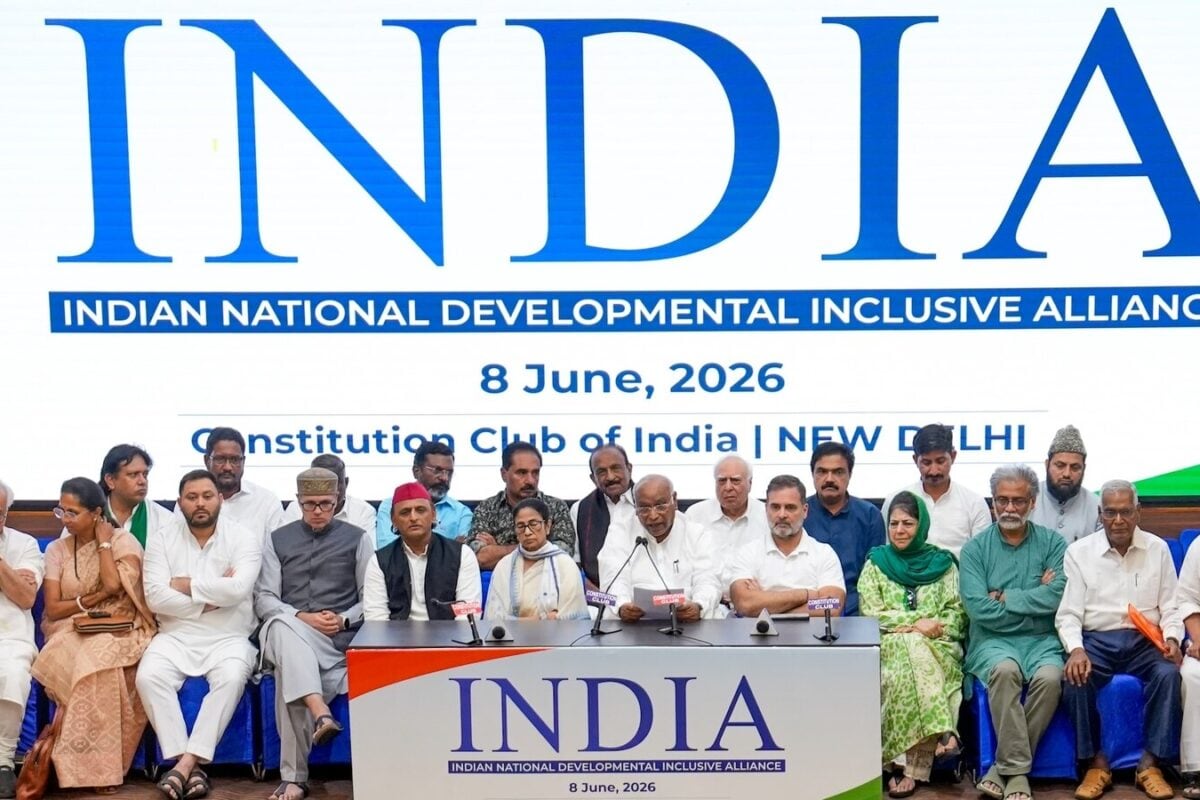
INDIA Bloc's 5-Point Plan To Keep Opposition Together Explained: What Changes With No DMK And AAP? Published By, Last Updated: June 09, 2026, 09:16 IST Much of the discussion at the INDIA bloc meeting reportedly centred on preventing further fragmentation within the opposition camp. Rapid Read Lok Sabha LoP Rahul Gandhi, Congress President Mallikarjun Kharge, Samajwadi Party MP Akhilesh Yadav, TMC supremo Mamata Banerjee and others during a press conference after the INDIA bloc meeting. (Image: PTI) After months of visible strains, electoral setbacks and public disagreements among allies, the opposition INDIA bloc has attempted a political reset. At its first formal meeting since the 2024 Lok Sabha elections, leaders of the alliance gathered in New Delhi on Monday and emerged with a common five-point action plan aimed at presenting a more coordinated challenge to the Modi government. The message from the meeting was that despite differences, the opposition wants to stay together. Read More: Rahul’s ‘100% Rigged’ Charge, Sonia’s ‘Sherni’ Praise: Under Fire At Home, Didi Gets INDIA Lifeline Held at the Constitution Club in Delhi, the meeting came at a difficult moment for several opposition parties. The Trinamool Congress is dealing with political turbulence after its defeat in West Bengal, the Congress and Left parties have sparred over Kerala politics, the DMK is no more part of the Bloc, the AAP is out, and some allies have questioned whether the coalition still has a clear direction. Against this backdrop, the meeting was as much about repairing relationships as it was about announcing a political agenda. Who Attended The Meeting? The meeting saw the participation of several prominent opposition leaders, including Congress president Mallikarjun Kharge, Rahul Gandhi, Sonia Gandhi, Trinamool Congress chief Mamata Banerjee, Samajwadi Party president Akhilesh Yadav, RJD leader Tejashwi Yadav, NCP (SP) leader Supriya Sule, Jammu and Kashmir Chief Minister Omar Abdullah, CPI leader D Raja and CPI(ML) leader Dipankar Bhattacharya.
Uddhav Thackeray and Hemant Soren joined virtually. According to Kharge, representatives of around 25 parties took part in the discussions. Who Stayed Away? The absences were as significant as the attendance. The DMK did not participate in the meeting amid changing political equations in Tamil Nadu. The Aam Aadmi Party was also absent. CPM general secretary MA Baby skipped the meeting, though the party was represented by Rajya Sabha MP John Brittas. The absence of some key allies underlined that while the alliance remains intact, it is still grappling with internal tensions. The Push For Unity Much of the discussion reportedly centred on preventing further fragmentation within the opposition camp. According to reports, Rahul Gandhi urged alliance partners not to weaken one another and emphasised the need for unity against the BJP. “United we stand, divided we fall," he reportedly told the gathering, arguing that the larger battle was for the Constitution and democratic institutions. Mamata Banerjee, who has previously expressed reservations about the Congress’s leadership role, is also understood to have argued against public criticism among allies and called for greater cohesion. Akhilesh Yadav, meanwhile, reportedly stressed that the Congress, as the alliance’s largest party, carries a special responsibility to coordinate effectively with regional parties and keep the coalition together. The Five-Point Plan: What Did The INDIA Bloc Decide? At the end of the meeting, Kharge announced five decisions that the alliance says will guide its political and parliamentary strategy in the coming months. Letter To On Electoral Concerns The first decision was to write to the Chief Justice of India regarding concerns over electoral roll revisions, alleged voting irregularities and what opposition parties describe as threats to electoral fairness. The alliance wants the judiciary’s attention on issues relating to voter lists and election processes, which several opposition parties have repeatedly questioned in recent years.
Demand For Education Minister Dharmendra Pradhan’s Resignation The bloc unanimously demanded the resignation of Union Education Minister Dharmendra Pradhan. Opposition leaders argued that repeated controversies surrounding examinations, including issues linked to NEET and concerns raised over CBSE-related processes, have affected millions of students and require accountability at the highest level. Call For An All-Party Meeting On The Economy The alliance also urged the Centre to convene an all-party meeting on economic issues. According to the opposition, rising prices, unemployment, farmer distress and broader economic concerns require discussion beyond partisan politics. The bloc wants Parliament and political parties to collectively debate these issues. Regular INDIA Bloc Meetings Every Two Months The most important organisational decision was to institutionalise coordination. Instead of meeting only during elections or political crises, alliance partners agreed to hold meetings every two months. The next meeting is expected to take place in Hyderabad in August. This is an acknowledgement that one of the alliance’s biggest weaknesses has been the lack of regular coordination. Daily Coordination During Parliament Sessions The final decision focused on Parliament. The alliance agreed to hold daily coordination meetings during the upcoming Monsoon Session to ensure opposition parties speak with one voice on key issues. These meetings are expected to be held every morning at the office of the Leader of the Opposition. What Changes On The Ground? The five-point plan does not immediately alter electoral arithmetic or resolve the alliance’s internal contradictions. It does, however, indicate that opposition parties have recognised the cost of disunity. The plan creates a framework for more frequent consultation, coordinated parliamentary interventions and joint political campaigns. It also shifts the alliance’s focus towards a set of common issues – elections, education, unemployment, inflation and institutional accountability – rather than getting bogged down in leadership debates.
Whether that translates into electoral success remains uncertain. The INDIA bloc still faces difficult questions over leadership, state-level rivalries and seat-sharing arrangements. The absence of important allies such as the DMK and AAP was a reminder that all differences have not disappeared. Yet, for now, the alliance has chosen reconciliation over rupture. The significance of the Delhi meeting lies less in the five resolutions themselves and more in the signal they send: despite setbacks and disagreements, the opposition has decided that staying together offers a better chance of challenging the BJP than going its separate ways. The coming months – especially the Monsoon Session of Parliament and upcoming state elections – will reveal whether this reset is merely symbolic or the beginning of a more disciplined opposition strategy. News18 Newsletter Handpicked stories, in your inbox A newsletter with the best of our journalism submit About the Author Pragati Ratti Pragati is a News Editor at news18.com. Having headed the Business and Viral sections, Pragati now ideates, writes and edits long-form features and articles on national and global affairs. She ensures... Read More First Published: June 09, 2026, 09:16 IST News explainers INDIA Bloc's 5-Point Plan To Keep Opposition Together Explained: What Changes With No DMK And AAP? Disclaimer: Comments reflect users’ views, not News18’s. Please keep discussions respectful and constructive. Abusive, defamatory, or illegal comments will be removed. News18 may disable any comment at its discretion. By posting, you agree to our Terms of Use and Privacy Policy Loading comments...
 The BriefWire