Swing from secular to Hindutva: How BJP won over the Bengali Bhadralok
"Where have all the Bhadralok gone?" asked one of my editors sarcastically when I said that the BJP might sweep the 2024 Lok Sabha election
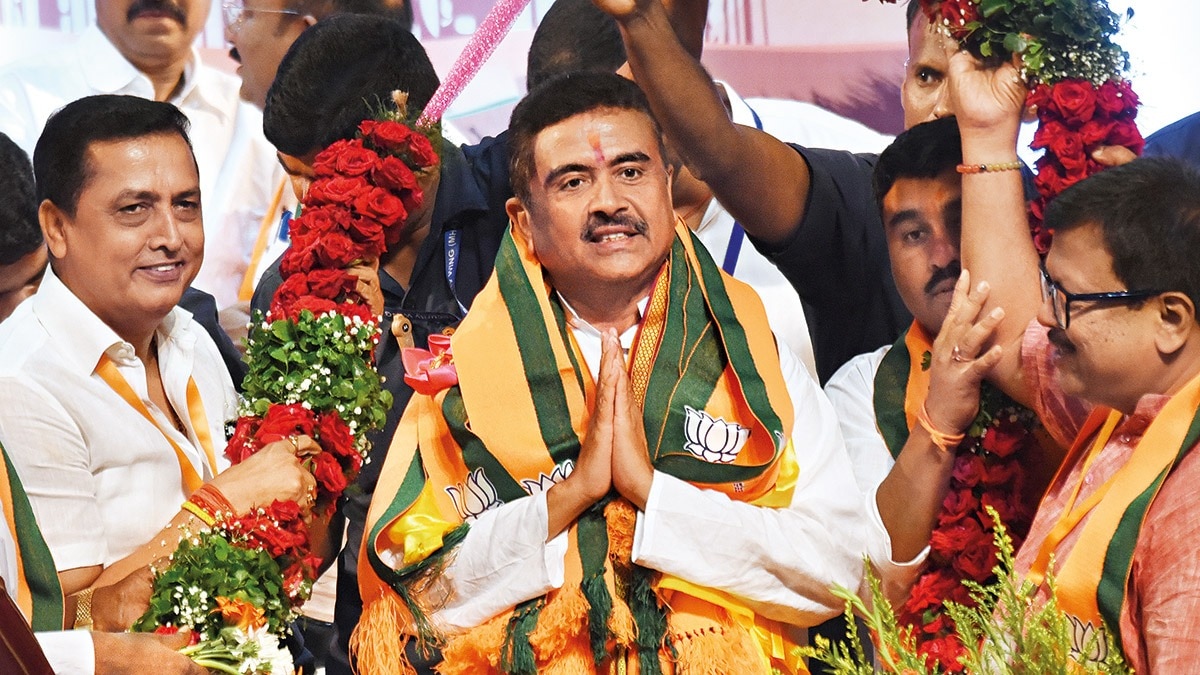
"Where have all the Bhadralok gone?" asked one of my editors sarcastically when I said that the BJP might sweep the 2024 Lok Sabha election in Bengal after watching the exit poll trends, which predicted a clear edge for the BJP over the Trinamool Congress (TMC). Although sarcastic, his voice reflected a concern as well as disbelief that the Bengali Bhadralok, shaped by their century-long cultural practices, would accept BJP’s Hindutva politics, which was largely considered alien on Bengal soil. Read Full Story However, the myth has now been busted. In the recently concluded 2026 assembly polls, the Bhadralok largely swung to the BJP, marking a new beginning in Bengal politics. The state witnessed an unprecedented Hindu consolidation, with the Bhadralok playing a significant role. A look at the Presidency region adjoining Kolkata, which is considered the Bhadralok bastion in the state, reveals the change. Long considered a TMC citadel, the Presidency region this time elected the BJP in a majority in four out of five districts. While the BJP won 208 of the 294 seats in the Assembly election, reducing the Mamata Banerjee-led TMC to 80 seats, it is the saffron party's victory in the Presidency region that is the most interesting. The victory of BJP candidate Swapan Dasgupta from Rashbehari, a Bengali Bhadralok bastion and fortress of the TMC, underlines the swing in this election. As a person who grew up in a middle-class Bengali family, this shift seemed interesting to me for two reasons. One, the Bhadralok have had a long trajectory, influenced by Congress's secular tradition, and later the Left's party system and cultural Marxism. Drawing influence from existing literary works, music, films, and theatre, the section formed the backbone of Bengal’s politics. Although the TMC did not offer a major intellectual boost to them, a part of them witnessed the rise of a ‘neo-left’ with a bit of subaltern touch with Mamata Banerjee’s emergence. Secondly, growing up in a middle-class family in the suburbs of Kolkata, I saw my family members, relatives, neighbourhood, and friends being sceptical of the BJP, partly because of its Hindutva push and partly because it was considered unfamiliar to Bengal’s soil. Scepticism persisted in urban spaces even after the party’s rise in 2019 and 2021, due to its lack of an ideological base and cadre in South Bengal. So, how did the tables turn? A party that was nowhere to be seen in the political circles, how did it manage to win over the state’s dominant section? Let’s dive deeper. However, first, have a glance at the definition of Bhadraloks. WHO IS A BENGALI BHADRALOK? In her book, Bengal Divided: Hindu Communalism and Partition, 1932-1947, scholar Joya Chatterji referred to Bhadralok as a "rentier class" that emerged because of the permanent settlement ecosystem, launched by the British government in Bengal. Earning their livelihood from the rents of the land, some of the Bhadralok got modern education (English education to be precise) and later became a significant force in shaping the political and party systems in the state since the pre-Independence days. Much water has flowed down the Ganges since those early days, and the contemporary Bhadralok no longer perfectly mirrors the history books.
Yet, their influence on the state's political landscape remains undeniable. To understand their current role, we can identify them as a socially forward community—one deeply shaped by distinct cultural practices and structurally dominant in the service class. UNEMPLOYMENT, MIGRATION IN WEST BENGAL, AND BHADRALOK'S DISAPPOINTMENT "Bengal is an old-age home. It has nothing today," said one of my friends a year back when I visited him during my annual homecoming tour from Delhi. And he was not alone. The majority of the present-day educated Bengali youth echo the same disappointment as my friend. Data shows that the growth rate of the industrial and service sector stood at 6.6% from 2012-2020, lower than 7.7% in the national scenario. The unemployment in urban and rural areas increased to 4.9% and 3.5% in urban and rural areas during 2018-2019. The per capita income, which was growing at a faster rate than the national scale during the last two decades of Left rule, fell sharply during Mamata Banerjee's 15-year tenure. "I don’t think the shift towards the BJP happened solely because of the aggressive Hindutva politics. The answer lies in the rising anti-incumbency factors against the TMC," Sayantan Ghosh, a professor at St. Xavier's College and writer of the book Battleground Bengal, told India Today Digital. He added that the BJP projected itself as a party capable of bringing large-scale investment and development in the state, which was accepted by the Bhadralok. Snigdhendu Bhattacharya, a journalist who has closely followed Bengal’s politics for a long time, told India Today Digital, "The migration did play a role against the Trinamool Congress. No big industry has come to the state in the last 15 years, and no major initiative was taken to boost the employment scenario in the state. Plus, Mamata Banerjee also failed to create a narrative to explain why migration occurred at such a grand level." No industry, very few jobs with a salary structure much lower than the national scale, underperforming government sectors, and lack of innovation compelled many to leave their families and move out to different parts of the country. With beaming frustration, they desperately looked for a change while often saying "Ar para jacche na (Can't stand TMC any more)." THE RISE OF STRONGMEN AND UNDER-REPRESENTATION OF BHADRALOK "Has the TMC ever represented the Bhadralok?" asked Zaad Mahmood, an author and professor at Kolkata's Presidency College in a conversation with India Today Digital. His work, The Roots of a Populist Regime: Examining the Trinamool Congress in West Bengal, highlighted a growing decline of the artisan class in the list of TMC candidates. The party's candidate profile underwent a sharp shift over a decade. In 2011, more than 45% of its candidates came from a service-class background, but that figure dropped to just over 34% 10 years later. Conversely, representation from other sectors grew: candidates with backgrounds in local-level entrepreneurship rose from 25.11% to 32.76%, while those with a background in social work rose from 21.08% in 2011 to 29.31% in 2021. According to the paper, the nominal assets of TMC candidates grew at an average annual rate of 8.8% between 2011 and 2016.
Looking across a full decade, the average asset value of the party's candidates skyrocketed, rising from just over Rs 70 lakh in 2011 to Rs 2.85 crore by 2021. "The TMC's tenure has witnessed the rise of a non-hegemonic commercial class that has effectively dismantled the Bhadralok's political monopoly at the grassroots level. This shift went beyond mere representation; the state's political economy and party policies began adapting directly to the interests of this emerging class. Figures like Anubrata Mondal and Sheikh Shahjahan came to personify the TMC's organisational spread across the state, leaving the older elite feeling increasingly sidelined. This alienation was compounded from within; as vibrant intellectual practices dried up in the traditional peripheries of the Bhadralok, the community itself grew increasingly disengaged," added Mahmood. As the vacuum grew, the BJP exploited it with a carefully crafted strategy. The elevation of Samik Bhattacharya, a Kolkata-based intellectual known for his love for Bengali poet Shakti Chattopadhyay and Bengali theatre, as its state unit chief appealed to many. "Replacing Dilip Ghosh with Samik Bhattacharya was a good attempt. Ghosh, the state unit chief in 2021, drew flak among many for allegedly igniting violence through his speeches. Also, the selection of candidates like Sharadwat Mukherjee also helped the BJP to cement its place among the Bhadraloks," Partha Pratim Basu, a professor from Kolkata's Jadavpur University, told India Today Digital. RG KAR RAPE-MURDER: WHERE THE BHADRALOK REVOLTED On June 4, 2024, TMC supporters took to the streets to celebrate the party's massive success in the Lok Sabha election. Defying all the predictions, the party won 28 seats, increasing its tally from the 22 seats in the 2019 general election. However, within months, it found itself at a crossroads. Nearly a lakh people took to the streets of Kolkata, its suburbs, and even in rural areas to protest against the rape and murder of a 31-year-old medical student in Kolkata's RG Kar Medical College. Initiatives of Raat Dokhol (Reclaim the nights) were taken by civil society groups, and a massive anti-TMC wave hit the state. And the result? A significant decline in women's votes, which constituted the core support for Mamata Banerjee. "Between 2021 and 2026, many things hit the TMC. Bundles of notes were found at TMC legislators' and ministers' homes. Incidents of raids by the central investigative agencies became routine, and many went to jail. So, the Bhadralok, who stood by the party in 2021, had enough reason to get angry. The final nail in the coffin was the RG Kar incident. Women turned their backs on Mamata Banerjee," said Basu. BJP's HINDU REVIVALIST ATTEMPT AND BHADRALOK SUPPORT Despite its long alienation, it is undeniable that Hindutva has its roots in Bengal. The term was first conceptualised by Chandranath Basu, a 19th-century scholar, in his book Hindutva - Hindur Prakrita Itihas. The writings of Bankim Chandra Chattopadhyay and the pragmatic vision of Syama Prasad Mookerjee also fuelled the concept. Despite the patronage from both 19th and 20th-century scholars and politicians, Hindutva largely remained on the margins as the state celebrated its secular and cultural Marxist traditions.
However, the political landscape started witnessing a major shift after the 2018 local body polls. "From 1950-2010, politics based on economic performance took centre stage because of the Leftists. However, a shift was first witnessed after 2009, when Mamata Banerjee opened the door for identity politics to win over the Muslim voters, who were swayed away from the Left. A decade later, the BJP exploited the room," said Bhattacharya. Explaining why the Bhadralok took to Hindutva, Bhattacharya said that the section had never acted as a homogenous group. "Hindu revivalism in the days of the 19th century was highly patronised by a section of Kolkata elites and zamindars. In the turbulent time of pre-Partition, a major fault line was created between the Hindus and the Muslims, and many of the Bhadralok openly vouched for Partition. The BJP's campaign during the 2026 Assembly polls triggered those fault lines. Continuous fearmongering over the demographic change due to illegal infiltration and using rhetoric of the Great Calcutta Killing and Noakhali riots bore fruit among many who came out of their liberal masquerade and voted for the BJP," Bhattacharya explained. Basu, on the other hand, believes that there had been an emerging section among the Bhadralok after liberalisation who hardly had any connection to the state’s tradition of upholding cultural Marxism. “This section is ambitious. They want scope and opportunities. Many of them actively support the BJP’s Hindutva agenda with a large-scale developmental push,” he added. Beyond words and theories, there lies a ground-level implementation. And for the BJP, the RSS carried it out in the state. The Sangh ran its whisper campaign through micro-level meetings, local tea stalls, beauty parlours in small towns, and local gatherings from posh housing societies to working-class neighbourhoods. The organisation held at least one lakh meetings in the state and deployed 50,000 auto drivers who influenced the spectrum by dropping just one or two lines about the existing political scenario. "Issues about alleged illegal infiltration and appeasement politics were at the centre of many such RSS gatherings," Swati Moitra, a Kolkata-based academic, told India Today Digital. "They penetrated well. In every society, there were RSS members who ran whisper campaigns. Thousands of WhatsApp groups were created to spread their propaganda. The urban spaces also witnessed the erection of small-scale temples and many religious gatherings, where the RSS members played a major role," she mentioned. She also said that many of the RSS and other Hindu outfit members worked within the ranks of the TMC. The Bengali Bhadralok's shift towards the BJP is because of multiple factors. And it is not as sudden as it seems to be. The section felt exhausted and angered by the political stagnation in the TMC era. Less investment, no job opportunities, coupled with mounting corruption, agitated many of them. As the BJP portrayed itself as a strong alternative compared to the Left and the Congress, the switch, over the course of time became inevitable. Ends
 The BriefWire