Quote of the day by American astronomer Marc Aaronson: “If we are going to die anyway...why be cautious? Why not risk all now, at this moment, in this adventure?”
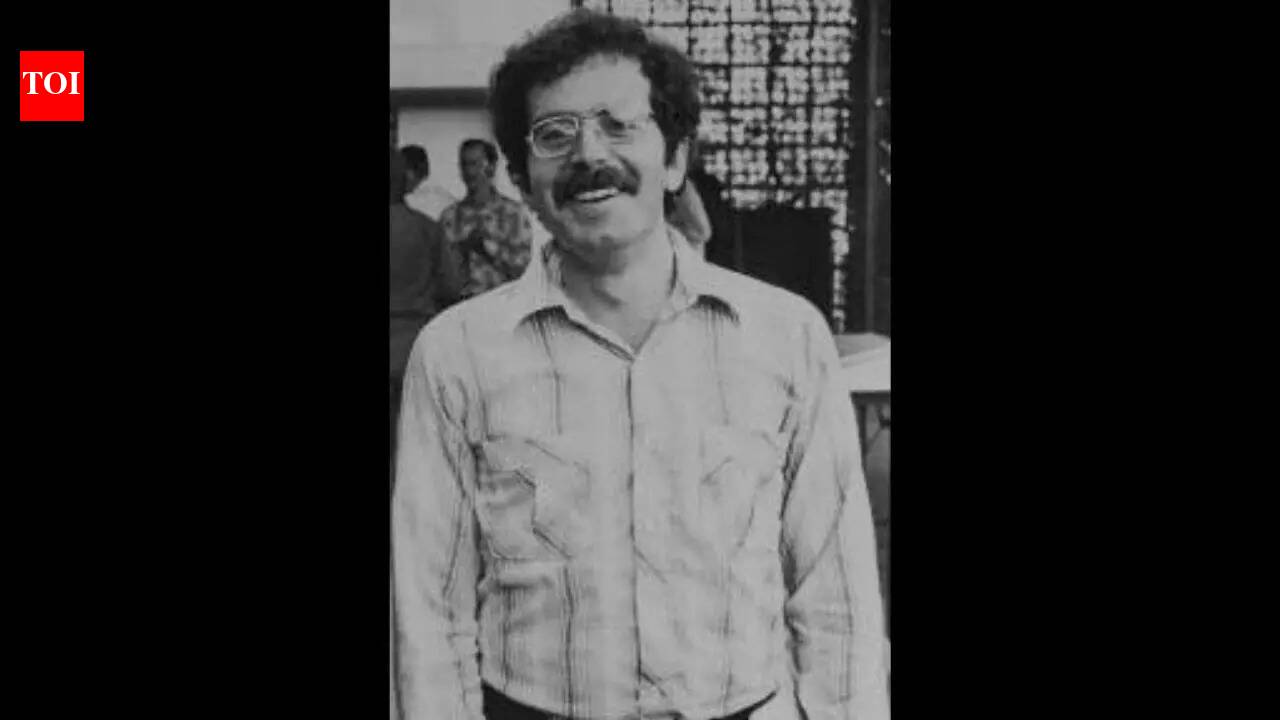
Marc Aaronson (Image source: researchgate.net) Quote of the day by Marc Aaronson “If we are going to die anyway...why be cautious? Why not risk all
Marc Aaronson (Image source: researchgate.net) Quote of the day by Marc Aaronson “If we are going to die anyway...why be cautious? Why not risk all now, at this moment, in this adventure?” Understand the meaning behind the quote by Marc AAaronson The fear of failure shapes countless decisions Regret often grows from opportunities left untouched Adventure is not always dramatic History tends to favour those willing to act Modern life often rewards hesitation Why the quote continues to resonate Other famous quotes by Marc Aaronson “History is not a collection of facts. It is a process of investigation.” “Curiosity is often the beginning of real learning.” “Questions are sometimes more valuable than answers.” “Understanding the past helps people understand themselves.” “Knowledge grows when people are willing to explore beyond what they already know.” There are certain quotes that make people pause because they seem to challenge a habit that most of us have. This quote by Marc Aaronson is one of them. It does not offer comfort. It does not suggest a careful plan. Instead, it asks readers to think about how much of life is spent waiting.Many people carry ambitions for years. Some want to start a business. Others dream of writing a book, changing careers, travelling, learning a new skill or pursuing a passion that has been pushed aside by daily responsibilities. The intention is often genuine, but action is delayed. There is always a reason to wait a little longer. More savings are needed. More experience is required. A better moment will arrive later.Sometimes waiting is sensible. At other times, it becomes a permanent habit. Months turn into years, and plans remain exactly where they started. Aaronson's quote speaks directly to that tendency. It reminds readers that life is finite and that certainty is rarely available, no matter how long someone waits.The words are not really about taking reckless risks. They are about recognising that complete safety is an illusion.Life continues moving forward regardless of how carefully people try to control it.
Because of that, the quote encourages readers to think about whether caution is protecting them or quietly preventing them from living the life they actually want.At first glance, the quote sounds bold, almost extreme. It appears to encourage people to throw caution aside and embrace risk without hesitation.A closer reading reveals something slightly different.Aaronson is not praising recklessness. He is questioning excessive caution. There is an important distinction between the two. One ignores consequences entirely. The other asks whether fear has become so powerful that it prevents meaningful action.Most worthwhile experiences involve uncertainty. Nobody starts a new chapter of life with complete knowledge of what will happen next. People who launch businesses do not know whether those businesses will succeed. People who relocate to unfamiliar places cannot predict every challenge they will face. Relationships develop without guarantees. Creative projects begin without promises of recognition.The quote highlights a simple fact. Uncertainty exists whether people act or remain still. Waiting does not eliminate risk. In some situations, waiting simply replaces one type of risk with another.That is where the quote derives much of its power. It asks readers to consider whether avoiding action is actually as safe as it appears.Many opportunities are not rejected because people lack the ability. They are rejected because people imagine failure before they even begin.Fear is often practical-sounding. It rarely introduces itself openly. Instead, it arrives disguised as sensible caution.Someone says they will apply next year. Someone decides to wait until conditions improve. Someone postpones a dream until they feel fully prepared.Preparation has value, of course. Nobody would argue otherwise.The challenge appears when preparation becomes endless.There are people who spend years getting ready for something they never actually do. The goal remains alive in theory but inactive in reality. Planning replaces progress. Reflection replaces action.Aaronson's quote pushes against that pattern. It suggests that there may come a point when the greater danger lies not in failing but in never attempting anything at all.Conversations with older adults frequently reveal an interesting pattern.Many speak openly about the mistakes they made.
They acknowledge poor decisions, failed ventures and paths that did not work out. Yet those stories are often told with surprising peace.What tends to trouble people more are the opportunities they ignored.The business they never started. The course they never took. The conversation they never had. The place they always wanted to visit but never did.Unlike failure, these experiences have no ending. There is no outcome to analyse and no lesson to fully understand because the opportunity was never explored.The unanswered question remains.What would have happened? Nobody knows.That uncertainty can stay with people for years. It is one reason why Aaronson's quote resonates with so many readers. It touches a fear that exists quietly in the background of ordinary life.The fear of looking back and realising that caution prevented something meaningful.When people hear the word adventure, they often imagine extreme situations.Images of mountain climbing, exploration or dramatic life changes come to mind. Yet most adventures look far less dramatic than that.For one person, adventure may mean leaving a stable job to pursue a long-held ambition. For another, it could involve returning to education after many years. Someone else may see adventure in moving to a different city, beginning a creative project or speaking openly about an idea they have kept private.The scale matters less than the willingness to move beyond familiar territory.Every meaningful change begins with uncertainty. No one receives a detailed map showing exactly how the future will unfold.The adventure lies in stepping forward anyway.That idea sits quietly beneath Aaronson's words.Looking back at history, many achievements appear inevitable because people already know the outcome.In reality, nothing felt inevitable at the time.Inventors pursued ideas that could easily have failed. Writers produced manuscripts with no guarantee they would ever be published. Entrepreneurs invested years of effort into projects that might never become profitable.What separates these individuals is not certainty. It is action.They moved forward despite uncertainty rather than waiting for uncertainty to disappear. History remembers successful outcomes, but every success story once existed as an uncertain possibility.That reality is easy to forget.Aaronson's quote brings attention back to it.Today's world provides more information than any previous generation had access to.On the surface, that seems beneficial.
People can research opportunities, compare options and learn from the experiences of others.Yet there is a downside. Endless information can encourage endless hesitation.Every decision comes with warnings, risks and reasons to delay. Every ambition can be met with examples of failure. The result is that some people become trapped in analysis.They keep evaluating possibilities without ever choosing one. Eventually, years pass while the decision remains unresolved.The quote challenges that mindset. It reminds readers that perfect clarity is unlikely to arrive. At some point, a person must decide whether to remain on the sidelines or become a participant.The lasting appeal of Aaronson's words comes from their honesty.Most people already know there are no guarantees in life. They understand that the future cannot be controlled completely. They know that unexpected changes can arrive without warning.Yet despite this knowledge, many still postpone things that matter to them.The quote interrupts that pattern of thinking.It asks a direct question. If uncertainty cannot be eliminated, why allow it to dominate every decision?That question does not come with a universal answer. Each person responds differently based on their circumstances, responsibilities and ambitions.Even so, the question remains powerful because it encourages reflection.A life built entirely around caution may feel safe for a while. Over time, however, people often discover that missed opportunities carry their own risks.Marc Aaronson's quote continues to be shared because it reminds readers of something simple and easy to forget.Life is not a rehearsal. Waiting forever is also a choice. Sometimes the most important step is not finding certainty but deciding that uncertainty is no longer a reason to stand still.
 The BriefWire