J&K's Purple Revolution: How Lavender Helped Bhaderwah Farmers Earn Up To ₹1 Lakh A Month
J&K's Purple Revolution: How Lavender Helped Bhaderwah Farmers Earn Up To ₹1 Lakh A Month Reported By, Edited By Last Updated: June 08, 2026, 20:46
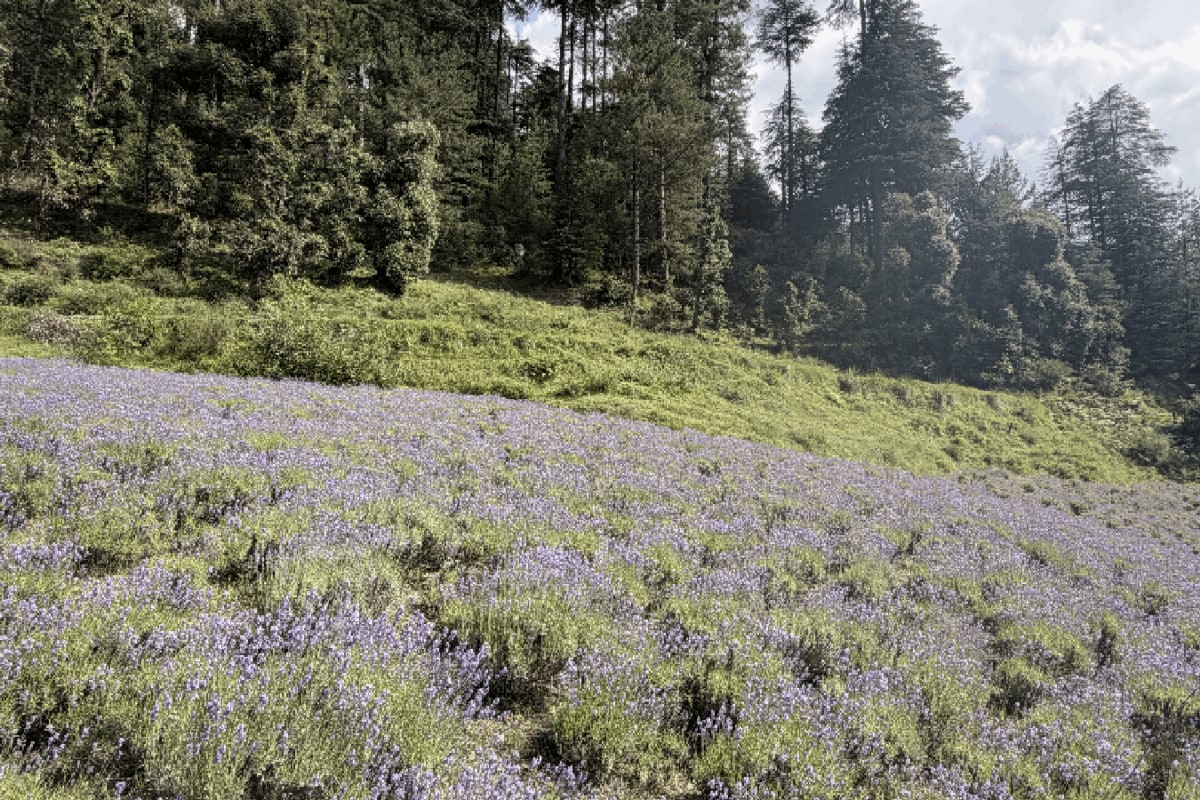
J&K's Purple Revolution: How Lavender Helped Bhaderwah Farmers Earn Up To ₹1 Lakh A Month Reported By, Edited By Last Updated: June 08, 2026, 20:46 IST The Bhaderwah model is now being replicated across Himalayan states as lavender cultivation expands beyond Jammu and Kashmir. Rapid Read Unlike conventional crops, lavender is generally not damaged by grazing animals, reducing losses for farmers. The crop can also be harvested twice a year, providing a more reliable source of income for farmers. (IMAGE: JASMINE SIDANA/NEWS18) Several farmers in Jammu and Kashmir’s Bhaderwah who once earned around ₹20,000 a month are now making close to ₹1 lakh through lavender cultivation and related businesses, Union Minister Jitendra Singh said on Saturday, adding that nearly 7,000-8,000 youngsters have joined the lavender movement, with many entrepreneurs generating annual revenues of ₹60-70 lakh and above. The remarks came as Singh inaugurated the 4th Lavender Festival at Government Degree College in Bhaderwah. Organised by CSIR-Indian Institute of Integrative Medicine (IIIM) under the theme “Lavender Goes Global", the two-day festival showcases the achievements of the Purple Revolution and the expanding lavender economy in Jammu and Kashmir.
Speaking to CNN-News18 at a lavender farm in Bhaderwah, Singh said the startup ecosystem emerging around lavender cultivation has demonstrated that entrepreneurship is no longer restricted to highly qualified professionals. “Startups are not limited to PhDs or highly qualified professionals. Many young people associated with the lavender ecosystem are simple graduates who have built successful enterprises through cultivation and value-added products," he said. Local representatives say the success story is rooted in the unique advantages of the crop. According to Bhaderwah MLA Daleep Singh Parihar, lavender cultivation was introduced in the region in 2016 and has since emerged as a highly profitable alternative to traditional farming. Unlike conventional crops, lavender is generally not damaged by grazing animals, reducing losses for farmers. The crop can also be harvested twice a year, providing a more reliable source of income for farmers. The growth of the sector has also led to a thriving market for value-added products including essential oils, perfumes, soaps and other lavender-based goods. Lavender Economy Creates New Entrepreneurs The movement has been driven not just by policy support but also by local entrepreneurs.
One such trader, popularly known as the region’s “Lavender Man of the Year", said he helped bring nearly 2,500 farmers into aromatic farming, encouraging them to shift away from traditional cultivation practices. According to him, the lavender economy has helped create startups even in remote villages. He also highlighted efforts to involve prison inmates in manufacturing lavender-based products such as agarbattis and other aroma products. Singh also underlined the participation of women and self-help groups, stating that the project has opened livelihood opportunities across communities while contributing to Prime Minister Narendra Modi’s goal of doubling farmers’ income. Bhaderwah Model Gains Ground Beyond J&K Describing the success story as the “Bhaderwah model", the minister said the region’s experience with lavender cultivation is now being replicated across other Himalayan states. “Governments from Uttarakhand, Arunachal Pradesh and Nagaland have approached the ministry to understand and adopt the model," he told CNN-News18, adding that neighbouring districts within Jammu and Kashmir have already begun following the approach. According to the minister, delegations from various Himalayan regions regularly visit Bhaderwah to study the model and explore its implementation in their own areas.
The government is now working towards foreign collaborations to further expand the initiative. News18 Newsletter Handpicked stories, in your inbox A newsletter with the best of our journalism submit About the Author Jasmine Sidana Assistant Manager, Editorial and Production Location: Bhaderwah, India, India First Published: June 08, 2026, 20:46 IST News india J&K's Purple Revolution: How Lavender Helped Bhaderwah Farmers Earn Up To ₹1 Lakh A Month Disclaimer: Comments reflect users’ views, not News18’s. Please keep discussions respectful and constructive. Abusive, defamatory, or illegal comments will be removed. News18 may disable any comment at its discretion. By posting, you agree to our Terms of Use and Privacy Policy Loading comments...
 The BriefWire