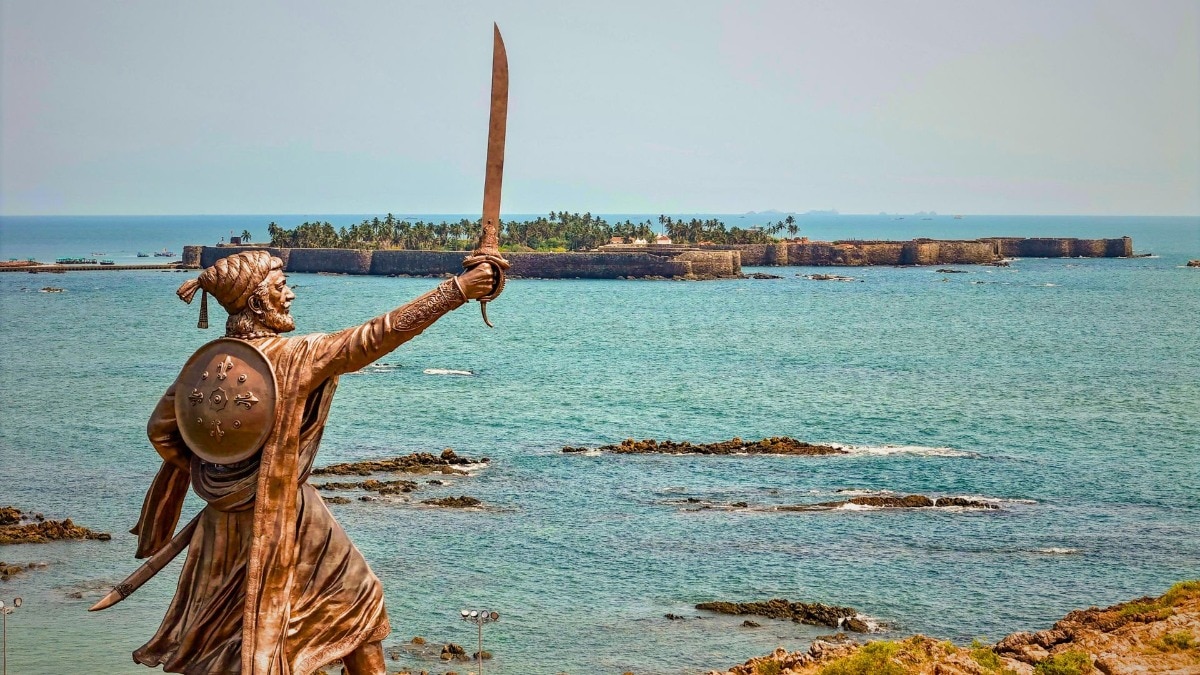
Shivaji statue coming up in Israel. Untold story of Jews' link to Maratha Empire
"Proud and historic," wrote Maharashtra's Chief Minister Devendra Fadnavis, in a post on X, announcing that the Consulate General of Israel in Mumbai has announced
"Proud and historic," wrote Maharashtra's Chief Minister Devendra Fadnavis, in a post on X, announcing that the Consulate General of Israel in Mumbai has announced plans to install a statue of Chhatrapati Shivaji Maharaj in the Jewish country. The announcement was made on the occasion of Shivrajyabhishek Din, which is the anniversary of the coronation of Chhatrapati Shivaji Maharaj. It was over 350 years ago, on June 6, 1674, that Shivaji was coronated. Read Full Story At a time when Jews were facing threats from the outside world for centuries, India was among the few countries where they lived without facing persecution, preserving their faith while also contributing to the local society. From the Marathi-speaking Bene Israel of the Konkan coast to the Jewish merchants who travelled along India's western shores, the relationship between India and the Jewish people stretches back thousands of years, but the 16th century is an important chapter in the history of the friendship between the two. Now, with a Shivaji statue to be erected in Israel, the spotlight is on a story of a lesser-known chapter of the shared history involving the Maratha Empire and Chhatrapati Shivaji Maharaj. HOW SOME JEWS EARNED 'SHANIVAR TELIS' MONIKER IN INDIA Bene Israelis, one of India's oldest Jewish communities, fled Galilee during the persecution of the Seleucid ruler Antiochus Epiphanes and reached India's western coast after a shipwreck near Navagaon, south of present-day Mumbai, in the early 2nd century BCE, according to HS Kehimkar, who was a prominent 19th-century educator, author, and civil servant's book, History of the Bene Israel of India (1937). According to community lore, the Bene Israeli survivors were seven men and seven women, and they settled in the Konkan region and gradually became an integral part of local society. The Bene Israel took up occupations such as oil-pressing and grocery trading, but strictly observed the Jewish Sabbath on Saturdays. Their staying away from work on Saturdays earned them the moniker Shanivar Telis (Saturday oil-pressers). The distinction was notable in Maharashtra's social landscape as Hindu oil-pressers were known as Somwari Telis because they rested on Mondays, while Muslim oil-pressers who observed Friday prayers came to be called Shukrawar Telis. Over the centuries, the Bene Israelis adopted the Marathi language and also many local customs of India, while preserving their Jewish identity. Their long presence in Maharashtra helped forge a uniquely Indian Jewish culture, one that thrived without the anti-Semitic persecution experienced elsewhere. BENE ISRAELIS SERVED IN MARATHA ARMY AND NAVY The lesser-known or less-told story is the community's association with the rise of the Maratha Empire. Known for their martial traditions and military skills, members of the Bene Israel served in regional armies, including those linked to the Maratha state. In the 17th century, Chhatrapati Shivaji Maharaj recognised the military capabilities of the Bene Israelis and incorporated some of them into his forces, making them a part of his army. As the Maratha ruler built a kingdom that challenged Mughal dominance and laid the foundations for a powerful Swarajya (indigenously ruled state), Jewish soldiers were among the many communities that contributed to its military strength.
The Bene Israelis' reputation as soldiers endured well beyond the Maratha era. In his research paper 'Bene Israel Soldiers in the Indian Army', West Bengal-based scholar Kaustav Chakrabarti notes that "the Bene Israel community of Jews in India proved to be the very best in their military ardour, serving with equal aplomb in the native and the colonial armies". Their service ranged from pre-colonial Indian kingdoms to the armies of the British Raj, reflecting a long-standing martial tradition. As Israel prepares to install a statue of Chhatrapati Shivaji Maharaj, the move does more than honour the Hindu Hriday Samrat (Emperor of Hindu Hearts). It also revives a fascinating chapter of shared history, one that links the Jewish community's centuries-old journey in India with the rise of the Maratha Empire and the legacy of a ruler revered far beyond Maharashtra. SHIVAJI STATUE: A SYMBOL OF INDIA-ISRAEL'S LONG-STANDING FRIENDSHIP The Consulate General of Israel in Mumbai announced plans to install a statue of Chhatrapati Shivaji Maharaj in Israel as a gesture to strengthen India-Israel ties. "To make the memorial worthy of Maharaj's legacy, we sought cooperation from Maharashtra CM Devendra Fadnavis, and he immediately agreed to provide it," Yaniv Revach, Consul General of Israel in Mumbai, posted on X on Saturday. "We believe that a statue of Chhatrapati Shivaji Maharaj in Israel would serve as a powerful symbol of the close ties between Israel and India. Such a monument would be especially meaningful given the historical links between Maharashtra and the Indian Jewish community, many of whose descendants today contribute significantly to Israeli society," Revach said in his letter to Fadnavis. "This is huge news! On the auspicious occasion of Shivrajyabhishek din, heartfelt thanks to the Israeli Consul General Yaniv Revach for this historic announcement of installing a grand statue of Chhatrapati Shivaji Maharaj in Israel," Maharashtra Chief Minister Fadnavis posted on X, reacting to Revach's announcement. "The Maharashtra government will extend complete support for this historic initiative," Fadnavis added. "At the peak of their population, the Bene Israelis used to number around 75,000. There are about 4,000 Bene Israelis left in India currently," Reuben Israel, a member of the Bene Israel community and Delhi-based publisher, told India Today Digital in 2023. Reuben also said that the Jews who were staying in India even then stayed back because they were comfortable in India, and had no reason to leave. "They had no difficulty practising Judaism in India. They faced no persecution here," he said. Such is the kind of closeness the Jews in India feel to the country. BENE ISRAELIS WORKED IN THE MARATHA EMPIRE'S ARMY The Bene Israel worked as traders and oil-pressers, but they were not limited to these works. Community traditions and historical evidence suggest that many members of the community developed a strong martial tradition and served in the armies and navies of regional powers along India's western coast, including the Siddis of Janjira, the Angrias, and the Marathas.
Various community stories and historians claim that Chhatrapati Shivaji Maharaj recognised the military capabilities of the Bene Israelis and recruited some of them into his army and naval forces operating in the Konkan region. An article by historian and Supreme Court advocate Arunansh B Goswami, in The Times of Israel, suggests the participation of Bene Israel soldiers and sailors in the rise of the Maratha state. The English Christian missionary and author, Reverend James Henry Lord's early 20th-century work 'The Jews in India and the East', mentions figures such as Aaron Churrikar, who is said to have been appointed a Nayek, or naval commander, in the Maratha fleet and granted land for his services. The book also recounts that members of a Bene Israel family who had earlier served the Siddis of Janjira, were captured by the Marathas and later inducted into Maratha service. Two members of the family, identified in community accounts as Samuel (Samaji) and Abraham (Abaji), were reportedly entrusted with naval responsibilities after demonstrating loyalty. Ancestors of several Bene Israeli families are also said to have commanded forts in the Konkan region. Bene Israeli servicemen were not limited to Shivaji's forces. Historical accounts indicate that they also served under the famed Maratha naval commanders of the Angre family, whose fleet dominated much of India's western coastline in the 18th century. Nevertheless, there is broad agreement that the Bene Israel possessed a strong military tradition. Kaustav Chakrabarti notes the active participation of Bene Israel soldiers in the military expeditions of indigenous rulers, including the Angrias and Shivaji. Chakrabarti argues that the community earned a reputation for military service long before the colonial era, a legacy that later continued in British Indian forces. Thus, although some of the specific stories surrounding Bene Israel officers in Shivaji's army remain rooted in community memory, historians generally acknowledge that members of the Jewish community served in the military establishments of the Marathas and other coastal powers, making them a little-known part of the history of the Maratha Empire. BENE ISRAELIS' CONTRIBUTIONS IN THE BRITISH INDIAN ARMY While the Bene Israelis' association with the Marathas is remembered largely through folklore and some historical work, their service in the British Indian Army is far better documented. From the second half of the 18th century onwards, members of the small Jewish community joined the Bombay Presidency Army of the East India Company in disproportionately large numbers and built a reputation for military discipline and leadership. Among the earliest known recruits were the Divekar brothers, including Samuel Ezekiel Divekar, who entered the Company's service in the late 18th century. According to community accounts cited by The Hindu newspaper, Samuel was captured during the Anglo-Mysore conflicts by the forces of Tipu Sultan in 1786. A popular tradition holds that he was spared after his Jewish identity became known. Over the next century, Bene Israel soldiers participated in many of the major campaigns fought by the East India Company and later the British Raj.
They served in the Anglo-Mysore Wars, the Anglo-Maratha Wars, the Anglo-Afghan Wars, the Anglo-Burmese Wars, the Sind campaigns, the Punjab Wars, and even during the Revolt of 1857. Despite forming only a tiny fraction of the Bombay Army's overall manpower, the Bene Israelis became significantly overrepresented among native commissioned officers. Their literacy, familiarity with English education, and long military tradition helped many rise through the ranks. Scholars have noted that by the mid-19th century, the community produced a remarkable number of Indian officers relative to its small population. In his study of the community's military history, Chakrabarti argues that the Bene Israelis established a reputation for courage and loyalty that made them one of the most distinguished military communities of their size in colonial India. Their record in the Bombay Presidency Army ensured that a community numbering only a few thousand left a footprint in Indian military history far larger than its demographic strength. THE MIGRATION TO ISRAEL AND THE SITUATION OF BENE ISRAELIS TODAY The creation of the State of Israel in 1948 marked a turning point in the history of the Bene Israeli community in India. Drawn by the idea of returning to the Jewish homeland, thousands of Bene Israeli families migrated from India to Israel in the years that followed. By the late 1960s, more than 12,000 members of the community had settled in Israel, transforming what had long been an Indian Jewish community into an important part of Israeli society. The transition, however, was not without challenges. In the early years, some Bene Israel immigrants faced questions from religious authorities regarding their personal status and Jewish lineage. These disputes led to protests and community campaigns, before the Israeli government and religious establishment formally recognised the community's full Jewish status during the 1960s, helping ease their integration into mainstream Israeli life. Today, the descendants of the Bene Israel number more than 50,000 in Israel, where they have contributed to the country's military, politics, education, and cultural life while preserving elements of their Indian heritage. Marathi songs, Indian cuisine, and community traditions continue to be celebrated by many Bene Israel families across Israel. A much smaller community remains in India with nearly 5,000 people, concentrated mainly in Mumbai, Thane, and parts of the Konkan coast. Though their numbers have declined dramatically, synagogues, cemeteries, and community institutions continue to stand as reminders of a Jewish presence in western India that stretches back many centuries. The Bene Israeli community, even after being a migrated population in India, inherited the culture and has shown immense respect for the Indian land. The plan to install a statue of Chhatrapati Shivaji Maharaj, the symbol of Swarajya, courage, and visionary leadership, will be a tribute by the Jewish community to the Indian warrior-king. Ends
 The BriefWire