Nehru’s 3,987 Km Vs Modi’s 54,908 Km: Mapping India’s Path To National Highways & Vikas
Nehru’s 3,987 Km Vs Modi’s 54,908 Km: Mapping India’s Path To Highways & Vikas Published By, Last Updated: June 08, 2026, 19:09 IST The Modi
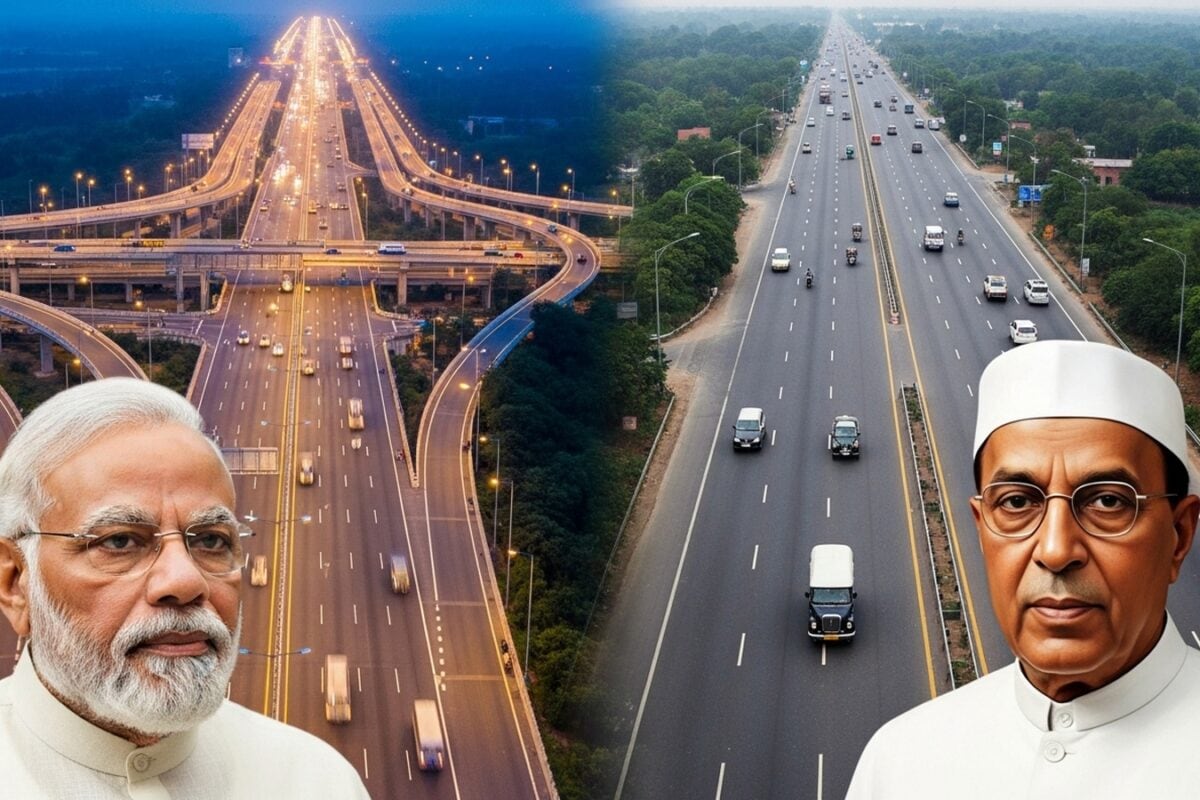
Nehru’s 3,987 Km Vs Modi’s 54,908 Km: Mapping India’s Path To Highways & Vikas Published By, Last Updated: June 08, 2026, 19:09 IST The Modi government's highway push has not merely expanded roads, but has redefined the scale at which India builds Rapid Read News18 One of the key slogans of Prime Minister Narendra Modi, who is set to surpass Jawaharlal Nehru’s record as India’s longest continuously serving democratically elected prime minister on June 10, 2026, has been ‘Sabka Saath, Sabka Vikas’. What better yardstick for growth than national highways? Ahead of the milestone moment, a look at how Nehru and Modi fared in terms of national highways. Between 1951 and 1961, India added just 3,987 km to its Highway network. The Nehru era undoubtedly laid the foundations of a newly independent nation, but highway expansion remained limited in both pace and ambition.
A decade under Prime Minister Narendra Modi has witnessed a dramatically different approach — one focused on execution, scale, and connectivity. The Highway network has expanded by nearly 60%, growing from 91,287 km in 2014 to 1,46,195 km in 2024 — an addition of over 54,908 km. The transformation is not just about length. The quality and capacity of the network have also improved significantly. The length of four-lane and above Highways has more than doubled, rising from 18,278 km in 2014 to 45,947 km today, while access-controlled high-speed corridors have expanded from just 93 km to 2,474 km. Construction speed tells an equally compelling story. In 2014-15, Highways were being built at a pace of about 12 km per day. Within a few years, that pace nearly tripled, reaching a record 36.5 km per day in 2020-21, with several subsequent years sustaining construction rates above 28 km per day.
Flagship programmes such as Bharatmala Pariyojana, the expansion of expressways, economic corridors, border roads, and multimodal connectivity under PM Gati Shakti have reshaped India’s infrastructure landscape. The result is faster travel times, lower logistics costs, stronger supply chains, and greater economic integration across regions. From adding 3,987 km in a decade to adding 54,908 km in a decade, the numbers capture a larger shift: from infrastructure as a necessity to infrastructure as a national growth strategy. The Modi government’s highway push has not merely expanded roads — it has redefined the scale at which India builds. News18 Newsletter Handpicked stories, in your inbox A newsletter with the best of our journalism submit About the Author Manjiri Joshi At the news desk for 20 years, the story of her life has revolved around finding pun, facts while reporting, on radio, heading a daily newspaper desk, teaching mass media students to now editing speci...
Read More First Published: June 08, 2026, 19:04 IST News india Nehru’s 3,987 Km Vs Modi’s 54,908 Km: Mapping India’s Path To Highways & Vikas Disclaimer: Comments reflect users’ views, not News18’s. Please keep discussions respectful and constructive. Abusive, defamatory, or illegal comments will be removed. News18 may disable any comment at its discretion. By posting, you agree to our Terms of Use and Privacy Policy Loading comments...
 The BriefWire