Rebellion, Exits And Mutiny: How Mamata Banerjee's 15-Year Bengal Dominance Collapsed In 35 Days
Rebellion, Exits And Mutiny: How Mamata Banerjee's 15-Year Bengal Dominance Collapsed In 35 Days Written By, Last Updated: June 08, 2026, 16:59 IST The TMC
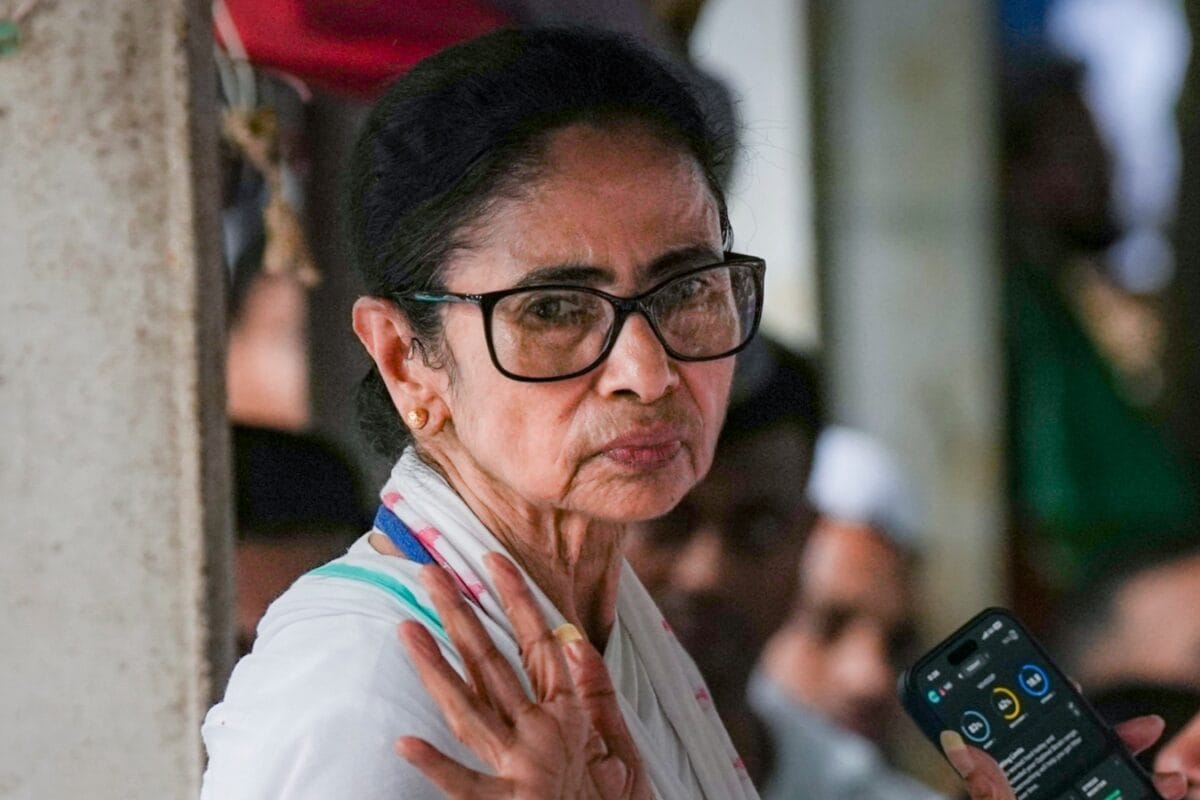
Rebellion, Exits And Mutiny: How Mamata Banerjee's 15-Year Bengal Dominance Collapsed In 35 Days Written By, Last Updated: June 08, 2026, 16:59 IST The TMC faced its biggest political setback after 20 dissident party MPs submitted a letter to the Lok Sabha Speaker seeking to join the NDA. Rapid Read Mamata Banerjee's Trinamool Congress (TMC) is facing an existential crisis in both Bengal and Delhi. (PTI) The outcome of the West Bengal Assembly elections was not the only upset for Mamata Banerjee’s Trinamool Congress (TMC). In the months that followed the TMC’s stunning defeat in Bengal, the party has faced one setback after another that has put a big question mark on its political future. The TMC faced its biggest political setback on Monday after at least 20 dissident party MPs submitted a letter to Lok Sabha Speaker Om Birla seeking to join the Democratic Alliance (NDA). The move came hours after Rajya Sabha MP Sukhendu Shekhar Ray submitted his resignation from the TMC. This is not just a setback. This is a blow of seismic proportions to Mamata Banerjee’s carefully crafted legacy that had dominated West Bengal’s politics for the last 15 years. With over two-thirds of TMC MLAs already in open revolt, the emerging rebellion among MPs has further eroded Mamata Banerjee’s image as the party’s unquestioned leader, raising fresh doubts about her political future. When It All Began The collapse of Mamata Banerjee’s authority within the Trinamool Congress (TMC) has been one of the most dramatic political developments in West Bengal since the BJP’s landslide victory in the 2026 Assembly elections.
Mamata Banerjee herself lost her Bhabanipur seat to Suvendu Adhikari, her one-time lieutenant, who later became the CM. On May 4, after the BJP stormed to power in Bengal with 207 seats out of the state’s 294, internal cracks within the TMC began to appear when several leaders, including Manoj Tiwary, Arunava Sen, Papiya Ghosh, and Kakoli Ghosh Dastidar, openly expressed displeasure against the party leadership and the high-handedness of TMC general secretary Abhishek Banerjee. These leaders cited deep-rooted corruption within the party and accused its top leadership of being increasingly inaccessible and ignorant of public anger and misgovernance, marking the gravest challenge for the party that was yet to come. Resignations, Skipped Meetings, & Expulsions The dissent that had gripped TMC slowly began to turn into a broader revolt against the party’s top brass. TMC MP Santanu Sen resigned as the party’s spokesperson, while Kakoli Ghosh Dastidar resigned from all party posts. More than 100 TMC municipal councillors also stepped down, signalling a brewing discontent within the party. One of the clearest signs of Mamata Banerjee’s weakening control over the TMC took place on May 30 when 60 out of its 80 MLAs refused to show up at a meeting chaired at her Kalighat residence. While the TMC attributed this to recent attacks on leaders, there were visible signs of internet mistrust. Another crisis engulfed the TMC when MLAs Ritabrata Banerjee and Sandipan Saha were expelled from the party on June 2 over alleged anti-party activities. The two MLAs had formally complained to the Assembly Speaker, alleging that signatures of several MLAs had been used without their consent on a letter naming the party’s preferred Leader of the Opposition, Sobhandeb Chattopadhyay, leading to a police inquiry.
Ritabrata Leads TMC Revolt In Assembly One month after the TMC’s defeat, Mamata Banerjee received a stunning blow when 58 of the party’s 80 MLAs submitted a letter to the Assembly Speaker backing Ritabrata Banerjee as Leader of the Opposition. The Speaker accepted the claim and recognised Ritabrata as the LoP, effectively stripping Mamata’s faction of control over the TMC’s legislature wing. The development underscored a remarkable reversal for Mamata Banerjee, who ruled West Bengal with near-total control for 15 years. What was more puzzling is that her grasp on the party was undone by an MLA who had joined the party six years ago. Since he was recognised as LoP, Ritabrata has launched a tirade of attacks on Abhishek Banerjee, accusing him of corruption, promoting dynastic politics and causing the electoral defeat. The rebellion has all the signs of a Maharashtra-style splits seen in the Shiv Sena and the Nationalist Congress Party (NCP). TMC Revolt Reaches Parliament The TMC’s crisis has officially reached the parliament, where 20 MPs have sought to join the NDA. Sources told CNN-News18 that Kakoli Ghosh Dastidar is expected to lead the breakaway faction. While TMC supremo Mamata Banerjee, national general secretary Abhishek Banerjee and several senior leaders attended the INDIA bloc meeting at the Constitution Club, the rebel MPs gathered at the Motilal Nehru Marg residence of Union Minister and BJP’s West Bengal election in-charge Bhupender Yadav. In just over a month, Mamata Banerjee has gone from being West Bengal’s undisputed political hegemon to facing the most serious internal challenge of her party.
The sequence of events, from criticism to full-fledged revolt, have raised questions about the future of the Trinamool Congress and the Banerjee family’s hold over the organisation. For the TMC, a silver lining could be found in several rebel MLAs, who continue to acknowledge Mamata Banerjee as the party’s supreme leader, suggesting that her personal stature still commands significant loyalty. However, it remains to be seen whether that residual goodwill is enough to restore her authority. News18 Newsletter Handpicked stories, in your inbox A newsletter with the best of our journalism submit About the Author Aveek Banerjee Aveek Banerjee is a Senior Sub Editor at News18. Based in Noida with a Master's in Global Studies, Aveek has more than three years of experience in digital media and news curation, specialising in int... Read More First Published: June 08, 2026, 16:59 IST News india Rebellion, Exits And Mutiny: How Mamata Banerjee's 15-Year Bengal Dominance Collapsed In 35 Days Disclaimer: Comments reflect users’ views, not News18’s. Please keep discussions respectful and constructive. Abusive, defamatory, or illegal comments will be removed. News18 may disable any comment at its discretion. By posting, you agree to our Terms of Use and Privacy Policy Loading comments...
 The BriefWire