Poison for profit? Why toxic agrochemicals still flow freely across India
The official figures tabled in the Rajasthan Assembly have exposed what many describe as a "white-collar poison" being sprayed across India's farmlands. This is no
The official figures tabled in the Rajasthan Assembly have exposed what many describe as a "white-collar poison" being sprayed across India's farmlands. This is no ordinary issue. Critics argue that it reflects a systemic crisis in which pesticides claimed the lives of 535 farmers in Rajasthan in just two years. But this tragedy is far from new. The bloody harvest of profit built on human suffering has been flourishing in Indian fields for decades. In Kerala's Kasaragod district, aerial spraying of Endosulfan left generations physically disabled and mentally impaired, creating one of the country's worst public health disasters. Read Full Story In 2017, more than 20 cotton farmers in Maharashtra's Yavatmal died after being exposed to toxic agrochemicals while spraying their crops. Their deaths remain a stark reminder of a regulatory system that many believe has failed to protect those who feed the nation. Yet despite these dark chapters, Paraquat Dichloride—a herbicide with no known antidote—and Glyphosate, a chemical linked to millions of lawsuits and cancer allegations globally, continue to be sold widely across India. While pesticide manufacturers continue to fill their coffers, farmers are paying with their lives. The recent 60-day ban imposed on Paraquat by the Andhra Pradesh government suggests that concerns have reached a tipping point. The bigger question is this: when 74 countries have already deemed Paraquat Dichloride too dangerous and banned it, why are hundreds of metric tonnes of the chemical still being sprayed on Indian soil every year? Why do governments appear so helpless in the face of these merchants of death? FARMERS RISE AGAINST TOXIC CHEMICALS The harmful impact of pesticides is not limited to Rajasthan. Across India, hazardous agrochemicals continue to be sold and used extensively. While companies earn substantial profits, both farmers and consumers are increasingly exposed to potential health risks. Recognising the seriousness of the threat posed by Paraquat Dichloride, the Andhra Pradesh government recently imposed a 60-day ban on its use.
Before Andhra Pradesh, Telangana, Odisha and Kerala had also introduced temporary restrictions on the chemical. However, state governments can only impose such bans for limited periods. As a result, demands for a permanent nationwide prohibition are now growing louder. Recently, Rampal Jat, President of Kisan Mahapanchayat, wrote to the Rajasthan government seeking a ban on Paraquat Dichloride. He argued that the purpose of agriculture is to provide healthy food, not food contaminated with dangerous chemicals. "The objective of farming is to nourish people, not poison them," Jat said, adding that hazardous chemicals used in agriculture inevitably enter the food chain. In a memorandum addressed to the Chief Minister, Kisan Mahapanchayat described Paraquat Dichloride as an extremely toxic chemical capable of causing severe damage to the lungs, kidneys and liver. The organisation called for an immediate ban and questioned how a chemical prohibited in more than 70 countries continues to be allowed in India. HOW MUCH IS BEING USED? The widespread use of a chemical whose mere droplets can prove fatal—and for which no antidote exists anywhere in the world—raises troubling questions. If 74 countries have already banned Paraquat because of its toxicity, why are more than 100 metric tonnes of it reportedly being used in Indian agriculture every year? Why has such a dangerous chemical not yet been prohibited nationwide? And what does this say about the value placed on public health? The Pesticide Lobby The extreme toxicity of Paraquat Dichloride has prompted many developed and developing countries to ban it altogether. Among them are France, Germany, Italy, Sweden, Austria, Denmark, China, Switzerland, the United Kingdom, South Korea, Thailand, Malaysia, Vietnam, Taiwan, Brazil, Sri Lanka, Chile and Peru. Yet in India, the chemical remains in widespread use. Since Andhra Pradesh imposed its recent ban, concerns have reportedly grown within segments of the agrochemical industry.
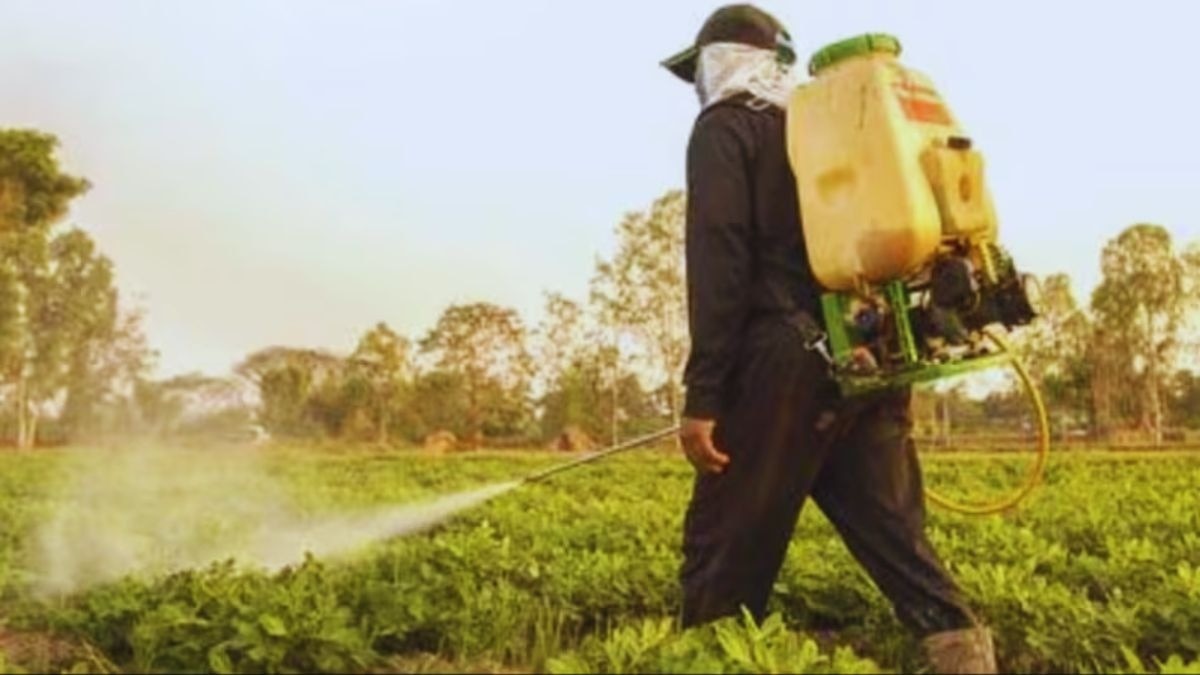
Critics allege that industry groups are now deploying their political and economic influence to ensure that other states do not follow Andhra Pradesh's example, allowing a highly profitable business to continue despite mounting public health concerns. Why Does Paraquat Remain So Popular? One reason for Paraquat's continued presence in Indian agriculture is its effectiveness. Faced with labour shortages and rising wage costs, many farmers see it as a cheap and quick solution that can destroy weeds within hours. Unlike in many developed countries, however, Indian agricultural workers often spray the chemical without protective gear such as masks, gloves or safety goggles. Many remain unaware of the neurological risks associated with exposure, including links to Parkinson's disease and tremors. THE LEGAL BATTLE Efforts to curb Paraquat's use in India have been underway for years. The government constituted a committee headed by Dr Anupam Verma to review 99 potentially hazardous pesticides. Rather than recommending a complete ban, the committee suggested stricter controls, improved packaging and use only by trained personnel. Environmental groups argued that these measures were insufficient. A petition filed by environmentalists and public-interest activists is currently pending before the Supreme Court. The petition seeks a complete ban on 99 hazardous pesticides and herbicides, including Paraquat Dichloride, citing risks to human health. Separately, a panel of agricultural scientists and medical experts has reportedly submitted a unanimous recommendation to the central government seeking a nationwide ban on Paraquat. The panel linked the chemical to fatal poisonings, kidney failure, severe lung disease and Parkinson's disease. Despite these recommendations, a complete ban has yet to be imposed. WHY IS THERE NO ANTIDOTE? According to agricultural scientists, the absence of an antidote for Paraquat Dichloride stems from the way it attacks the human body. The chemical triggers a process known as "redox cycling," setting off a self-perpetuating chain reaction of cellular destruction.
Rather than targeting a single organ, it attacks the body's cellular energy systems. Paraquat uses oxygen and cellular energy to generate highly destructive free radicals. Crucially, the chemical is not consumed in the process. Instead, it continuously regenerates itself, producing more and more free radicals. As long as oxygen and cellular energy remain available, the cycle continues. This creates a cruel paradox for doctors. In most cases of respiratory distress, oxygen therapy is a life-saving intervention. In Paraquat poisoning cases, however, oxygen can accelerate lung damage, making treatment even more difficult. Unlike toxins that target specific receptors or enzymes and can potentially be neutralised with antidotes, Paraquat directly destroys cell membranes. Within hours, the lungs, kidneys and liver can begin to fail. COMPANIES PROFIT, BUT WHO EDUCATES THE FARMERS? Perhaps the most troubling aspect of the crisis is that multinational companies have earned billions of rupees selling these chemicals in rural India while doing little, critics say, to educate farmers about safe handling practices. Manufacturers are well aware that chemicals such as Paraquat Dichloride and Glyphosate require strict safety measures, including protective suits, specialised gloves and masks. Yet many farmers continue to use them without adequate training or protective equipment. Safety instructions on product labels are often printed in tiny text and may be difficult for many users to understand. Critics argue that in the pursuit of profit, companies have effectively placed highly toxic chemicals in the hands of vulnerable farmers while failing to invest meaningfully in awareness and safety programmes. The consequence, they say, is that countless farmers unknowingly bring danger into their own fields—while the companies selling these products continue to reap the rewards. Ends
 The BriefWire