Why Trump's Envoys Made Secret Trip To A Tennessee Lab That Could Hold Key To Iran Deal
Why Trump's Envoys Made Secret Trip To A Tennessee Lab That Could Hold Key To Iran Deal Written By, Last Updated: June 08, 2026, 15:46
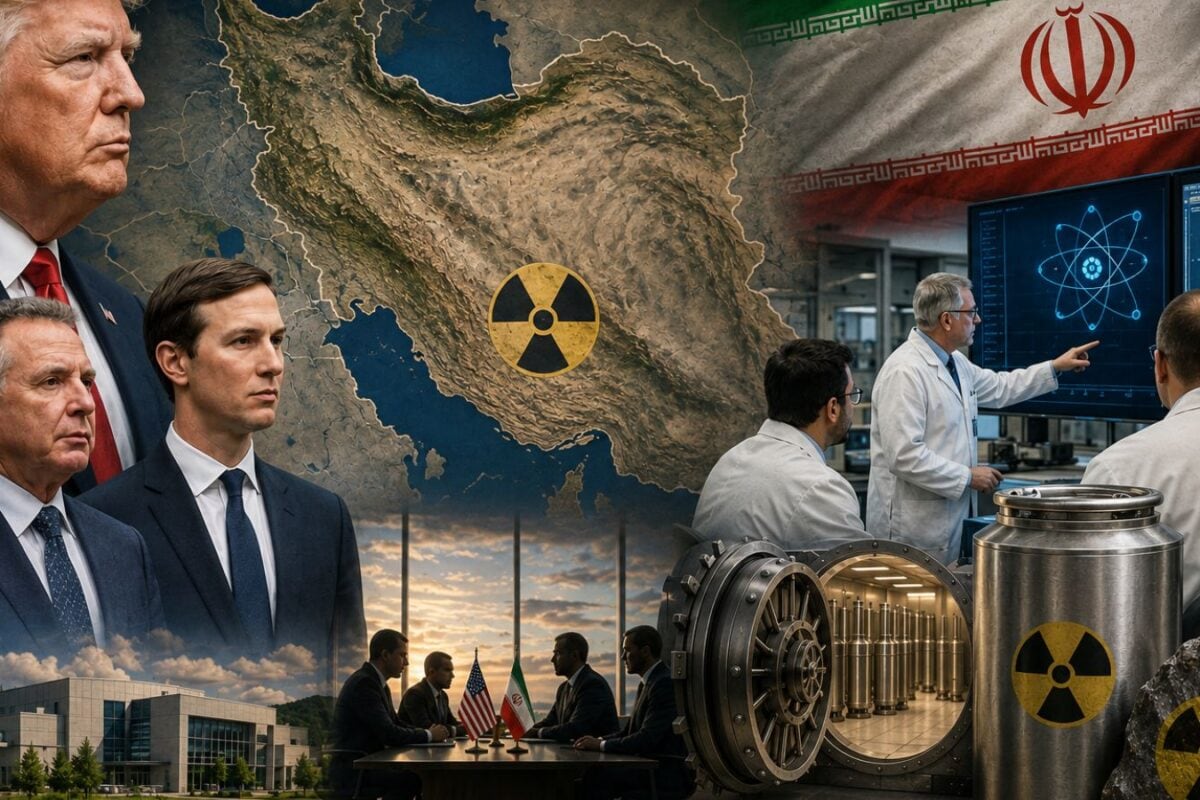
Why Trump's Envoys Made Secret Trip To A Tennessee Lab That Could Hold Key To Iran Deal Written By, Last Updated: June 08, 2026, 15:46 IST The biggest obstacle isn’t whether Iran has nuclear facilities. It’s the uranium that already exists Rapid Read Steve Witkoff and Jared Kushner travelled to the famed Oak Ridge Laboratory as the White House prepares for the possibility of formal nuclear negotiations with Tehran. (AI-Generated Image) When President Donald Trump’s envoys Steve Witkoff and Jared Kushner quietly travelled to Oak Ridge, Tennessee, last week, they weren’t there to negotiate with Iran. They were there to answer a much harder question—If a deal is reached, what do you actually do with Iran’s uranium? According to Axios, the two officials met nuclear scientists and technical experts at the famed Oak Ridge Laboratory as the White House prepares for the possibility of formal nuclear negotiations with Tehran. The visit is one of the clearest signs yet that Washington believes diplomacy may have a realistic chance of succeeding. The Tennessee Story Most nuclear negotiations focus on politics: How much uranium can Iran enrich, what sanctions get lifted, and what inspections will be allowed? But if a deal is signed, a far more complicated challenge begins: disposing of, securing, monitoring, or transforming Iran’s existing stockpile of enriched uranium. That is why Oak Ridge matters. Oak Ridge Laboratory was one of the key sites of the Manhattan Project and remains one of America’s premier centres for nuclear science. It houses specialists in uranium enrichment, nuclear materials management and verification systems. Nuclear material from countries such as Kazakhstan and Libya has previously passed through processes involving Oak Ridge expertise. As one US official told Axios: “This does not mean a deal will happen.
But it indicates that the negotiations are at a very serious stage." Why Iran’s Uranium Is The Entire Negotiation The biggest obstacle isn’t whether Iran has nuclear facilities. It’s the uranium that already exists. According to the latest IAEA assessments, Iran possesses hundreds of kilograms of uranium enriched to 60 per cent purity, far beyond civilian energy requirements and technically much closer to weapons-grade material. The IAEA recently cited a figure of roughly 440.9 kilograms of uranium enriched up to 60 per cent, Reuters reported. Western governments argue that this stockpile dramatically shortens Iran’s potential path to a nuclear weapon if Tehran ever chose to take that step. Iran insists its programme is peaceful. The result is a fundamental disagreement: Washington wants the uranium gone but Tehran wants to keep it. So What Could Actually Happen To Iran’s Uranium? Experts generally see four possible scenarios. Option 1: Ship It Out Of Iran This is Washington’s preferred solution. According to The New York Post, Iran’s highly enriched uranium could be transported to another country for storage, processing or disposal under international supervision. Similar arrangements have been used in previous non-proliferation efforts. This works for the US because it removes breakout risk, is easier to verify, and creates a clear compliance benchmark. However, Tehran sees enriched uranium as a strategic asset and Iranian leaders fear surrendering leverage without guaranteed benefits. Reuters recently reported that Iran has not agreed to hand over its highly enriched uranium stockpile and considers the issue unresolved. Option 2: Dilute It Instead of removing the uranium, Iran could blend it with natural uranium until enrichment levels fall significantly. This process, known as “downblending", has been used elsewhere in nuclear arms-control programmes.
This means Iran retains ownership but then verification becomes crucial. Inspectors would need constant access to ensure material is genuinely diluted and not secretly retained elsewhere. Option 3: Convert It Into Reactor Fuel Another possibility is converting enriched uranium into fuel forms that are much harder to reconvert into weapons material. Technically, this is feasible and has featured in past nuclear discussions. This option offers a compromise as Iran keeps a civilian nuclear programme and the international community reduces proliferation concerns. But implementation would require years of monitoring. Option 4: International Custody Inside Iran The most politically creative solution may be leaving the material in Iran while placing it under an unprecedented verification regime. That would involve continuous surveillance, real-time monitoring, IAEA inspections and sealed storage facilities. The challenge is trust, which is currently in short supply. Now The Biggest Problem No one, not even IAEA, knows where the uranium is. This is where negotiations become even more complicated. Recent IAEA reports quoted by Reuters reveal that inspectors have been unable to verify the status, location and composition of Iran’s uranium stockpiles after military strikes and months of limited access. The agency says it lacks complete visibility into where some enriched material is currently located. That means any future agreement may have to start with a basic accounting exercise: Find the uranium. Confirm the uranium. Then decide what to do with the uranium. The Significance Of The Oak Ridge Visit Historically, governments don’t assemble large technical teams unless they believe a diplomatic framework is at least plausible. According to Axios, experts are already being consulted about limiting future enrichment, disposing of existing stockpiles, verification mechanisms, and long-term monitoring systems. That does not mean a deal is imminent.
Major disagreements remain over enrichment rights, sanctions relief and the fate of the uranium stockpile itself. However, the Tennessee trip suggests Washington is beginning to think beyond negotiations and toward implementation. The most important question in the Iran nuclear talks is no longer whether diplomats can draft an agreement. It is whether they can solve the technical problem that follows. For Washington, a successful deal means ensuring Iran cannot rapidly convert existing uranium into weapons-grade material. For Tehran, a successful deal means retaining sovereignty, preserving nuclear capabilities and avoiding what it sees as national humiliation. That is why one of the most consequential locations in the Iran negotiations right now is not Tehran, Geneva or Washington. It’s a laboratory in Tennessee where scientists are quietly working on the question that could determine whether a future Iran deal survives its first day. News18 Newsletter Handpicked stories, in your inbox A newsletter with the best of our journalism submit About the Author Apoorva Misra Apoorva Misra is News Editor at News18.com with over nine years of experience. She is a graduate from Delhi University's Lady Shri Ram College and holds a PG Diploma from Asian College of Journalism,... Read More Location: United States of America (USA) First Published: June 08, 2026, 15:39 IST News explainers Why Trump's Envoys Made Secret Trip To A Tennessee Lab That Could Hold Key To Iran Deal Disclaimer: Comments reflect users’ views, not News18’s. Please keep discussions respectful and constructive. Abusive, defamatory, or illegal comments will be removed. News18 may disable any comment at its discretion. By posting, you agree to our Terms of Use and Privacy Policy Loading comments...
 The BriefWire