Nehru Addressed 3 Foreign Parliaments, Modi 19: What It Says About India’s Rising Global Voice
Nehru Addressed 3 Foreign Parliaments, Modi 19: What It Says About India’s Rising Global Voice Published By, Last Updated: June 08, 2026, 15:01 IST PM
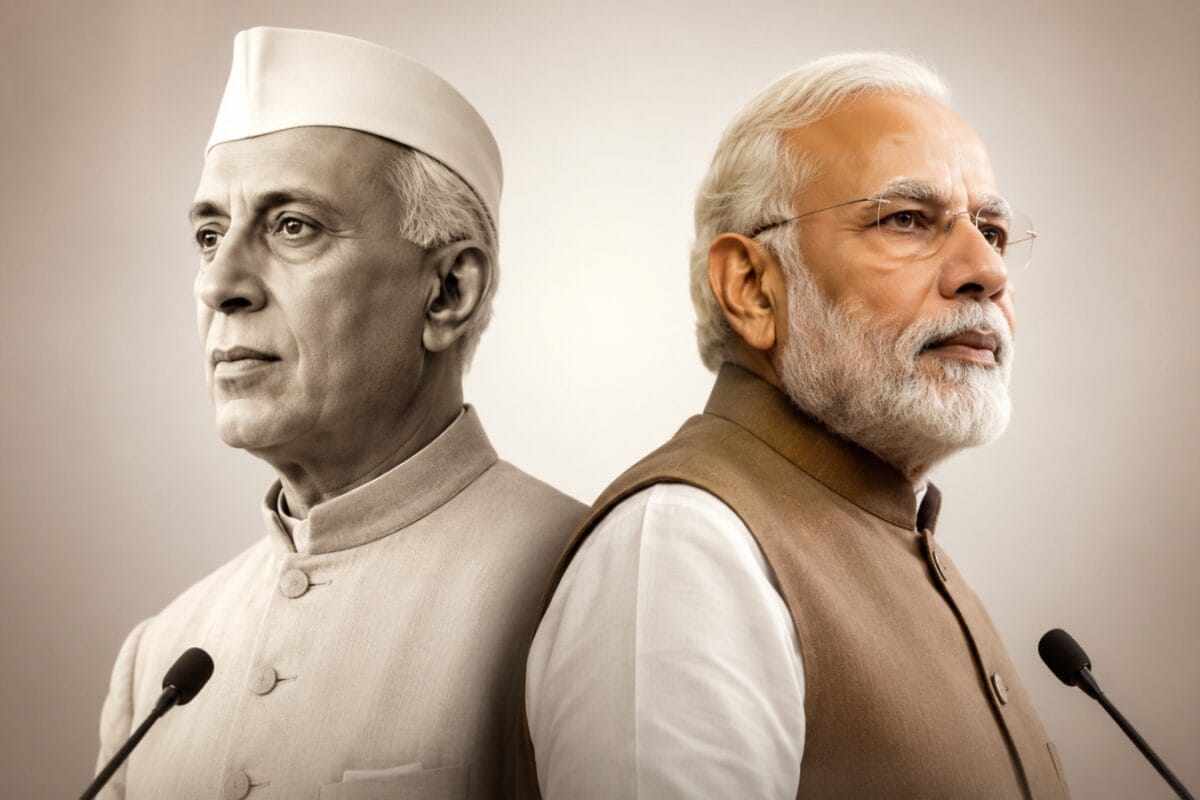
Nehru Addressed 3 Foreign Parliaments, Modi 19: What It Says About India’s Rising Global Voice Published By, Last Updated: June 08, 2026, 15:01 IST PM Modi’s 19 foreign parliament addresses, the highest by any Indian executive head, reflect India’s expanding diplomatic reach across world capitals. Rapid Read AI-generated image of Jawaharlal Nehru and PM Narendra Modi. When a Prime Minister speaks inside a foreign parliament, the moment carries weight beyond protocol. It means another country is not just hosting India’s leader, but giving India’s voice space inside its own democratic chamber — before lawmakers, diplomats, media and the wider world. That is where the Nehru-Modi contrast becomes significant. Jawaharlal Nehru addressed three foreign parliaments during his lifetime. Whereas, PM Narendra Modi has addressed 19 foreign parliaments between 2014 and 2026, the highest for any Indian executive head. As Modi nears the milestone of surpassing Nehru as India’s longest democratically elected, continuously serving Prime Minister on June 10, 2026, these speeches show how India’s global voice has travelled from the early quest for recognition to a wider, more confident presence across world capitals. Nehru’s Message To US Lawmakers Nehru’s 1949 address to US lawmakers came when India-US ties were still at a nascent stage. The House Chamber was under renovation, so he addressed a reception in the Ways and Means Committee Room for about 15 minutes before going to the Senate, which was then meeting in the Old Supreme Court Chamber, to deliver the same address.
At the time, President Harry S Truman’s Washington was still trying to understand Nehru’s non-alignment and socialist outlook. India, for its part, was trying to protect its newly won independence in a world increasingly divided by Cold War blocs. Nehru’s message was cautious but clear. He said he had come on a “voyage of discovery" of America’s “mind and heart" and to place before it India’s own “mind and heart". He welcomed technological and mechanical cooperation, but underlined that India would rely first on self-help and would not seek “any material advantage" in exchange for any part of its “hard-won freedom". It was the voice of a newly independent country seeking cooperation without dependence. How Modi Expanded India’s Global Voice Modi’s foreign parliament addresses belong to a different phase of India’s global journey. His speeches have taken India’s message to legislatures across the neighbourhood, major Western democracies, Africa, the Caribbean, the Indo-Pacific and West Asia. In 2014, soon after taking office, Modi addressed the parliaments of Bhutan, Nepal, Australia and Fiji. In 2015, he addressed the Assembly of Mauritius, the Parliament of Sri Lanka, the Parliament of Mongolia, the UK Parliament and the Parliament of Afghanistan. He addressed the US Congress in 2016 and again in 2023. The later list expanded further: Uganda in 2018, Maldives in 2019, Guyana in 2024, Ghana, Trinidad and Tobago, Namibia and Ethiopia in 2025, and the Knesset of Israel in 2026. In Knesset, his most recent such address, Modi was honoured with the Israeli Parliament’s highest award.
What Modi Said In The US Congress Modi’s 2016 address came from a very different position from Nehru’s 1949 speech. By then, India-US ties had moved into a stronger strategic phase under President Barack Obama, who became the first US President to visit India twice during his term. Trade had risen from $60 billion in 2009 to $107 billion in 2015, India’s defence purchases from the US had reached $14 billion, and Indian FDI into the US had tripled. That confidence showed in Modi’s language. Referring to Atal Bihari Vajpayee’s call to step out of the “shadow of hesitation", Modi said India and the US had overcome the “hesitations of history". He described “comfort, candour and convergence" as defining the relationship and said the US Congress had helped turn “barriers into bridges of partnership". In 2023, Modi became the first Indian Prime Minister to address a joint session of the US Congress twice. He is also only the second international leader, after Israeli Prime Minister Benjamin Netanyahu, to be granted that honour more than once. His 2023 address reflected how much India’s global position had changed. Modi said that when he first visited the US as Prime Minister, India was the 10th largest economy in the world, and that it had become the fifth largest. “When India grows, the whole world grows," he said. Modi also presented India’s global engagement through the idea of “Vasudhaiva Kutumbakam" — the world is one family.
Linking it to India’s G20 theme of “One Earth, One Family, One Future", he said India’s engagement with the world was for everyone’s benefit. Why Foreign Parliament Addresses Matter Foreign parliament speeches are symbolic, but symbolism matters in diplomacy. Such invitations are extended when a country wants to signal respect, strengthen political ties or recognise the visiting leader’s importance. That is why Modi’s 19 addresses matter. They reflect not just personal diplomacy, but a wider acceptance of India as a country whose position is relevant across regions and issues. News18 Newsletter Handpicked stories, in your inbox A newsletter with the best of our journalism submit About the Author News Desk The News Desk is a team of passionate editors and writers who break and analyse the most important events unfolding in India and abroad. From live updates to exclusive reports to in-depth explainers,... Read More First Published: June 08, 2026, 15:01 IST News india Nehru Addressed 3 Foreign Parliaments, Modi 19: What It Says About India’s Rising Global Voice Disclaimer: Comments reflect users’ views, not News18’s. Please keep discussions respectful and constructive. Abusive, defamatory, or illegal comments will be removed. News18 may disable any comment at its discretion. By posting, you agree to our Terms of Use and Privacy Policy Loading comments...
 The BriefWire