From Nehru's 5 IITs To PM Modi's 23: How India's Premier Institutions Expanded
From Nehru's 5 IITs To PM Modi's 23: How India's Premier Institutions Expanded Published By, Last Updated: June 08, 2026, 13:31 IST In PM Modi's
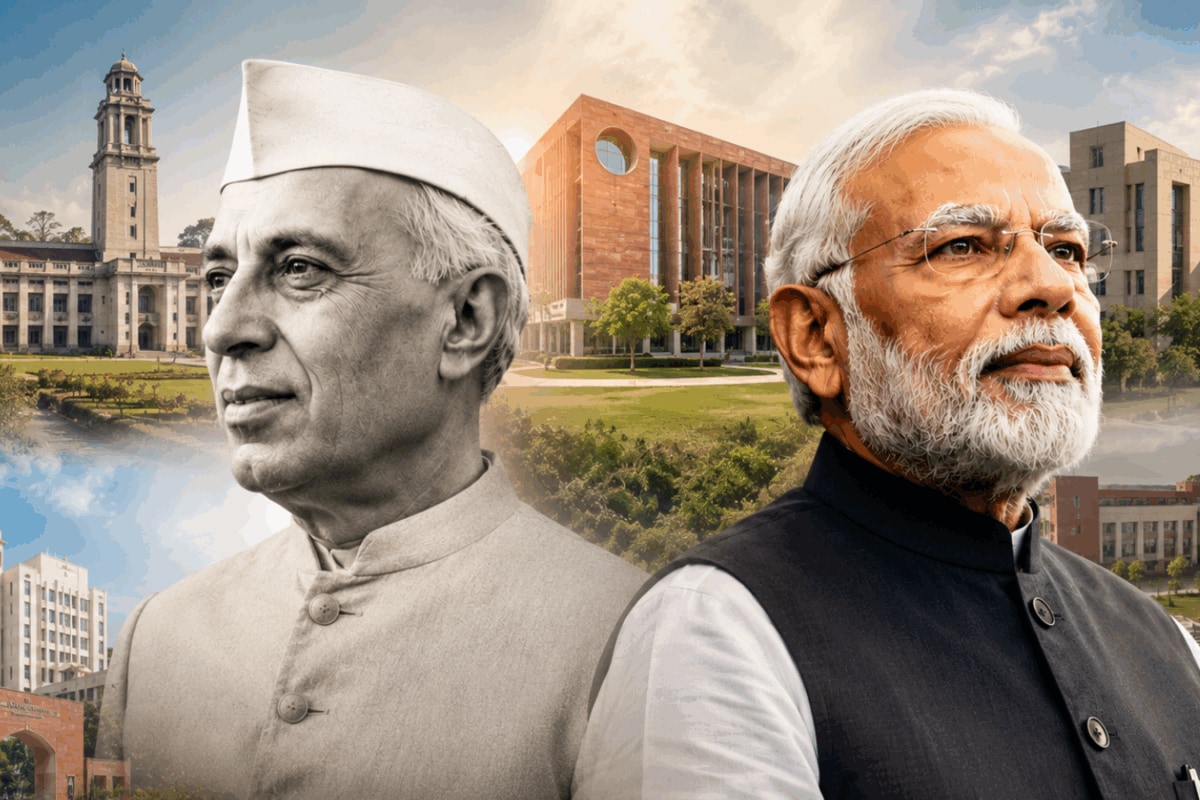
From Nehru's 5 IITs To PM Modi's 23: How India's Premier Institutions Expanded Published By, Last Updated: June 08, 2026, 13:31 IST In PM Modi's era, the challenge has been different: how to extend access to those premier institutions in a country that is larger, younger and far more aspirational. Rapid Read The Modi government's push to expand IITs, IIMs and AIIMS has often been described as a "mission-mode" effort to meet the needs of a growing youth population. (AI generated image) As Prime Minister Narendra Modi prepares to surpass Jawaharlal Nehru’s record as India’s longest continuously serving democratically elected Prime Minister, comparisons between the two leaders are drawing attention to how India itself has transformed over the past seven decades. Few sectors illustrate that transformation better than higher education. When Nehru led India in the years after Independence, the challenge was to create institutions that could provide the scientific, technical and medical expertise needed to build a modern nation. In PM Modi’s era, the challenge has been different: how to extend access to those premier institutions in a country that is larger, younger and far more aspirational than the India of the 1950s. The story of India’s IITs, IIMs and AIIMS reflects this evolution – from laying foundations to expanding capacity. The Institutions That Defined Modern India In the years following Independence, India’s leadership viewed higher education as central to nation-building. The Indian Institutes of Technology were established to create a world-class engineering talent pool that could drive industrial and technological development.
During Nehru’s tenure, five IITs were established – Kharagpur, Bombay, Madras, Kanpur and Delhi. Around the same period, AIIMS Delhi emerged as the country’s premier medical education and research institution. These institutions would go on to become some of India’s most respected educational brands, producing generations of engineers, scientists, doctors and innovators who helped shape the country’s growth story. For decades, however, access to such institutions remained limited. Their prestige grew, but so did competition for a relatively small number of seats. Modi-Era Expansion By the time PM Narendra Modi assumed office in 2014, India was home to more than 1.2 billion people and one of the world’s largest youth populations. Demand for quality higher education had increased dramatically, with millions of students competing every year for admission to premier institutions. The focus increasingly shifted from creating centres of excellence to expanding access to excellence. Over the past decade, the network of India’s top educational institutions has grown significantly. The number of IITs increased from 16 in 2014 to 23 by 2026. The number of IIMs rose from 13 to 21, while AIIMS institutions expanded from 7 to 23 across the country. The expansion was not merely numerical. It also sought to bring premier institutions closer to students in regions that had historically lacked such facilities. New IITs, IIMs and AIIMS campuses were established across multiple states, reducing the concentration of elite educational infrastructure in a handful of major cities.
Educating a New India The scale of expansion reflects the changing realities of the country. When the first IITs were established, India had a population of around 34 crore. Today, the country is home to more than 140 crore people. The number of students aspiring for professional education has increased exponentially, driven by rising incomes, greater awareness and expanding career opportunities. A nation of this scale requires a larger educational ecosystem than the one envisaged in the early years after Independence. The Modi government’s push to expand IITs, IIMs and AIIMS has often been described as a “mission-mode" effort to meet the needs of a growing youth population while strengthening India’s talent pipeline in engineering, management and healthcare. Beyond the Numbers Expansion, however, brings its own challenges. Education experts have long argued that maintaining quality, attracting faculty, strengthening research and building institutional culture are as important as increasing the number of campuses. New institutions often take years to develop the reputation and academic ecosystems enjoyed by their older counterparts. Even so, the broader trend is unmistakable. India’s higher education landscape has evolved from a handful of elite institutions serving a newly independent nation to a much wider network designed to cater to one of the largest student populations in the world. Foundation and Expansion The evolution of India’s premier educational institutions tells the story of two different eras. Nehru’s contribution lay in establishing institutions that would become symbols of academic excellence and modern nation-building.
PM Modi’s contribution has been in expanding that network on an unprecedented scale to meet the demands of a much larger and more ambitious India. Together, the journey from five IITs to twenty-three, from one AIIMS to twenty-three, reflects not just the growth of educational infrastructure but also the transformation of India itself – from a newly independent republic seeking expertise to a nation striving to educate and empower millions of young people across the country. News18 Newsletter Handpicked stories, in your inbox A newsletter with the best of our journalism submit About the Author News Desk The News Desk is a team of passionate editors and writers who break and analyse the most important events unfolding in India and abroad. From live updates to exclusive reports to in-depth explainers,... Read More First Published: June 08, 2026, 13:31 IST News india From Nehru's 5 IITs To PM Modi's 23: How India's Premier Institutions Expanded Disclaimer: Comments reflect users’ views, not News18’s. Please keep discussions respectful and constructive. Abusive, defamatory, or illegal comments will be removed. News18 may disable any comment at its discretion. By posting, you agree to our Terms of Use and Privacy Policy Loading comments...
 The BriefWire