Sonam Wangchuk from Ladakh, the lion, not the cockroach
New Delhi's Jantar Mantar on Saturday saw protests by the once-satirical, now-serious Cockroach Janta Party (CJP). Ladakh-based innovator, educator and climate activist Sonam Wangchuk joined
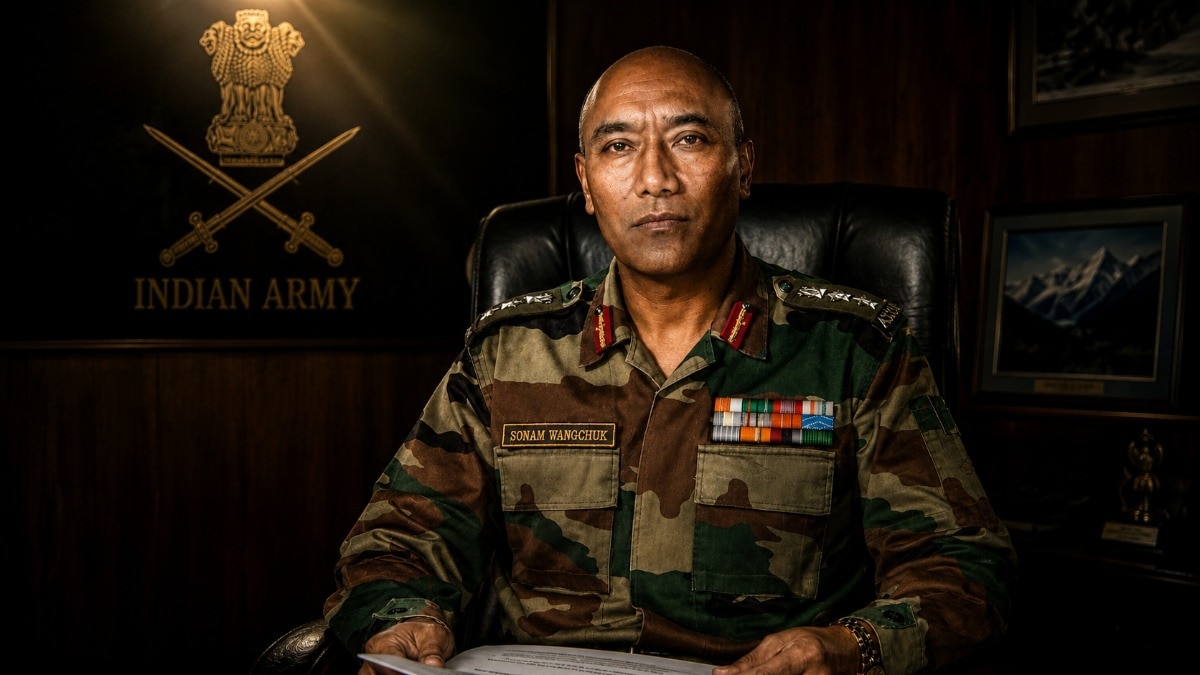
New Delhi's Jantar Mantar on Saturday saw protests by the once-satirical, now-serious Cockroach Janta Party (CJP). Ladakh-based innovator, educator and climate activist Sonam Wangchuk joined Abhijeet Dipke, the CJP founder, as he came back to India to lead the protests on Saturday. Wangchuk had earlier this week extended his support to the youth-led movement over the NEET paper leak issue, lending credibility and visibility to a protest that began as internet satire before metamorphosing into an organised group. Read Full Story While many know activist-educator Sonam Wangchuk, many might not know another Sonam Wangchuk, who's also from Ladakh. He was an Indian Army officer who fought the Pakistanis in the 1999 Kargil war and etched his name in history. He was awarded the Maha Vir Chakra (MVC), India's second-highest wartime gallantry award. While climate activist Wangchuk fought Ladakh's water crisis through innovations like artificial glaciers, soldier Sonam Wangchuk, battled Pakistani intruders in the Kargil War. And unlike the ironic mascot of a political movement built around what Dipke said is "a surviving a dysfunctional system", Colonel Sonam Wangchuk earned another identity in the mountains of Kargil. The Lion of Ladakh. WHO IS SONAM WANGCHUK, THE LION OF LADAKH Born on May 11, 1964, in Sankar (near Leh) in the erstwhile Jammu and Kashmir, Colonel Sonam Wangchuk grew up amid the rugged mountains that would later test his mettle.
Influenced by a relative in the Indian Army, he joined the Officers Training Academy in Chennai and was commissioned into the 4th Battalion of the Assam Regiment. He served in challenging areas, including with the Indian Peace Keeping Force (IPKF) in Sri Lanka, before joining the Indus Wing of the Ladakh Scouts — the "Snow Warriors", known for their endurance in high-altitude warfare. By 1999, then-Major Sonam Wangchuk was a seasoned officer, familiar with the unforgiving terrain of Ladakh. When Pakistani intruders occupied strategic heights across the Line of Control (LoC) in the Kargil war, the Indian Army launched Operation Vijay to evict them. The Batalik sector, with its glaciated ridges rising above 18,000 feet, presented challenges like freezing cold, blizzards, thin air, and slopes where every step could be fatal. On May 28-30, 1999, Major Wangchuk was tasked with a critical mission. He had to secure a dominant ridge line at Chorbat La to pre-empt further enemy infiltration and establish observation posts. Leading a column of the Ladakh Scouts, he moved towards the LoC under cover of darkness and harsh weather. WHEN SONAM WANGCHUK'S PALTAN WAS AMBUSHED ON PATROL IN LADAKH The operation took a sudden turn when the column was ambushed from a vantage position by Pakistani troops.
Enemy fire rained down, and in the firefight, one NCO, Havildar Tsewang Rigzin, was killed. Rigzin was awarded Vir Chakra, posthumously. The situation was perilous. Withdrawal could have ceded vital ground, but advancing head-on into fortified positions seemed like a suicidal step. At this moment of crisis, then-Major Wangchuk's leadership shone. He steadied his men, prevented panic, and quickly devised a counter-plan. Displaying exceptional bravery, he led a daring flanking manoeuvre. Under relentless enemy fire and in the rarefied atmosphere where oxygen was scarce, Wangchuk personally spearheaded the assault on the enemy position. His troops overran the post, killing two enemy soldiers and recovering a heavy machine gun, a Universal Machine Gun, ammunition, and other stores, along with the bodies of enemy personnel. This swift action turned the tide. Ladakh Lieutenant Governor Vinai Kumar Saxena pays his respects to Colonel Sonam Wangchuk at his funeral, accompanied by soldiers of the Ladakh Scouts offering a formal military salute. (Image: PTI) What followed was something even more remarkable. Major Wangchuk took stock of forces along the entire Chorbat La axis in the Batalik sector. Over the next days, he coordinated operations to clear the area up to the LoC of all enemy intrusions.
By securing Chorbat La, one of the first major successful operations of the Kargil War, they boosted the morale of Indian forces and denied the enemy a crucial foothold on the Ladakh Range. For his conspicuous gallantry, leadership from the front, and devotion to duty in the face of the enemy under extreme climatic conditions, Major (later Colonel) Sonam Wangchuk was awarded the Maha Vir Chakra (MVC), India's second-highest wartime gallantry award. Wangchuk himself was known for his calmness and humility, and often downplayed his achievements, crediting his troops and emphasising collective effort. Colonel Sonam Wangchuk continued to serve the nation until his retirement in 2018. Colonel Wangchuk passed away on April 10, 2026, due to a heart attack at the age of 61. The two Sonam Wangchuks from Ladakh have shown different expressions of patriotism and public service. Satire created the cockroach. The Lion of Ladakh was forged in a real battle. Ends Published By: Anand Singh Published On: Jun 8, 2026 09:50 IST
 The BriefWire