No Tanker Water In Mumbai From Today: 'LPG-Like Crisis' Feared As Societies, Hotels Face Crunch
No Tanker Water In Mumbai From Today: 'LPG-Like Crisis' Feared As Societies, Hotels Face Crunch Published By, Edited By Last Updated: June 08, 2026, 06:00
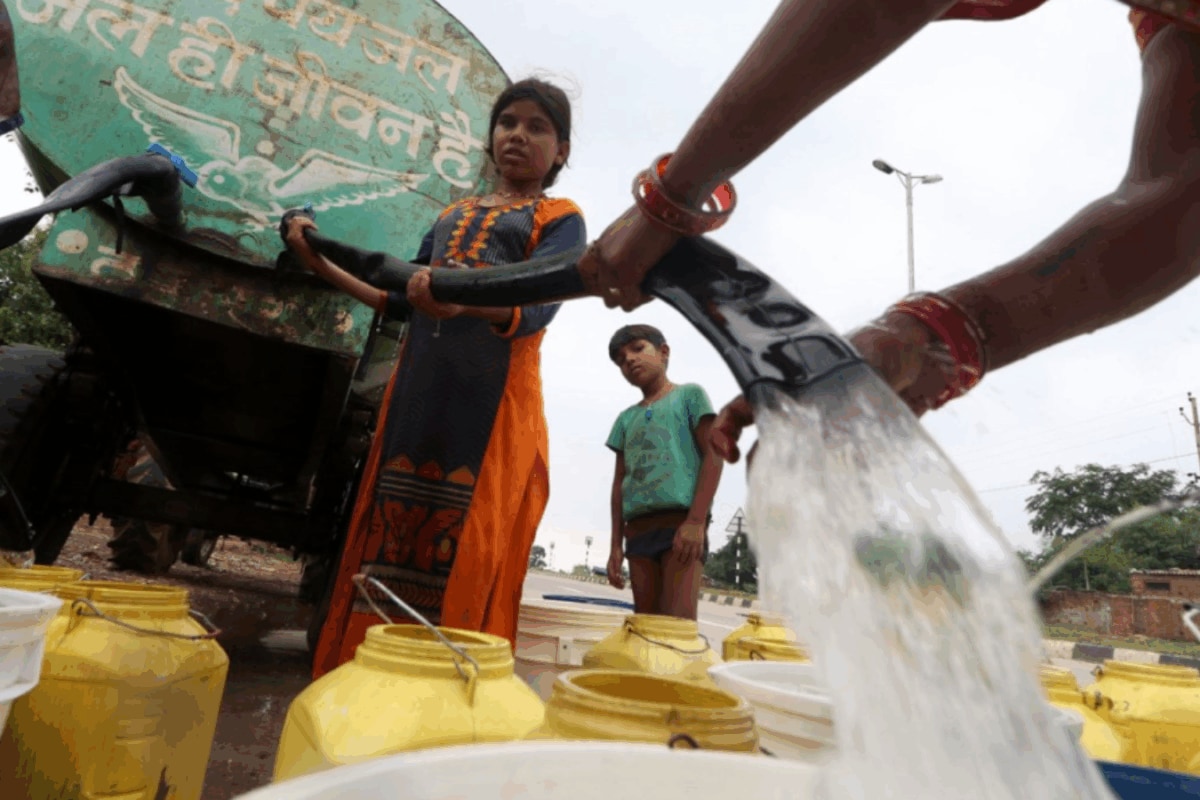
No Tanker Water In Mumbai From Today: 'LPG-Like Crisis' Feared As Societies, Hotels Face Crunch Published By, Edited By Last Updated: June 08, 2026, 06:00 IST Mumbai's water crisis deepens: Tanker operators on indefinite strike from Monday, even as the city battles a 10 per cent cut and braces for a potentially deficient monsoon. Mumbai's 2,000-strong tanker fleet, supplying 550 MLD daily, went on indefinite strike from midnight on June 8. (Representational Image) Mumbai’s water crisis entered a dangerous new phase on Monday as the city’s tanker operators suspended services from midnight, leaving millions of residents and businesses without a critical alternative supply source — even as the city battles an ongoing 10 per cent municipal water cut and reservoir levels continue to drop ahead of what forecasters warn could be a deficient monsoon season. The Mumbai Water Tanker Association (MWTA), which represents over 2,000 tankers that collectively supply around 550 million litres per day (MLD) of water across the city, announced an indefinite strike beginning 12 am on June 8, citing what it called “harsh and selective" enforcement of Central Ground Water Authority (CGWA) rules — applied, the association contends, exclusively within Mumbai’s limits and nowhere else in the Mumbai Metropolitan Region or the rest of Maharashtra. Why Are Tanker Operators On Strike? The immediate trigger is a wave of notices — over 250 in the past week alone — issued by revenue authorities and the BMC to well operators, borewell owners, and water suppliers across the city. The notices invoke a CGWA public directive requiring all existing groundwater users to apply for a No-Objection Certificate (NOC) for groundwater withdrawal, and warn that abstraction structures — dug wells, borewells, tube wells, and dewatering structures — could be sealed for illegal groundwater extraction. Power supply of some well owners has already been disconnected. Show-cause notices have been served to at least five MWTA members.
Operators say authorities have threatened to confiscate tanker vehicles if services continue. “We have decided to suspend services until a meeting is held with the authorities and an amicable solution is arrived at through discussion and consultation," MWTA spokesperson Ankur Sharma was quoted by Hindustan Times. What Are The CGWA Rules That Triggered This? Under the CGWA framework, private tanker suppliers and well operators must comply with a strict set of conditions. Here’s what the rules demand • NOC mandatory: Every groundwater user must obtain a No-Objection Certificate from the CGWA for any extraction • Land ownership proof: The well must be situated on a land parcel of at least 200 square metres — a condition the association calls wholly impractical in land-scarce Mumbai • Documentation: Operators must submit tanker ownership papers and water quality certificates • Smart metering: Tamper-proof digital flow meters with telemetry must be installed at extraction points • Quality compliance: All supply must meet Bureau of Indian Standards (BIS) drinking water norms The association argues these conditions are structurally incompatible with Mumbai’s urban geography and financially unviable for most operators. Revenue authorities and the BMC have issued notices warning that abstraction structures — dug wells, borewells, tube wells, and dewatering structures — could be sealed for non-compliance. “The conditions prescribed by the CGWA are not feasible for Mumbai. It is not financially viable for us to continue operations under these regulations, which is why we have been compelled to suspend services," MWTA president Jasbir Singh Bira was quoted by HT. Is The Strike Targeting Potable Or Non-Potable Supply? The association stresses that CGWA NOCs are mandated only for potable groundwater extraction — and the overwhelming bulk of tanker supply is non-potable water used for construction, sanitation, and general utility purposes. Potable water from tankers is deployed only in emergencies such as BMC pipeline bursts, Sharma was quoted by The Times of India.
Why Is Mumbai Being Singled Out? The MWTA contends that CGWA norms are being enforced exclusively within Mumbai’s city limits — not in the rest of the MMR or anywhere else in Maharashtra. If substantiated, this would raise serious questions about the regulatory intent behind the crackdown. The association has sought urgent intervention from Chief Minister Devendra Fadnavis and demanded a meeting before services resume. How Much Of Mumbai’s Water Do Tankers Supply? Tankers account for roughly eight per cent of Mumbai’s total daily water requirement — a share that becomes disproportionately critical during periods of reduced municipal supply. The MWTA’s fleet services housing societies, hotels, restaurants, government agencies, and infrastructure projects citywide. A suspension, even for a few days, risks compounding the stress of the ongoing municipal cut — particularly in eastern and western suburbs where pipeline pressure has been inconsistent. Who Will Be Worst Hit? For housing societies already navigating reduced BMC supply, the strike arrives at the worst possible time. “The BMC does not provide water consistently and we depend on tankers to get through periods when there is no municipal supply," said Mandeep Singh Makkar, chairperson of Synchronicity Cooperative Housing Society in Chandivali, as reported by the Hindustan Times. The hospitality sector is sounding the alarm too. Rahul Rohra, who owns Veranda restaurants in Bandra and Khar, warned HT that inadequate pipeline pressure had long pushed hotels and restaurants onto tanker dependency. “If tanker services stop, it could trigger an LPG-like crisis in the hospitality sector. There is also the possibility of a black market emerging for tanker water," he said. The ripple effects are already visible. The Garware Club House has announced it will shut its spa and swimming pool from Sunday in view of the water shortage and reduced tanker supply. What Are Residents And Businesses Saying? Alarm is widespread. Housing society residents fear days without any water at all; restaurateurs warn of operational collapse and potential black-market price gouging.
With extreme heat compounding demand, the timing could not be worse. Is The BMC Prepared With A Backup Plan? That question remains unanswered. HT reported that Abhijeet Bangar, additional municipal commissioner (projects), did not respond to calls or texts seeking comment on contingency measures ahead of the strike. With reservoir levels already under pressure and the monsoon yet to deliver relief, Mumbai can ill afford a prolonged disruption to one of its key supplementary water sources. Mumbai Tanker Strike: At A Glance Watch more videos Share this Article WhatsApp facebook Twitter telegram copy link Strike start Monday, June 8, 12 am — indefinite Tankers affected 2,000+ (Mumbai Water Tanker Association) Daily supply at risk ~550 MLD Share of city’s water needs ~8% Current municipal water cut 10% Trigger CGWA NOC notices to well and borewell operators Notices issued ~250 well operators in past week Key CGWA condition NOC + minimum 200 sq m land ownership proof Association’s demand CM intervention; halt to notices Who’s affected Housing societies, hotels, restaurants, infrastructure projects, govt agencies News18 Newsletter Handpicked stories, in your inbox A newsletter with the best of our journalism submit About the Author News Desk The News Desk is a team of passionate editors and writers who break and analyse the most important events unfolding in India and abroad. From live updates to exclusive reports to in-depth explainers,... Read More First Published: June 08, 2026, 06:00 IST News cities mumbai-news No Tanker Water In Mumbai From Today: 'LPG-Like Crisis' Feared As Societies, Hotels Face Crunch Disclaimer: Comments reflect users’ views, not News18’s. Please keep discussions respectful and constructive. Abusive, defamatory, or illegal comments will be removed. News18 may disable any comment at its discretion. By posting, you agree to our Terms of Use and Privacy Policy Loading comments...
 The BriefWire