2 Paths To PM’s Chair: Nehru’s Greenfield Opportunity Vs Modi’s Competitive Political Rise
2 Paths To PM’s Chair: Nehru’s Greenfield Opportunity Vs Modi’s Competitive Political Rise Published By, Last Updated: June 07, 2026, 19:43 IST Narendra Modi's rise
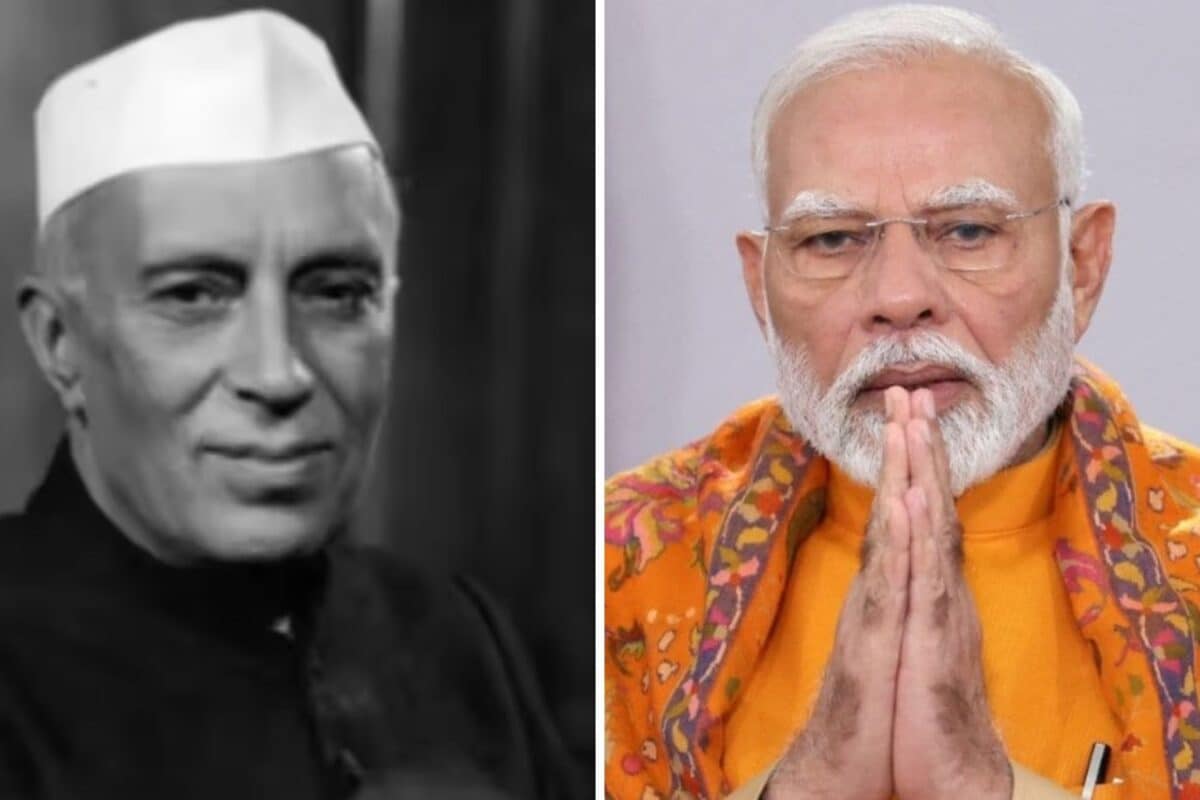
2 Paths To PM’s Chair: Nehru’s Greenfield Opportunity Vs Modi’s Competitive Political Rise Published By, Last Updated: June 07, 2026, 19:43 IST Narendra Modi's rise was built on successive democratic mandates and the ability to expand political support across regions and social groups Rapid Read Jawaharlal Nehru and Narendra Modi (right). As Prime Minister Narendra Modi prepares to surpass Jawaharlal Nehru’s record as India’s longest continuously serving democratically elected prime minister on June 10, 2026, the moment also invites a deeper look at how the two leaders reached the same office through starkly different political landscapes. While both occupied the nation’s highest office for extended periods, the paths that brought them there unfolded in entirely different political landscapes. Nehru’s Greenfield Political Moment When Jawaharlal Nehru assumed office in 1947, he was the natural political heir of the freedom movement. Backed by the Congress establishment, strengthened by the moral authority of the Independence struggle, and enjoying the personal confidence of Mahatma Gandhi, Nehru entered office at a time when the Indian Congress commanded unparalleled public legitimacy.
The political environment he inherited was unlike anything seen in contemporary India. The Congress dominated the national imagination, opposition forces remained fragmented, and the emotional momentum of Independence gave the party near-universal acceptance across large sections of society. Nehru’s challenge was immense — building the institutions of a newly independent nation — but the route to leadership itself faced little serious political contestation. Modi’s Rise Through Competitive Politics Narendra Modi’s ascent unfolded in a markedly different era. His journey to the Prime Minister’s Office was preceded by decades of organisational work, grassroots political engagement, electoral campaigns, and administrative experience. Unlike the post-Independence Congress system, Modi emerged in a political environment defined by coalition governments, regional power centres, ideological polarization, and relentless electoral competition. India of the late twentieth and early twenty-first centuries was characterised by fragmented mandates, coalition instability, corruption controversies, and competing political narratives. leadership was no longer inherited through a dominant political ecosystem; it had to be earned through sustained political mobilization and repeated electoral success.
From party worker to Chief Minister and eventually Prime Minister, Modi’s rise was built on successive democratic mandates and the ability to expand political support across regions and social groups. Two Political Contexts The journeys show two distinct phases in India’s democratic evolution. Nehru led at a time when the Congress enjoyed overwhelming political dominance and the goodwill generated by the freedom struggle. Modi rose in an era where electoral victories were fiercely contested, political loyalties were fragmented, and national mandates required overcoming multiple layers of opposition. One leader inherited a political landscape shaped by the triumph of Independence and the dominance of a single political movement. The other emerged from decades of competitive democratic politics, navigating coalition-era complexities and intense electoral battles to secure national leadership. As Modi reaches a historic tenure milestone, the contrast between these two journeys underscores how dramatically India’s political landscape has evolved — from the age of post-Independence consensus to the era of continuous democratic competition.
News18 Newsletter Handpicked stories, in your inbox A newsletter with the best of our journalism submit About the Author News Desk The News Desk is a team of passionate editors and writers who break and analyse the most important events unfolding in India and abroad. From live updates to exclusive reports to in-depth explainers,... Read More First Published: June 07, 2026, 19:42 IST News india 2 Paths To PM’s Chair: Nehru’s Greenfield Opportunity Vs Modi’s Competitive Political Rise Disclaimer: Comments reflect users’ views, not News18’s. Please keep discussions respectful and constructive. Abusive, defamatory, or illegal comments will be removed. News18 may disable any comment at its discretion. By posting, you agree to our Terms of Use and Privacy Policy Loading comments...
 The BriefWire