Amid Fragile Truce, US Considers Redirecting Iranian Assets To Gulf Allies For Damage Repairs
Amid Fragile Truce, US Considers Redirecting Iranian Assets To Gulf Allies For Damage Repairs Published By, Last Updated: June 07, 2026, 08:04 IST The fate
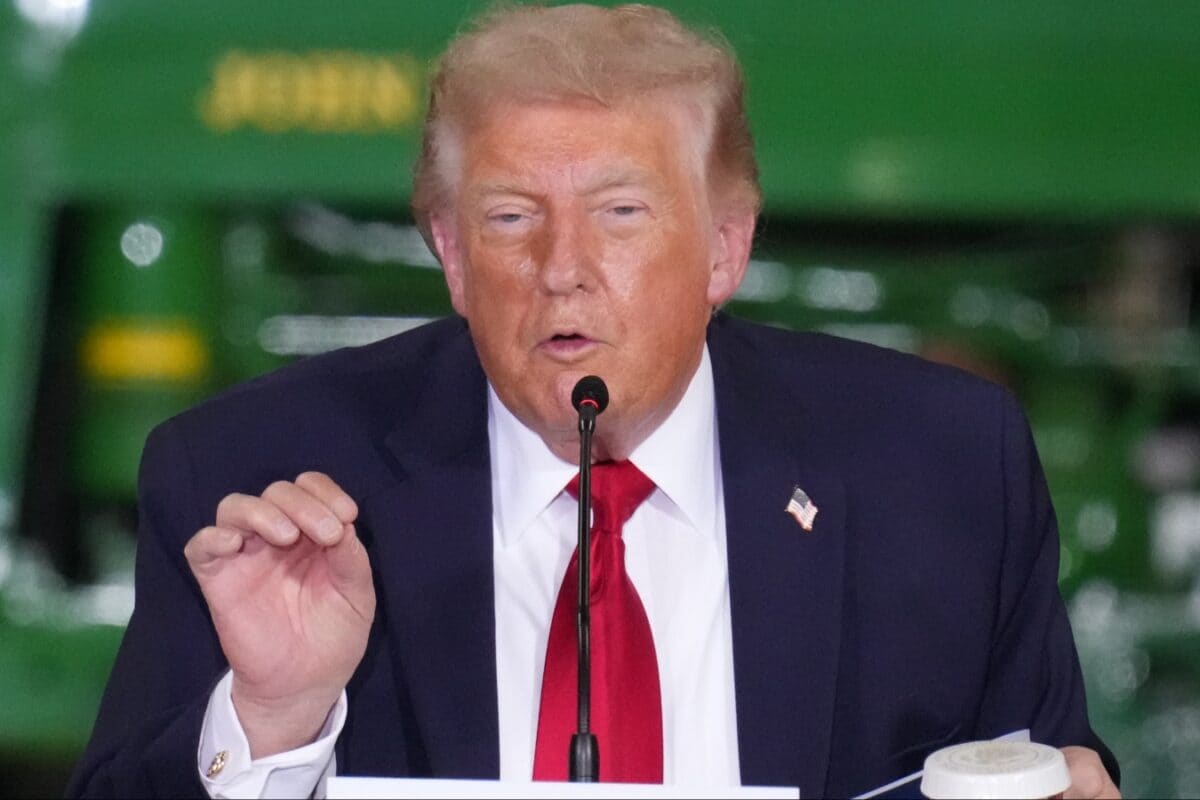
Amid Fragile Truce, US Considers Redirecting Iranian Assets To Gulf Allies For Damage Repairs Published By, Last Updated: June 07, 2026, 08:04 IST The fate of billions in Iranian funds has become a key flashpoint in US-Iran talks, with Washington exploring whether the money can pay for Gulf war damage. A file photo of Donald Trump (AP) The United States is considering redirecting Iranian assets to Gulf states to help fund repairs and reconstruction for damage caused by Tehran, according to Reuters, in a move that could further complicate already fragile negotiations aimed at extending a ceasefire between Washington and Iran. A source familiar with the matter told Reuters on Saturday that the US government would seek to channel Iranian assets toward rebuilding and repairs of future damage resulting from Iranian attacks. The source added that US Treasury Secretary Scott Bessent has directed a team to assess the costs of damage already inflicted on Gulf allies by Iran and consider whether Iranian assets could also be used to cover those repairs. The source did not specify what types of Iranian assets were being examined. Reuters noted that the language used to describe the proposal did not appear to be limited to frozen assets alone. The disclosure came a day after Mohsen Rezaei, an adviser to Iran’s supreme leader, said in an interview with CNN that progress toward a peace agreement depended on the release of $24 billion in Iranian assets frozen by the United States.
According to Bloomberg, Treasury officials have already begun an initial phase of the effort by gathering comprehensive estimates of the costs associated with repairing damage caused by Tehran since the conflict began. The report further said the administration is examining whether Iranian assets could be used not only for future reconstruction but also to reimburse Gulf allies for past damages. That could include costs linked to restoring oil infrastructure previously targeted by Iran and Iran-backed groups. Bloomberg also reported that Saudi Arabia, the United Arab Emirates, Kuwait and Bahrain have sustained damage from missile and drone attacks launched by Iran and its proxies since the conflict erupted. The initiative comes as the Trump administration seeks to maintain leverage in negotiations with Tehran. Bloomberg noted that Trump has repeatedly criticised former President Barack Obama for transferring funds to Iran and has signalled he does not want to surrender bargaining power by releasing Iranian assets. CEASEFIRE UNDER PRESSURE Reuters reported that the proposed redirection of Iranian assets risks becoming another point of friction in an already fragile ceasefire that has come under renewed strain following military exchanges over the weekend. Early Saturday, US forces struck Iranian coastal radar facilities in Goruk and on Qeshm Island in the Strait of Hormuz after intercepting drones that US Central Command said posed a threat to maritime traffic. Iran’s Revolutionary Guard subsequently announced retaliatory strikes against US bases in Kuwait and Bahrain.
Kuwait’s army said it engaged seven ballistic missiles that passed over residential areas, causing material damage but no casualties. In Bahrain, warning sirens sounded, and residents were urged to seek shelter. Both countries condemned the attacks. Iran later said it had targeted US bases in both Gulf states with ballistic missiles. The US military, however, said six missiles were intercepted while a seventh failed to reach its target. Reuters reported that despite indirect negotiations mediated by Pakistan, a broader agreement remains elusive. Tehran is seeking access to billions of dollars in oil revenue, sanctions relief for crude exports, the lifting of a US blockade on its ports and leverage over the Strait of Hormuz, through which roughly one-fifth of global oil traffic passed before the conflict. IRAN CALLS FROZEN FUNDS A TEST OF TRUST According to AFP, the release of frozen Iranian assets has emerged as a central issue in negotiations between Tehran and Washington. Speaking to CNN, Rezaei described the $24 billion in frozen funds as a measure of American intentions toward Iran. “If he (Trump) wants to reach an agreement with Iran, this $24 billion is a test of trust that Iran wants to have with Trump," Rezaei said. “This is a test that America must pass, and the path will be opened," he added. Calling the money Iran’s rightful property, Rezaei said, “This is our own money, not America’s money." AFP reported that while no official figure exists for the total amount of Iranian assets frozen abroad, media estimates have placed the amount between $100 billion and $123 billion.
Iran has linked any agreement to end the conflict to the release of those funds and several other demands, including an end to hostilities across multiple fronts. Rezaei also warned of broader consequences if fighting resumes. “We will drag the war" beyond the Gulf if the United States returns to hostilities, he said, bringing “another dimension to the war." At the same time, he indicated that a renewed conflict was not inevitable, saying that “the possibility of war is low." News18 Newsletter Handpicked stories, in your inbox A newsletter with the best of our journalism submit About the Author Vani Mehrotra Vani Mehrotra is the Deputy News Editor at News18.com. She has more than 10 years of experience in national and international news and has previously worked on multiple desks. First Published: June 07, 2026, 07:16 IST News world Amid Fragile Truce, US Considers Redirecting Iranian Assets To Gulf Allies For Damage Repairs Disclaimer: Comments reflect users’ views, not News18’s. Please keep discussions respectful and constructive. Abusive, defamatory, or illegal comments will be removed. News18 may disable any comment at its discretion. By posting, you agree to our Terms of Use and Privacy Policy Loading comments...
 The BriefWire